

EMVision Secures $3m Grant to Expand Brain Scanner Utility to TBI
EMVision has received a $3 million grant to expand its portable brain scanner technology to detect traumatic brain injuries, aiming to improve point-of-care…
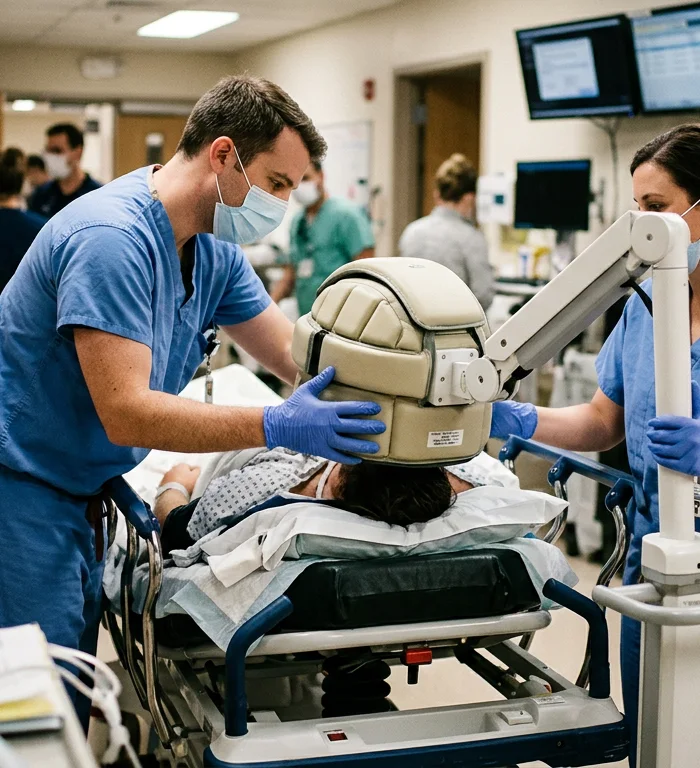
EMVision Medical Devices has been awarded a $3 million non-dilutive government grant to adapt its portable brain scanner for the detection of traumatic brain injury (TBI). The project aims to validate the device’s ability to identify traumatic intracranial haemorrhage and explore its potential application in concussion assessment. By expanding the scanner's diagnostic capabilities beyond stroke, the company intends to address a significant gap in point-of-care neurodiagnostics.
The development program includes clinical validation in emergency departments, where the device’s performance will be benchmarked against standard CT and MRI imaging. Researchers will also conduct human factors and safety evaluations to determine the scanner's efficacy in high-pressure clinical environments. These findings are intended to provide the necessary evidence base for future regulatory submissions regarding TBI-specific indications.
Project activities are scheduled to commence in the Project activities are scheduled to commence in the first quarter of 2027, with clinical study protocols and ethics approvals expected by the first half of that year. The initiative is supported by a matched funding model involving institutional partners, including hospital and prehospital innovation entities. This grant represents the company's third such award, signaling continued government interest in portable, non-ionizing diagnostic technology.
Because TBI incidence rates exceed those of stroke
The expansion into TBI is strategically significant for the company’s revenue model. Because TBI incidence rates exceed those of stroke, the addition of a TBI detection feature is projected to more than double the potential scan volume per device. This dual-utility approach is intended to improve the economic viability of deploying the technology across ambulance fleets and in specialized settings such as aged care, military, and sporting facilities.
Traumatic brain injury remains a leading global cause of death and disability, with an estimated annual economic impact of approximately $400 billion. Current diagnostic protocols often require patient transport to hospitals for CT imaging, which can cause critical delays in treatment. A portable, point-of-care solution could facilitate faster clinical decision-making, particularly in rural or remote regions where access to specialized neurosurgical services is limited.
More stories
- Dietitians advise small swaps for plant-based eating
- TikTok dementia videos mislead in 66.4% of sample, researchers say
- Aberdeen Royal Infirmary faces police inquiry call over 19 deaths
- Bariatric surgery group loses 28.2% after GLP-1 use
- TOFA boosts mouse energy use 18% while preserving muscle
- ICO probes NHS therapy notes accessible to up to 140,000 staff
- Very hot coffee and tea show threefold esophageal SCC association
- Nighttime light exposure correlates with small heart changes in 11,000 adults
Latest news
- David Parr House to honor Victorian art-workman with blue plaque
- Iran's attacks hit 25 tankers near Strait of Hormuz
- FCC approves prison cellphone jamming despite 2.5-mile warning
- Russia strikes Ukraine as Odesa faces electricity strain
- Bahrain reports two injuries after Iranian aerial attacks
- Congress tests Black Democrats' growing policy influence
- Baltic responders fight Sparta II fire after drone strike
- Europe faces attribution gap after 16 cyber, physical incidents