

Belarusian Opposition Leader Urges Inclusion in Regional Security Negotiations
Exiled Belarusian opposition leader Sviatlana Tsikhanouskaya is calling on the EU to include Belarus in future Ukraine peace talks to address long-term…
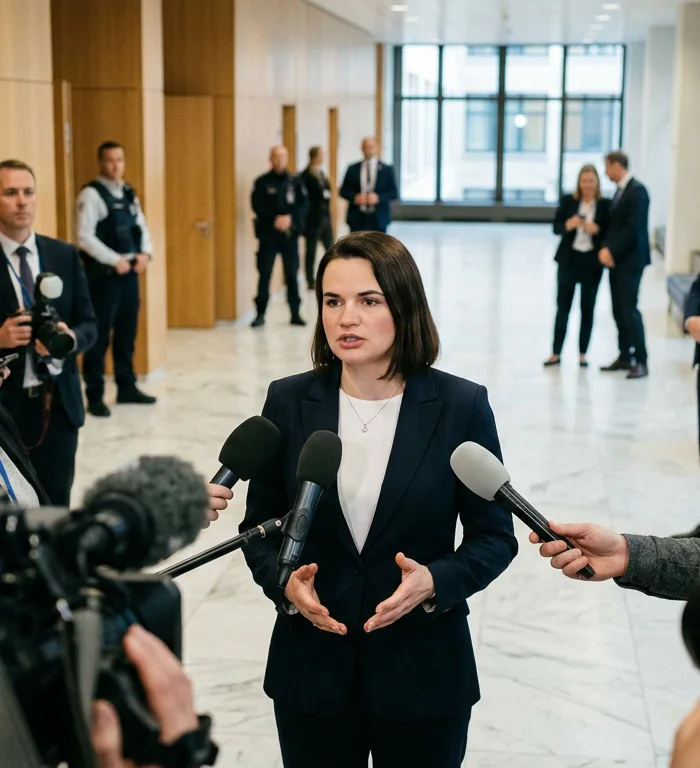
Exiled Belarusian opposition leader Sviatlana Tsikhanouskaya has formally requested that the European Union integrate the status of Belarus into any forthcoming peace negotiations concerning Ukraine. The opposition leadership argues that regional security architecture remains incomplete and vulnerable if the current administration in Minsk remains in power.
Tsikhanouskaya contends that the Belarusian government continues to pose a direct threat to neighboring states, citing its role as a staging ground for Russian military operations during the 2022 invasion of Ukraine. She asserts that the current leadership in Minsk cannot be considered a reliable partner for maintaining secure borders or regional stability.
Historical diplomatic approaches toward the Belarusian regime were criticized as insufficient, with the opposition leader noting that past European policies often prioritized stability over democratic governance. This perceived tolerance of the regime allowed for a prolonged period of political maneuvering between Russian and European interests, which ultimately failed to prevent the current security crisis.
While acknowledging the complexity of past diplomatic efforts
While acknowledging the complexity of past diplomatic efforts, including the failed Minsk agreements, the opposition maintains that the current geopolitical environment necessitates a shift in strategy. The focus is now on ensuring that future security frameworks address the political status of Belarus to prevent further regional destabilization.
Policymakers are advised to monitor how these demands influence ongoing discussions regarding European security architecture. The inclusion of Belarus in high-level talks remains a point of contention, as it challenges established diplomatic norms regarding the recognition of state actors and the management of authoritarian regimes in the context of the broader conflict in Eastern Europe.
More stories
- Germans oppose Ukraine aid as poll shows support slipping
- Kim Jong-un receives 10 envoys after constitutional shift
- Ukraine claims Libya strike sinks Russian naval corvette
- COP31 climate talks collapse over fossil fuels and funds
- Russian military faces 1,087 recorded suicides in Ukraine war
- US faces China, Russia in Africa minerals contest
- Europe to join next Ukraine talks, Kushner says
- Melaka vote puts living costs before 687,697 voters
- Trump nears midterms at 32% approval with Democrats ahead
- Jayakumar backs Singapore GRC safeguards after online attacks
Latest news
- Trump prepares tariffs on China and other major exporters
- New-car buyers pay record average $50,087 in October
- Banks face ECB reserve debate over liquidity and profits
- Investors see Anthropic debut gains fade below $83 a share
- Iraq orders federal control over Kurdish-area oilfields
- Nvidia shares retreat as AI rally cools before PCE data
- Macy’s parade faces balloon limits as storm winds approach