

Jayakumar backs Singapore GRC safeguards after online attacks
The former senior minister said recent attacks on Indians online show race can still be exploited despite decades of social progress.
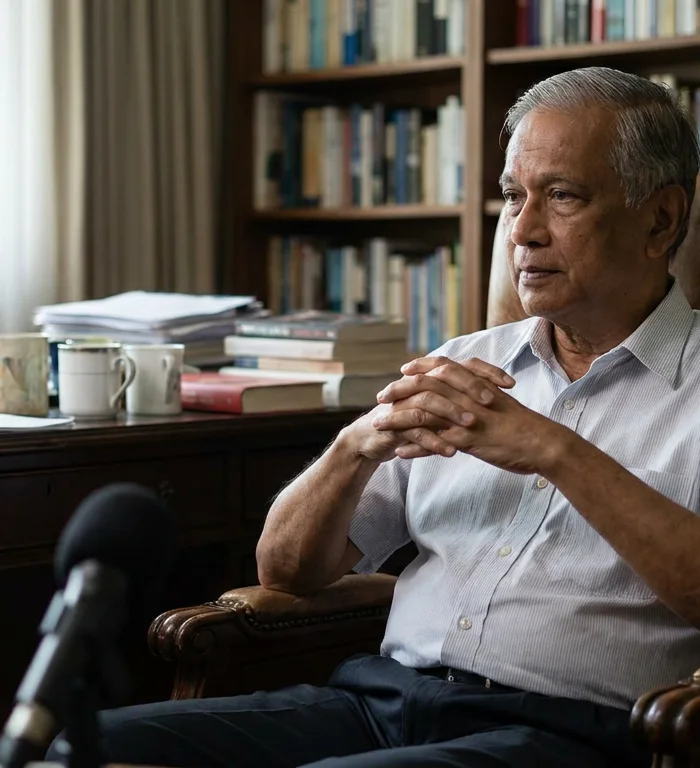
Former Senior Minister S Jayakumar said Singapore still needs Group Representation Constituency safeguards, a minority-representation mechanism introduced with 39 of 81 parliamentary seats in 1988, in a CNA interview published on Tuesday.
In the CNA interview published on Tuesday, Jayakumar tied his case to recent online vitriol against Indians; the GRC scheme began with 13 constituencies in 1988, versus 81 total parliamentary seats.
Jayakumar said online comments after the Nepal-Tibet disaster and Singapore Airlines’ investment in Air India showed race could still become a political vulnerability. CNA reported that Prime Minister Lawrence Wong, Senior Minister Lee Hsien Loong and Senior Minister K Shanmugam denounced racial slurs aimed at Indians.
“(The GRC system) will no longer apply when you and I can confidently say that race, language and religion are issues we never have to worry about again,” Jayakumar said in the CNA interview.
Jayakumar said Singapore had made progress in relations between communities, but warned against treating those gains as permanent.
“I'm old enough to have seen racial riots, and 10 years as home affairs minister, I had to deal with issues caused by race, language and religion. I would caution us to be more realistic,” he said.
The interview accompanied Jayakumar’s book, Creating Three Unique Singapore Laws: An Inside Story, which covers constitutional changes that created the elected presidency, Group Representation Constituencies and Non-Constituency Members of Parliament.
Jayakumar said founding Prime Minister Lee Kuan Yew first considered pairing two constituencies, with two candidates running together and one drawn from a minority community. CNA reported that the proposal drew objections from Ahmad Mattar, then environment minister.
“I am not in favour of the idea. We should avoid it if we can. As a Malay, I don’t think I would like to contest in any elections where my victory is guaranteed – not because I am a ‘strong’ candidate but because I have a so-called ‘strong’ twin brother to lean on,” Ahmad wrote in a letter cited by CNA.
Jayakumar said he later suggested allowing the president to nominate minority lawmakers if elected numbers were insufficient, while then-Attorney General Tan Boon Teik suggested reserved constituencies for Malay candidates. Lee rejected nominated minority MPs as more demeaning because they would not be elected, Jayakumar said.
The GRC scheme passed in parliament in May 1988 and was used in that year’s general election. Jayakumar said the eventual model widened the safeguard beyond Malays to include other minority communities.
Jayakumar also backed reserved presidential elections, a mechanism passed in November 2016 that reserves an election for a community not represented for five consecutive terms. He said a nationwide presidential vote has a different dynamic from constituency-level general elections.
Jayakumar acknowledged that President Tharman Shanmugaratnam, whom he called “an outstanding person”, won the 2023 presidential election with 70.4% of the votes in a three-way race. He said the reserved-election rule was a precaution.
“Can you be absolutely sure that in the next 30, 40, 50 years, you will have another minority candidate elected? So is it prudent to have a mechanism that ensures that?” Jayakumar said.
More stories
- South African parties split over Cape Town's 30,000-home annual gap
- Ruto seeks Russian investment in Kenya's $380m trade push
- Sudan teachers seek 20% budget share with 8m children outside school
- Spain rail network faces scrutiny after 64 killed near Toledo
- Spain reports at least 30 dead in high-speed train crash
- Villa Vie disembarks 203 passengers in Cambodia over fuel costs
- Tomorrow's Netanyahu election bid tests Israel's coalition arithmetic
- Students turn Serbia election into Vučić's biggest loss
- Japan's older workers make up 31.3% of serious workplace accidents
- Longyearbyen keeps tap-water ban for 2,600 residents