

Tomorrow’s Netanyahu election bid tests Israel’s coalition arithmetic
Israel’s election on Tuesday tests whether Benjamin Netanyahu can retain power as rival blocs compete for control of parliament.
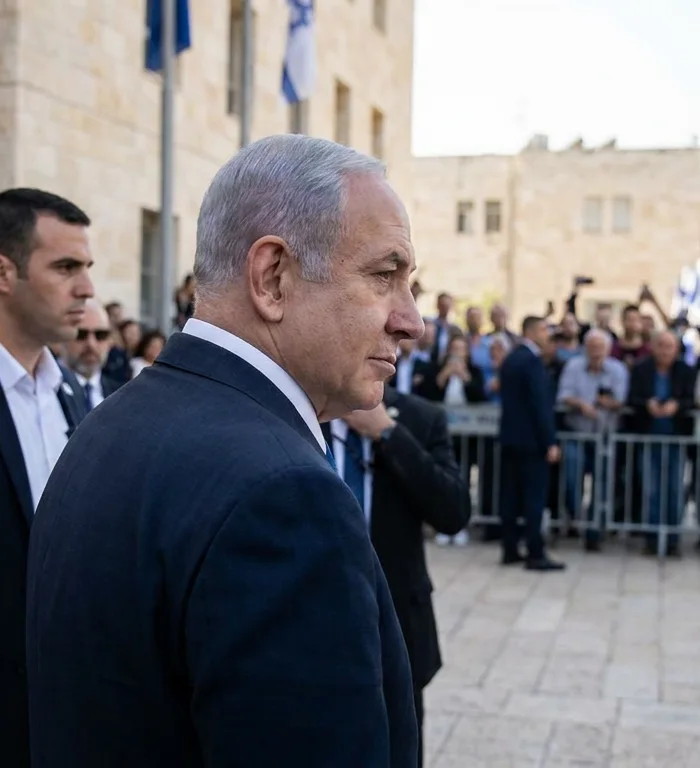
Israel's election on Tuesday tests whether Benjamin Netanyahu can retain power as rival blocs compete for control of parliament.
The contest extends beyond which party finishes first: the competing camps must assemble enough parliamentary support to govern. Yohanan Plesner, president of the Israel Democracy Institute, considers an inconclusive result the likeliest outcome, leaving coalition negotiations central to the transfer or retention of power.
Netanyahu and Eisenkot contest leadership
Netanyahu, who leads Likud, wants to renew his governing partnership with ultranationalist and Jewish religious parties. His campaign argues that military operations remain unfinished and that he should remain in office to oversee them.
The prime minister also presents himself as the candidate able to govern without Arab parties. His claim that their influence would endanger Israeli security is a campaign argument, not an established consequence of their participation.
President Trump endorsed Netanyahu last week, giving the incumbent another argument for continuity. Netanyahu has since portrayed his relationship with Trump as essential to preventing Iran from acquiring nuclear weapons.
Gadi Eisenkot, a former Israeli military chief who heads the centrist Yashar party, is the leading contender to head an alternative coalition. His potential partners span Arab parties and the Israeli right, center and left, united by opposition to Netanyahu rather than a shared governing program.
Eisenkot served alongside Netanyahu in the wartime cabinet during much of the Gaza conflict's opening year. His campaign now emphasizes national reconciliation and promises a state investigation into the failures preceding the Hamas attack of October 7, 2023.
Arab turnout and conscription divide voters
This is Israel's first national election since that attack, with fighting continuing across Gaza, Lebanon and Syria. Eisenkot's challenge therefore combines questions about wartime leadership with demands for accountability over how the conflict began.
Arab participation is another variable in the coalition calculations. Plesner argues that greater turnout among Arab voters would reduce the prospects of Netanyahu rebuilding a government with his existing partners.
Jehad Abomoch, a cafe owner in Baqa al Gharbiya, expects opposition to Netanyahu and his far-right allies to motivate Arab voters. That is one resident's assessment, however, rather than evidence establishing how the broader electorate will vote.
Military conscription creates a separate fault line within the incumbent's political camp. Two new parties are challenging his accommodation with ultra-Orthodox allies by advocating compulsory service for ultra-Orthodox Jewish citizens; their ability to enter parliament would affect the available coalition combinations.
Coalition bargaining may outlast voting
If neither camp secures a majority in the 120-member Knesset, negotiations could require parties to reconsider promises about whom they will govern with. A minority administration supported from outside by Arab parties is another possible arrangement, though its formation would depend on parliamentary backing rather than simply finishing ahead of its opponents.
Failure to establish a government could produce another election. Israel held five national votes between 2019 and 2022, providing a recent example of repeated ballots without a durable resolution to political deadlock.
Plesner warns that another vote becomes the path forward if politicians maintain their commitments against changing sides and no governing arrangement emerges. The decisive developments would then be coalition commitments, Arab parties' willingness to support an alternative administration and whether conscription demands can be reconciled with religious parties' positions.
More stories
- South African parties split over Cape Town's 30,000-home annual gap
- Ruto seeks Russian investment in Kenya's $380m trade push
- Sudan teachers seek 20% budget share with 8m children outside school
- Spain rail network faces scrutiny after 64 killed near Toledo
- Spain reports at least 30 dead in high-speed train crash
- Villa Vie disembarks 203 passengers in Cambodia over fuel costs
- Students turn Serbia election into Vučić's biggest loss
- South Africa brings Coetzee into 1-1 Australia decider
- Russians go to the polls
- Congress weighs AI safety standards before year-end vote