

Mass Protests Erupt Over Proposed Czech Public Media Funding Overhaul
Massive protests in Prague challenge a government plan to shift public media funding to the state budget, citing risks to media independence and democratic…
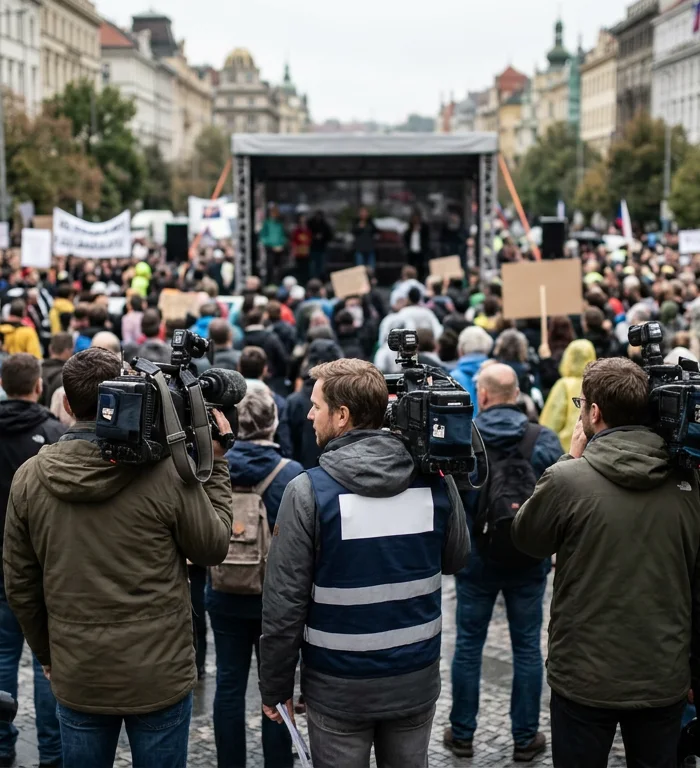
An estimated 350,000 protesters gathered in Prague to oppose government legislation that would transition public media funding from individual subscription fees to direct state budget allocations. Critics argue the shift threatens editorial independence by granting the ruling coalition leverage over public broadcasters. The proposed model includes a 15% reduction in total funding, raising concerns regarding potential layoffs and operational constraints.
The ruling coalition, led by Prime Minister Andrej Babiš, has moved to accelerate the bill through Parliament, including limiting opposition debate time during initial readings. This legislative strategy has prompted widespread civil unrest, including a national strike by media employees supported by academic, religious, and labor organizations. The government maintains that the restructuring will not compromise media freedom.
International scrutiny has intensified, with the European Parliament recently debating the implications of the bill for the rule of law. EU officials have emphasized that national media funding must remain transparent and sustainable to meet democratic standards. The current administration’s legislative push occurs amid broader tensions regarding its alignment with EU policy, specifically concerning environmental regulations, migration, and financial support for Ukraine.
Beyond media governance, the protests reflect growing dissatisfaction with the administration’s defense and security policies. Critics have specifically targeted the influence of coalition partners, alleging that current defense spending levels and policy stances undermine national security and NATO commitments. The opposition continues to demand the resignation of key cabinet members, framing the current political climate as a systemic threat to democratic institutions. The government has signaled its intent to proceed with the legislative agenda despite the scale of public opposition.
More stories
- Germans oppose Ukraine aid as poll shows support slipping
- Kim Jong-un receives 10 envoys after constitutional shift
- Ukraine claims Libya strike sinks Russian naval corvette
- COP31 climate talks collapse over fossil fuels and funds
- Russian military faces 1,087 recorded suicides in Ukraine war
- US faces China, Russia in Africa minerals contest
- Trump, Putin and Xi to hold historic trilateral in Shenzhen
- UK and EU seek 3 deals in Burnham reset
- Canada seeks EU carbon-tax relief as energy ties deepen
- Johor-Singapore SEZ draws projects tied to 28,755 jobs
Latest news
- Trump prepares tariffs on China and other major exporters
- New-car buyers pay record average $50,087 in October
- Banks face ECB reserve debate over liquidity and profits
- Investors see Anthropic debut gains fade below $83 a share
- Iraq orders federal control over Kurdish-area oilfields
- Nvidia shares retreat as AI rally cools before PCE data
- Macy’s parade faces balloon limits as storm winds approach