

CPP-NPA clashes fall 61% in Philippines
Conflict monitors and analysts cited by Rappler point to weaker rebel activity, while government claims of near-eradication remain disputed.
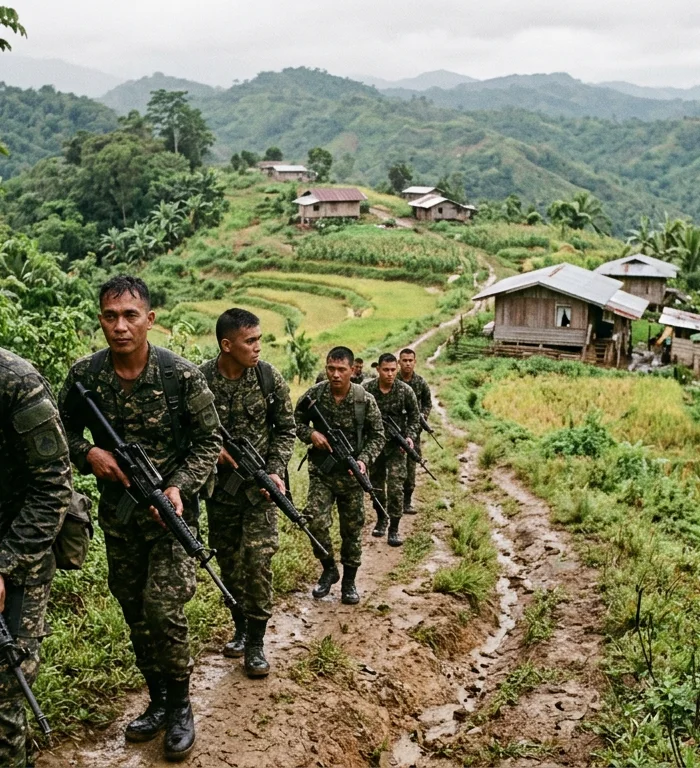
Philippine military clashes with the New People’s Army fell 61% to 106 in 2025 from 273 in 2020, according to conflict-monitor data cited in a Rappler opinion essay published Oct. 27.
The figures sharpen the policy question over whether Manila should pursue military pressure or political settlement; International Crisis Group estimates put the rebels at 1,200 to 2,000 fighters, above the government’s 785 estimate.
The New People’s Army is the armed wing of the Communist Party of the Philippines, whose insurgency Rappler’s essay said has entered its most serious crisis in 58 years. The Armed Conflict Location and Event Data Project supplied the clash count cited by Nathan Gilbert Quimpo, the essay’s author.
The Marcos administration has presented the insurgency as nearing exhaustion. The essay said President Ferdinand Marcos Jr. claimed in 2024 that no NPA guerrilla fronts remained active, while the National Task Force to End Local Communist Armed Conflict put the force at 785 “remnants.”
Quimpo challenged that official account, writing that continued reports of clashes over the past two years made the government’s broadest assertions not credible. He nonetheless said the CPP-NPA had suffered grave setbacks since the launch of the government’s “whole-of-nation” counterinsurgency strategy in late 2018.
The insurgency began in 1969 with about 60 fighters, nine automatic rifles and 26 single-shot rifles and pistols in Central Luzon, according to the essay. It later built guerrilla fronts across strategic mountain areas outside Moro regions.
Rappler’s account describes repeated cycles: growth under Ferdinand Marcos Sr.; decline after the Communist Party of the Philippines split in 1993; recovery around 2005; another peak in 2017; and renewed losses under intensified counterinsurgency.
The essay frames the movement’s Maoist “protracted people’s war” strategy as increasingly mismatched to Philippine social and political conditions. It says the party could look to Nepal’s Maoists, who signed a 2006 peace agreement and entered electoral politics in 2008-2009.
Peace talks have not produced a comprehensive political settlement. The article said negotiations with the National Democratic Front, the CPP’s politico-diplomatic arm, collapsed under Corazon Aquino and failed to reach a final agreement under later administrations.
Source: Rappler opinion essay by Nathan Gilbert Quimpo, Oct. 27, 2026.
More stories
- Germans oppose Ukraine aid as poll shows support slipping
- Kim Jong-un receives 10 envoys after constitutional shift
- Ukraine claims Libya strike sinks Russian naval corvette
- COP31 climate talks collapse over fossil fuels and funds
- Russian military faces 1,087 recorded suicides in Ukraine war
- US faces China, Russia in Africa minerals contest
- Thailand cuts biofuel taxes for three months
- Deadlock hits Israel election as coalition math tightens
- France plans troop deployment ahead of Saturday protests
- SpaceX explores Tesla merger as Musk backs company talks
Latest news
- Trump prepares tariffs on China and other major exporters
- New-car buyers pay record average $50,087 in October
- Banks face ECB reserve debate over liquidity and profits
- Investors see Anthropic debut gains fade below $83 a share
- Iraq orders federal control over Kurdish-area oilfields
- Nvidia shares retreat as AI rally cools before PCE data
- Macy’s parade faces balloon limits as storm winds approach