

European Union Rejects New Climate Funding Targets for Africa at COP31
The EU has rejected calls to increase climate adaptation funding for Africa, arguing that the focus should remain on deploying existing pledges rather than…
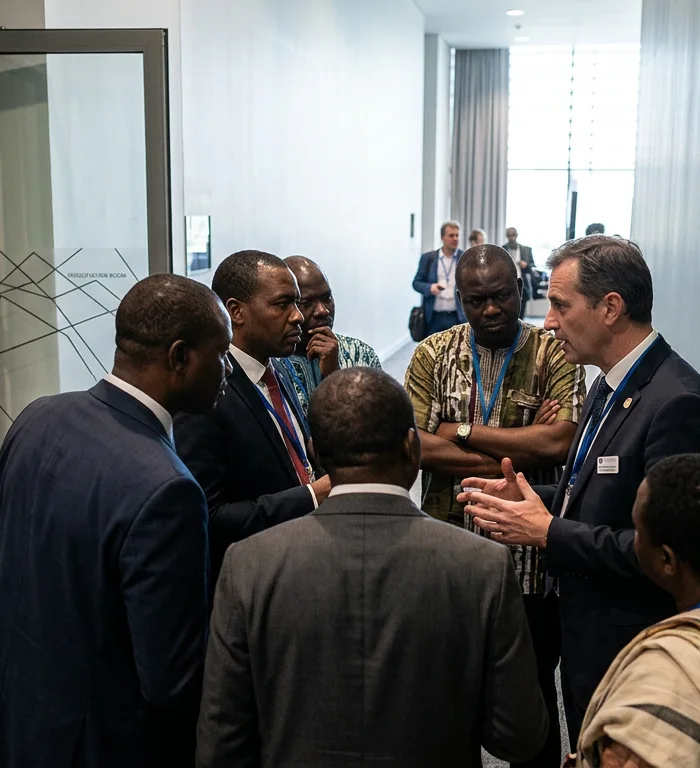
At the ongoing COP31 summit, the European Union has formally resisted calls from the African Group of Negotiators to triple annual climate adaptation funding to meet a proposed 2035 target. European delegates maintain that the current priority must be the efficient deployment of existing financial commitments rather than the establishment of new, higher funding benchmarks. Officials emphasized that while the current annual baseline of approximately $40 billion is contested, the primary obstacle remains the administrative difficulty developing nations face in accessing funds already pledged.
The debate highlights a significant disconnect between the urgent financial requirements of vulnerable regions and the current delivery mechanisms of international climate finance. While African nations argue that current funding levels are insufficient to address the escalating frequency of climate-induced disasters—such as the severe droughts in Uganda and recurring floods in Malawi—European representatives argue that capital currently "in the bank" is failing to reach the ground. Data indicates that sub-Saharan Africa requires an estimated $51 billion annually for adaptation, yet current global disbursements to developing nations remain significantly below the projected $300 billion annual requirement for 2035.
European Union
A critical factor complicating the disbursement process is the absence of formal National Adaptation Plans (NAPs) in 23 African countries. These documents are essential for identifying specific climate risks and justifying financial assistance. Experts note that many of these nations are currently hindered by severe debt distress and competing economic crises, which prevent the development of the necessary infrastructure to secure and manage international climate aid. Consequently, the lack of institutional capacity to process these plans creates a cycle where vulnerable regions remain unable to tap into existing, albeit insufficient, global funds.
Looking forward, the impasse suggests that climate finance negotiations will remain deadlocked as long as developed nations prioritize the optimization of existing delivery channels over the expansion of total capital. For policymakers, the situation underscores that financial aid is currently constrained not only by political will but by the administrative and economic fragility of recipient states. Future discussions are expected to focus on streamlining access to funds, though the gap between projected loss and damage costs—estimated at $440 billion for Africa through 2030—and actual funding levels remains a primary source of geopolitical tension.
More stories
- Germans oppose Ukraine aid as poll shows support slipping
- Kim Jong-un receives 10 envoys after constitutional shift
- Ukraine claims Libya strike sinks Russian naval corvette
- COP31 climate talks collapse over fossil fuels and funds
- Russian military faces 1,087 recorded suicides in Ukraine war
- US faces China, Russia in Africa minerals contest
- Indonesia seeks Google explanation for 19,372 YouTube removals
- San Antonio faces scrutiny over 50,000-hog farm approvals
- European Commission seeks disaster accountability for 3°C world
- Dongpeng and Mengniu cut Mbappe ties after Mao joke video
Latest news
- Trump prepares tariffs on China and other major exporters
- New-car buyers pay record average $50,087 in October
- Banks face ECB reserve debate over liquidity and profits
- Investors see Anthropic debut gains fade below $83 a share
- Iraq orders federal control over Kurdish-area oilfields
- Nvidia shares retreat as AI rally cools before PCE data
- Macy’s parade faces balloon limits as storm winds approach