

Burnham faces Brexit test over 55% EU return support
A Guardian opinion column cited a wide gap between regret over Brexit and support for rejoining if Britain loses former EU opt-outs.
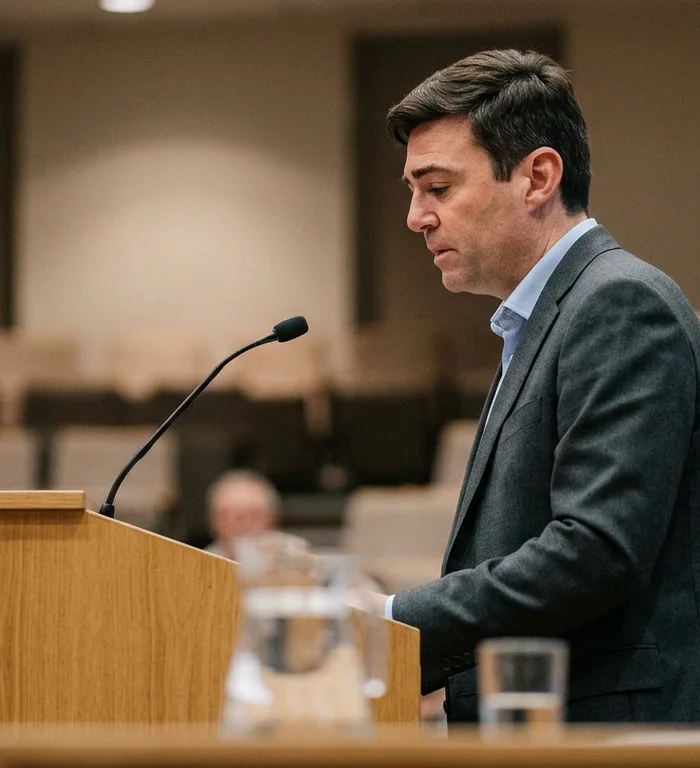
Andy Burnham faces a political test after reopening debate on Britain’s EU ties, with 55% of Britons supporting rejoining, according to a Guardian opinion column published Oct. 30.
The issue matters because the column cited polls showing nearly 60% call Brexit a mistake, against about one-third still in favour, while support for rejoining falls to 35% if Britain must give up former opt-outs.
Simon Jenkins, the Guardian columnist, wrote that Burnham wanted “an honest discussion … an open conversation” about where future talks with Brussels could lead. The column said Burnham would not break Labour’s 2024 election pledge to honour the referendum in this parliament.
The political risk was visible in the reaction from Brexit supporters. Jenkins quoted Reform UK leader Nigel Farage responding with the words: “Betrayal … catastrophe.”
The column framed the debate around economic costs and political limits. It cited an estimate that weaker links with the EU, described in the column as Britain’s biggest trading partner, have cost 6-8% of GDP; the upper end is about one-third above the lower end, according to Atlas360 calculations.
That figure was presented as a cumulative drag rather than the immediate downturn predicted by some early forecasts, which the column said were wrong. Jenkins argued that the economic cost now sits alongside a political reality: public regret over Brexit does not translate into agreement on what should replace it.
Jenkins wrote that Keir Starmer had already eased some post-Brexit barriers a year earlier through modest arrangements on youth exchanges and meat exports. Burnham wants to go further, with negotiations described as resuming in Brussels in November.
In the Commons, according to the column, Burnham cited harm to the car industry. Jenkins also pointed to agricultural regulation, border delays for cars and passengers, and inspections affecting fish exports as examples of post-Brexit friction.
The path beyond the current settlement remains unsettled. The column listed possible models including a bespoke place for Britain in a wider European economic area, membership of the European Free Trade Association or a customs union, while saying some options may not be acceptable to existing EU states.
The most sensitive condition is Britain’s former opt-outs. Jenkins wrote that support for rejoining drops from 55% to 35% if the UK must accept terms that would mean joining the euro and taking part in the Schengen passport-free travel area.
Jenkins argued that Britain has long been divided over European integration. He contrasted David Cameron’s resignation after the 2016 referendum with earlier cases in which Ireland and Denmark negotiated opt-outs after anti-EU referendum results.
The column also revisited the period after the referendum, saying many MPs favoured an unclear “soft Brexit” but did not build a parliamentary coalition around it. Jenkins attributed that failure to party conflict in Westminster and the later rise of Boris Johnson’s harder Brexit approach.
For now, Labour remains bound by its referendum pledge, and the immediate talks are presented as a narrower exercise over regulations, conventions and protocols. Jenkins proposed a cross-party Commons committee to follow the November negotiations and focus on trade, growth, cultural ties and security relations with Europe.
November talks
The first check is whether negotiations resume in Brussels in November, as the column said, and whether they focus on technical barriers rather than a direct reopening of EU membership.
A second check is whether Burnham’s discussion moves beyond broad language into specific options cited by the column, including a customs union, European Free Trade Association membership or a bespoke economic arrangement.
A third check is whether Westminster creates the cross-party Commons committee Jenkins proposed to monitor the November talks and carry the EU debate forward.
Source: opinion column, The Guardian, Oct. 30
More stories
- Japan faces ASEAN doctrine test after Fukuda dies at 90
- Palm oil buyers face EU deforestation risk from Dec. 30
- Undocumented learners face South Africa matric barriers
- CIR places 25 Sudan commanders at reported sexual-violence sites
- Brent heads for fourth monthly gain as Middle East risk persists
- European coffin makers seek EU case with ranks down to 90
- Swedish agency opened 50 cases tied to Microsoft datacentres
- Netanyahu bloc faces 8-seat gap in Israel coalition race
- India Ukraine peace efforts draw Delhi deeper into talks
- Irkutsk plague response isolates 197 after lab death case