Irkutsk plague response isolates 197 after lab death case
Irkutsk officials are monitoring 197 contacts after a laboratory worker died from an unspecified form of plague. Learn about the precautions.
Mateo Fernandez ·
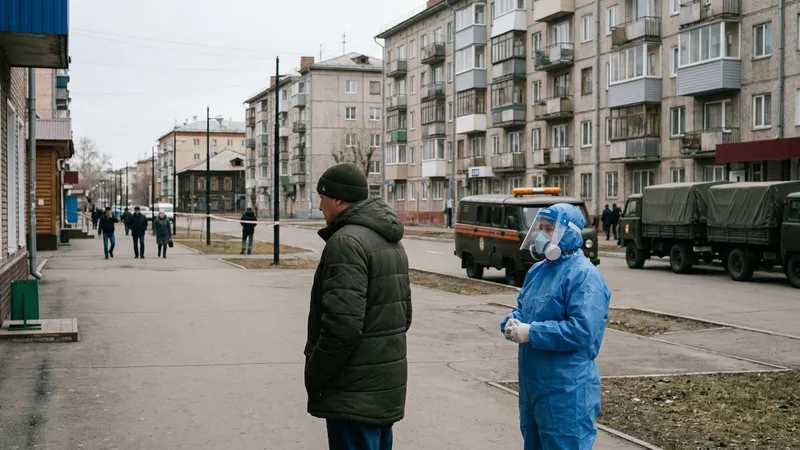
Irkutsk plague precautions put 197 possible contacts under observation after officials confirmed a laboratory worker died from the infection.
The case centers on an employee of the Irkutsk anti-plague institute who was hospitalized Tuesday in Shelekhov, near the regional capital, with symptoms of severe pneumonia. She was placed on a ventilator and died Thursday, according to reports.
Alexei Tsydenov, head of the neighboring republic of Buryatia, said Friday that the woman had died from an unspecified form of plague. Irkutsk officials had earlier described the illness only as a “particularly dangerous infection.”
197 contacts enter observation
At least 197 people who may have been exposed were placed under medical isolation or monitoring, according to reports citing health authorities. More than 100 of them were described as being held in hospital wards, giving officials a defined contact group to test and monitor.
Irkutsk region Governor Igor Kobzev said after meeting Rospotrebnadzor chief Anna Popova that emergency containment measures were being coordinated. “All identified contact persons have been placed under medical observation. As of today, the contacts show no signs of illness, and their laboratory test results are negative,” Kobzev wrote on Telegram on Friday.
Officials canceled planned public events in Irkutsk as the contact tracing effort widened. The Shelekhov district hospital was placed under quarantine pending review by a special commission, and law enforcement reportedly opened a criminal investigation into possible health safety violations resulting in death.
Test tube account draws scrutiny
The worker was identified in reports as Daria Sh., a 27- or 28-year-old employee of the Irkutsk institute. Reports said she told medical staff that she had accidentally broken a test tube containing live bacteria while collecting samples for analysis.
That account remains attributed to reports; officials have not publicly released a detailed description of any laboratory breach. Kobzev’s Friday statement addressed containment steps and testing results among contacts but did not mention the reported death.
The distinction matters for the investigation. If the infection was linked to a workplace accident, the immediate focus would fall on laboratory procedures, handling of live bacteria and whether protective protocols were followed inside the institute.
Buryatia rejects outbreak link
Tsydenov sought to distance neighboring Buryatia from the case, saying the woman had not visited the republic and that her infection was unrelated to the region. “There are no plague outbreaks in the republic, including in areas bordering Mongolia,” he wrote on social media.
Plague is a bacterial disease associated with animal reservoirs and can take several clinical forms. Reports described the suspected infection as pneumonic plague, which affects the lungs and can spread between people through respiratory droplets, but Tsydenov’s statement did not identify the form.
That leaves two separate uncertainties for health officials: how the worker was infected and whether any secondary transmission occurred before she was isolated. The negative laboratory results reported by Kobzev are the strongest public indicator so far that authorities have not detected illness among known contacts.
Containment hinges on test results
If negative tests among contacts hold through the observation period set by health authorities, the immediate effect would likely remain local: fewer movement restrictions, lower pressure on hospitals and a narrower investigation for the institute. For Russia’s public health system, that path would keep the episode as a laboratory safety case rather than a regional outbreak.
If symptoms appear among contacts, officials would have to expand testing, isolation and event restrictions, with respiratory transmission the mechanism cited in reports of suspected pneumonic plague. That scenario would increase operational risk for the Irkutsk anti-plague institute and push neighboring regions to review travel and health screening links.
The main open questions are whether investigators verify the laboratory accident account, what form of plague caused the death and how long the 197 contacts remain under observation. Until authorities publish those details, the daily condition of the contact group and the status of the hospital quarantine are the clearest measures of the response.