India voter rolls revision faces youth protest test in Delhi
Voter rolls protests in Delhi and Mumbai targeted Election Commission chief Gyanesh Kumar as opponents challenged revisions they say exclude voters.
Raj Patel ·
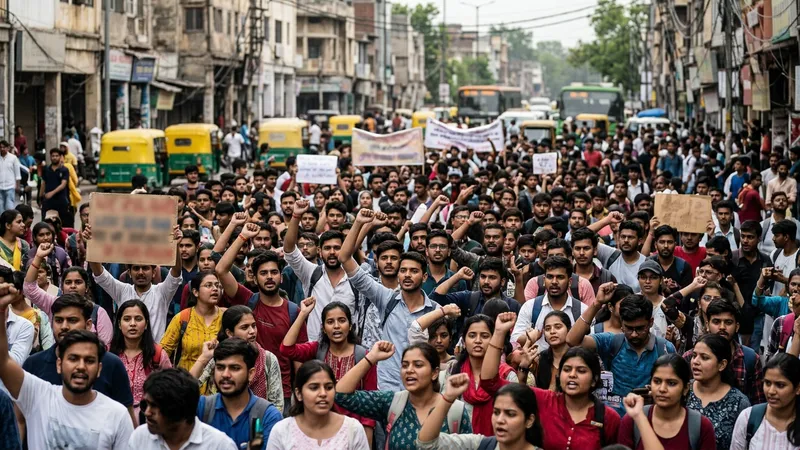
Voter rolls protests spread across Delhi and Mumbai as demonstrators demanded Gyanesh Kumar resign over disputed electoral revisions.
Thousands of youth protesters and opposition supporters rallied on Sunday, widening a confrontation over changes to India's electoral lists. Police in the capital detained some participants for a third day, after blocking gatherings over the previous two days and moving dozens away by bus.
Delhi detentions enter third day
In New Delhi, protesters began gathering in the early evening before police detained some of them. A witness at the scene described demonstrators breaching barricades, surrounding vehicles carrying detainees, climbing onto them and lying on the road to obstruct their movement.
Aahna Singh, an activist and political science student at Jawaharlal Nehru University, alleged police violence during the protest. "Police dragged me by my hair," Singh said. "The police are resorting to brutality."
The police response followed two days in which authorities prevented assemblies in the capital and transported detainees away by bus. Some people detained on Friday and Saturday were later released, while cases were registered against others on allegations of violating orders that barred mass gatherings in the center of the city.
Mumbai leaders target Kumar
In Mumbai, opposition leaders Raj Thackeray and Uddhav Thackeray led demonstrations calling for the voter-roll revisions to be withdrawn. They also demanded that Election Commission Chief Gyanesh Kumar step down, putting the election body at the center of a political dispute before more planned protests.
Raj Thackeray accused the ruling Bharatiya Janata Party of benefiting from the changes and said elected power should rest on voters, not administrative decisions. "It's the people of this country who should decide who sits in power and who sits in opposition, not the Election Commission," he said.
Protesters say the voter-roll revision exercise, launched last year, has removed millions of eligible voters from electoral lists. The Election Commission and the BJP deny that the changes favor Prime Minister Narendra Modi's governing party.
Commission defends roll cleanup
The Election Commission says the revision is meant to remove duplicate, deceased or ineligible entries and protect the integrity of the electoral register. On Friday, it directed officials to register eligible voters who may have been left off the rolls by mistake.
Kumar has not publicly answered the calls for his resignation or commented on the demonstrations. The dispute now turns on whether the commission's corrective order is seen by opposition parties and youth groups as enough to address claims of wrongful exclusion.
An alliance of opposition parties plans a Tuesday march to the Election Commission office under a campaign to save democracy. The Gen Z Cockroach Janta Party has separately announced plans for a larger rally in Delhi on October 10, extending the calendar of protests beyond the weekend.
Modi faces youth pressure
The demonstrations add to a series of youth-led challenges during Modi's third term. In July, student protests over a leak of question papers for a national medical college entrance examination led to the departure of the federal education minister, according to the account provided in the source material.
If the commission's registration directive satisfies enough voters, the confrontation could shift from street protests to administrative review of electoral lists. If opposition parties keep mobilizing around alleged exclusions, the dispute could harden into a broader test of confidence in election management before future contests.
For India's political system, the immediate issue is not only how many names are corrected but whether voters accept the process as neutral. For the BJP and opposition parties, the next rallies will show whether the voter-roll dispute remains a procedural fight or becomes a wider campaign issue.