Iran Hormuz shipping pact nears as US talks stay frozen
Iran and Oman are close to a Hormuz shipping route pact, but Tehran rejects direct US talks as President Trump waits for economic pressure.
Lauren Collins ·
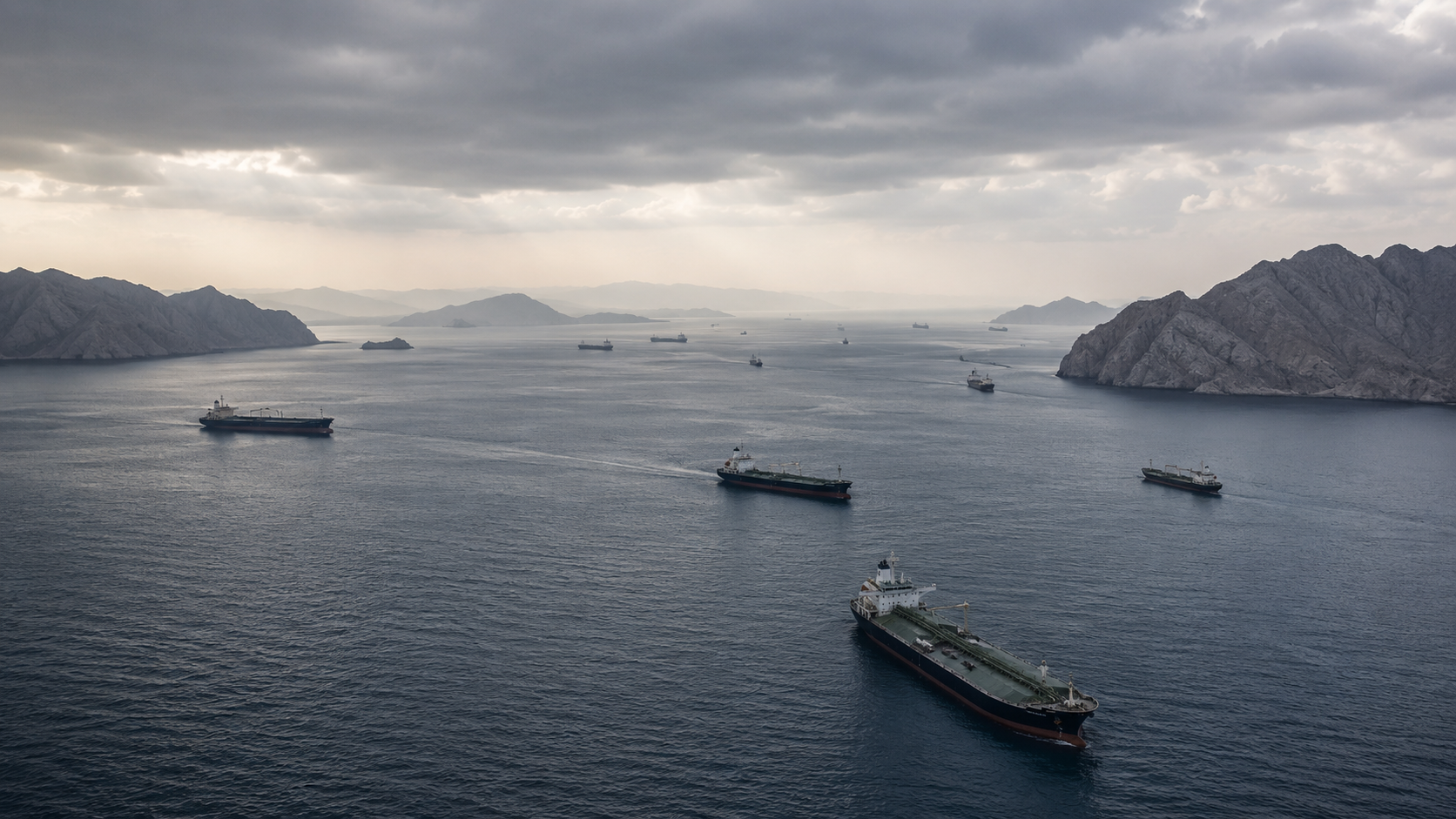
Hormuz shipping negotiations are nearing an Iran-Oman route pact, but Tehran has rejected direct US talks, leaving energy transit relief uncertain.
Oman route remains unfinished
Iran and Oman are close to an arrangement to establish a shipping route through the Strait of Hormuz, according to Iranian Foreign Minister Abbas Araghchi. A final agreement has not been reached, and the absence of settled transit rules keeps the waterway at the center of a wider confrontation over energy security.
Araghchi said the proposed pact with Oman was “very close,” while also closing the door on direct negotiations with Washington for now. Iranian state television cited him as saying, “As long as the American violation of the Memorandum of Understanding continues and the US does not make amends for its violations, there is no possibility of resuming negotiations.”
The memorandum he referenced was a short-lived interim peace agreement signed in June. Tehran says repeated US violations have made direct talks impossible, so messages are instead moving through intermediaries.
Trump waits on inflation pressure
President Trump has taken a patient public line, suggesting Washington can let Iran’s economic strain weigh on its negotiating position. In a Sunday phone interview, he said the US was “low-keying it” after weeks in which he had threatened major airstrikes and then pulled back to allow talks more time.
“We are only semi-negotiating with them,” Trump said. “We are just watching Iran with its huge inflation and the fact they have no money.” Iran’s central bank has reported recent year-on-year inflation of yüzde 77, a figure that gives Washington leverage but also raises the political cost for Tehran of appearing to yield.
Vice President JD Vance gave a more guarded account of the diplomatic track in a Saturday television interview. He said there had been some recent progress, but added that the test was whether Iran could “give the things that are necessary for us to be happy, for us to feel like we’ve gotten what we need out of this particular engagement.”
Strait risk reaches energy markets
The Strait of Hormuz is a narrow but central route for oil and gas shipments, carrying about one-fifth of global flows. That scale is why a partial or conditional reopening can matter beyond the Gulf: even small disruptions can affect tanker scheduling, insurance costs and buyers’ sense of supply risk.
Iran on Saturday renewed a broad list of demands for Washington as conditions for a full reopening of Hormuz. The move indicated that any immediate relief for oil and gas shipments may be limited, particularly if Tehran links maritime access to broader security and diplomatic concessions.
The regional backdrop remained unstable on Sunday. Houthi rebels claimed they had struck Saudi Aramco’s Jizan oil refinery, while Saudi authorities reported that a fire at the facility was quickly extinguished and that no injuries were recorded.
Conditional paths for Hormuz
If Iran and Oman complete a corridor agreement with enforceable transit rules, the immediate effect would be to lower operational uncertainty for shippers using Hormuz. For Saudi Aramco, fewer disruptions around Gulf infrastructure would reduce pressure on logistics and contingency planning; for the wider energy industry, the mechanism would be simpler routing, lower security friction and steadier cargo timing.
If talks instead stay indirect and Iran maintains its demands, the macro effect would run through risk pricing rather than lost supply alone. Global buyers could continue to treat Gulf shipments as exposed to political disruption, while Saudi Aramco and other regional operators face higher security burdens and tanker companies keep more conservative schedules.
The main open question is whether the Oman channel can separate shipping rules from the larger US-Iran dispute. If it cannot, Hormuz will remain both a commercial passage and a bargaining instrument, with energy markets watching not only for a signed pact but for evidence that ships can move under rules all sides accept.