Attacks on Delivery Robots Signal a Deeper Social Rift
Delivery robots are increasingly attacked on sidewalks, reflecting gig-worker anxiety and broader tensions over AI-driven automation.
Cuneyd Erdogan ·
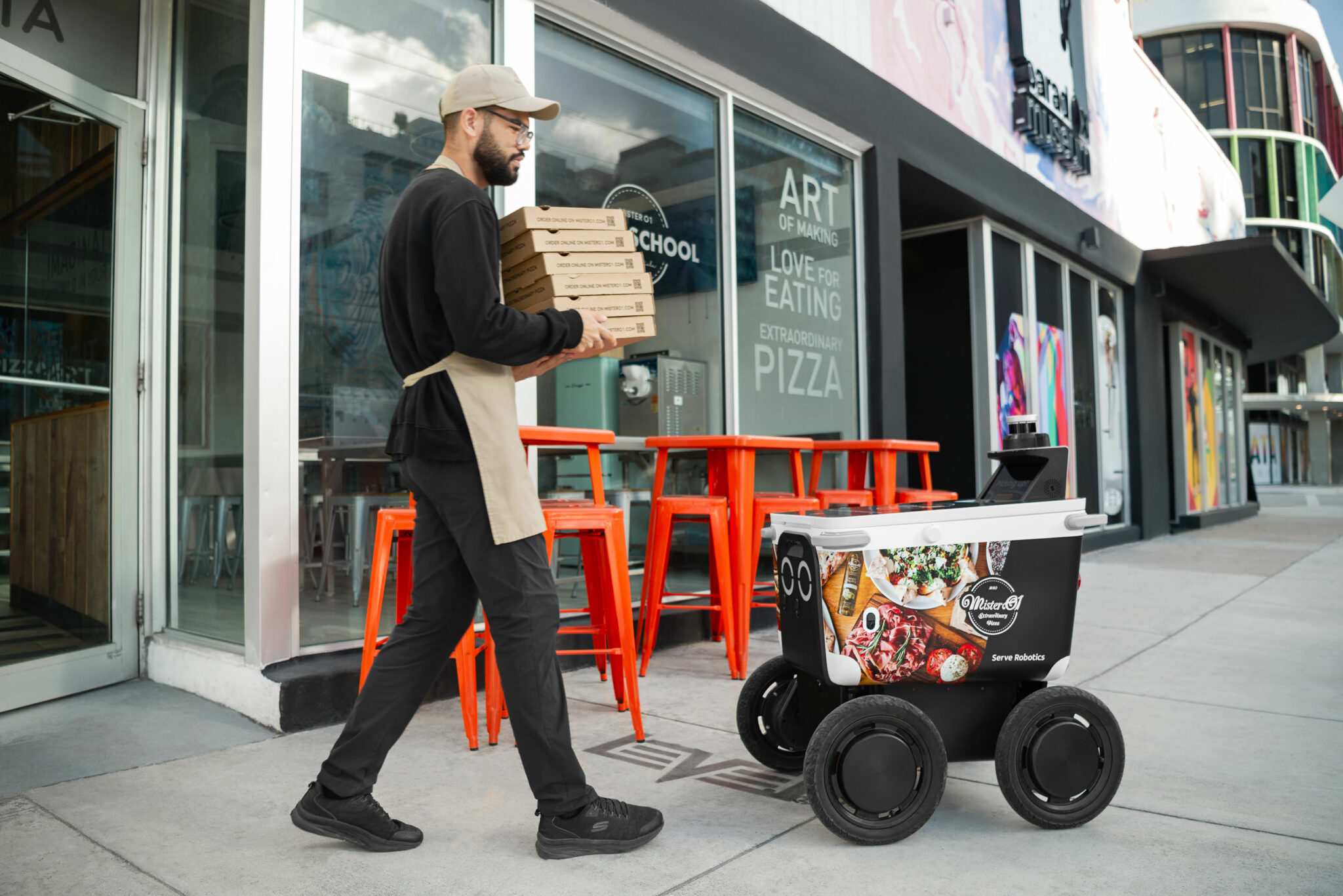
Autonomous delivery robots operating on city sidewalks are increasingly being targeted by members of the public, according to accounts describing incidents where the machines are tipped over, kicked, or destroyed. The robots are deployed by companies including Starship Technologies and Serve Robotics, and the confrontations are unfolding in everyday public spaces rather than in labs or online.
The episodes are often dismissed as random vandalism or attempts at social media attention, but the source material describes a more consistent—if uncoordinated—pattern of resistance.
The hostility is linked in the source to economic anxiety, particularly among gig-economy workers who view the robots as direct competition. For delivery drivers working through platforms such as Doordash or Uber Eats, the machines are portrayed not as a novelty but as a signal that the same technology that enabled app-based work can also be used to reduce the need for human couriers.
The source characterizes this as a shift in the public debate over artificial intelligence and automation, moving it from corporate and academic settings into the street-level reality of daily life.
The source draws a historical parallel to the Luddite movement in England, when textile workers destroyed mechanized equipment between 1811 and 1816 as wages fell and craft-based communities came under pressure. In that framing, the earlier backlash is presented not as simple fear of technology but as an attempt to influence how industrial change would be implemented and who would benefit.
The current conflict is described as emerging from structural conditions that include a large, precarious gig workforce that lacks protections such as minimum wage, benefits, or job security.
In the source’s stakeholder breakdown, the primary beneficiaries of delivery-robot deployment include technology firms such as Starship, Nuro, and Amazon through its Scout project, along with venture capital backers. Corporate customers—ranging from university campuses and large retailers to local restaurants—are described as potential winners because robots could reduce last-mile delivery costs by removing human labor from the equation.
Consumers could see faster or cheaper delivery, and the source notes that cities might experience less congestion and fewer emissions if robots replace delivery vehicles.
The most immediate downside, as presented, falls on human delivery drivers, with the source pointing to trials in cities including Los Angeles and San Francisco. It also frames the technology as a broader warning for logistics and transportation work, a sector employing millions. The power imbalance is described as stark: well-funded companies with lobbying capacity versus a fragmented, non-unionized contractor workforce with limited leverage.
On the macroeconomic side, the source cites analyses from Goldman Sachs and McKinsey that project wide exposure of jobs to AI-driven automation. It references estimates that up to two-thirds of current jobs are exposed to some degree of AI automation, and that generative AI could automate tasks accounting for up to 30% of hours worked across the US economy.
The source also flags uncertainty around how productivity gains will be distributed, noting recent decades in which productivity growth has not tracked wage growth, and it cites MIT economist Daron Acemoglu’s view that much of today’s AI emphasizes “labor-displacing” automation rather than “labor-augmenting” tools.