

ASEAN families face demographic shift as fertility falls below 2.1
Singapore-coordinated research covering 12,942 urban households found resilience indicators remain high despite later marriage and smaller households.
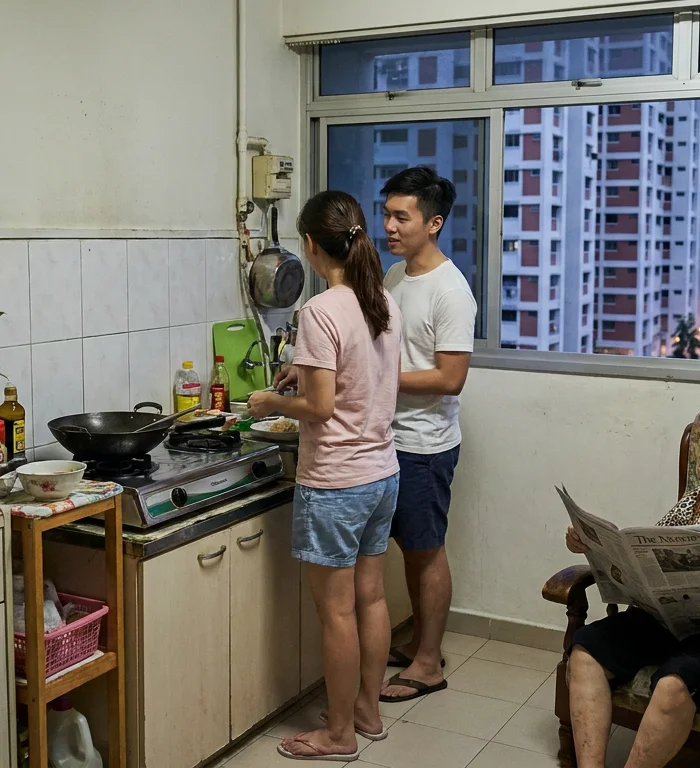
The inaugural State of ASEAN Families Report 2026, released on Tuesday, found fertility rates in most ASEAN states below the 2.1 births-per-woman replacement level as people marry later and households shrink.
The report, coordinated by Singapore’s Ministry of Social and Family Development with ASEAN Secretariat support, drew on national statistics from 10 member states and a survey of 12,942 households across 10 cities, giving policymakers regional evidence for family programmes.
The report said households generally recorded moderate to high family resilience and well-being despite the demographic shifts. “Respondents also reported broadly positive quality of life, while marital relationships were generally positive, with high levels of relationship satisfaction,” it said.
The median age at first marriage rose in most ASEAN member states with available figures. In Singapore, it increased to 29.6 years for women in 2025 from 28.2 years in 2015, and to 31.1 years for men from 30.3 years.
Vietnam recorded a larger change over the same period, with women’s median age at first marriage rising to 25.9 years from 22.8 years and men’s increasing to 30.1 years from 26.9 years, according to the report.
Most ASEAN states now have total fertility rates below the 2.1 births-per-woman replacement threshold, with only Cambodia, Indonesia and Laos at or above it. Singapore’s rate fell to 0.9 births per woman in 2025 from 1.2 in 2015, while the Philippines dropped to about 1.7 from about 2.9.
Households are also getting smaller in most countries covered. Singapore’s average household size declined to 3.1 people in 2025 from 3.4 in 2015, while Brunei fell to 5.1 people in 2021 from 5.8 in 2011. Indonesia was the exception cited, rising to 3.9 people per household in 2022 from 3.8 in 2014.
The report defined family resilience as the ability of a family to cope with adversity, recover and emerge stronger. It found 92.7% of respondents reported moderate to high resilience, 79.6% said their families were close-knit, and 89.1% of married respondents said they were happy in their marriage.
MSF said higher family resilience across ASEAN was associated with stronger family bonds, higher family well-being, better quality of life and higher marital quality. Respondents in nuclear and three-generation households reported higher average resilience scores than one-person households.
Singapore’s Minister for Social and Family Development Masagos Zulkifli launched the report at the Asian Family Conference 2026 in Singapore. “A collective evidence base can help us better understand these trends, learn from ASEAN’s diverse experiences, and design more effective policies and programmes for our own countries,” he said.
The survey is a snapshot of urban families across 10 ASEAN cities. Timor-Leste, admitted as ASEAN’s 11th member in October 2025, was not included because the research collaboration was endorsed before its admission.
The report is part of a three-year regional research collaboration running from 2025 to 2027, with the Singapore University of Social Sciences as lead research partner.
More stories
- Japan pursues Quad talks alongside outreach to Xi Jinping
- UN Talks on AI-Powered Autonomous Weapons Face Opposition from Major Military Powers
- Russian airspace incident adds pressure to Japan relations
- Iran targets Bahrain radar as US strikes back near Hormuz
- Indian authorities search for 1 sailor after Oman tanker attack
- Atiku aide backs crude-contract review for petrol subsidy
- COP31 negotiators face $250m loss-and-damage eligibility test
- Saudi tourism faces Houthi threat after 13 killed at airport
- Joburg Crisis Alliance seeks pledges from 270 councillors
- Zimbabwe court keeps mental-health abortion limits