

Joburg Crisis Alliance seeks pledges from 270 councillors
The coalition says it will monitor eight commitments and 10 first-year priorities after documenting water, power and governance failures.
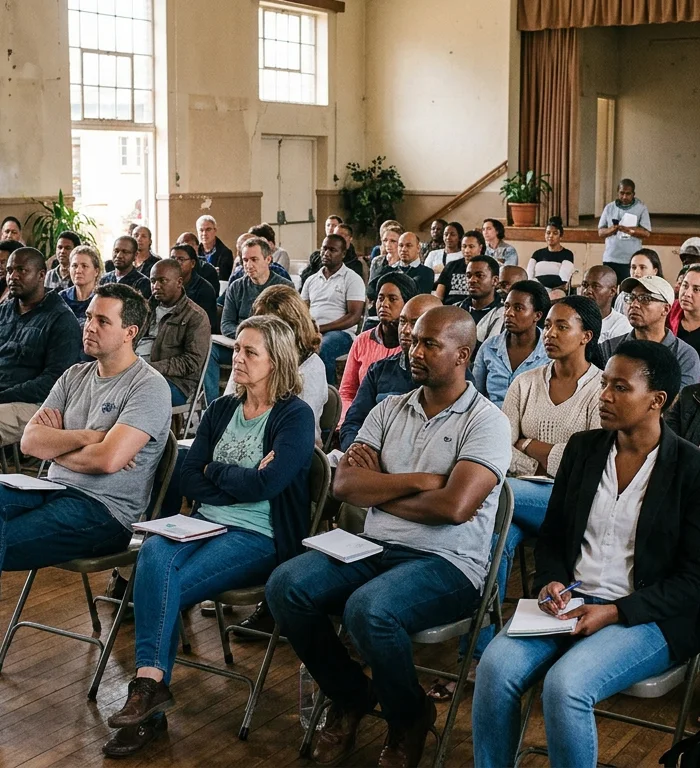
Joburg Crisis Alliance urged Johannesburg’s 270 councillors and election candidates to sign eight service and governance commitments at its 10th summit on Oct. 17, according to a GroundUp report published Oct. 20.
The campaign targets a city of 4.8 million residents that collected more than R81 billion in 2024/25 revenue while the Auditor-General found nearly R3.7 billion in irregular expenditure.
The JCA, a coalition of residents, activists and civic organisations, said more than 250 people attended the Parkview summit. It issued a Residents’ Call to Save Joburg after what GroundUp described as extensive community engagement.
“Johannesburg's residents struggle with unreliable water and electricity, deteriorating infrastructure, unsafe neighbourhoods, corruption and declining public services,” the JCA said at the summit.
The alliance said candidates should commit to capable government, ethical leadership, reliable water and electricity, safer public spaces, honest law enforcement, secure housing, and jobs and opportunities for young people and small businesses. It said it is non-partisan and is not endorsing a party or candidate.
Water was presented as one of the clearest pressure points. More than 50,500 leaks were reported between June 2025 and June 2026, mainly from old pipes, while estimated water losses reached R2.8 billion in 2024/25. Johannesburg Water said it needs more than R64 billion over 10 years for its turnaround plan.
Electricity losses were larger. Johannesburg reported more than R5.6 billion in electricity losses in 2024/25, while Eskom threatened in May to cut supply to parts of the city over a R5.2 billion debt owed by the City and City Power. GroundUp reported the debt has since been settled.
Other service failures cited at the summit included refuse disruptions at Pikitup, landfill pressure and deteriorating sewage infrastructure. The national regulator found half of Johannesburg’s sewage treatment plants in critical condition, and the city’s audit score fell from 91% in 2011 to 49% in the 2025 report.
The financial backdrop is also strained. The Auditor-General gave Johannesburg’s 2024/25 financial statements a qualified opinion, meaning the auditor found material problems in parts of the accounts. The Auditor-General also found almost R2.4 billion in unauthorised expenditure.
Finance Minister Enoch Godongwana warned the city in April that it could lose part of a national grant unless it improved its finances, citing creditor debt of more than R25 billion, according to the GroundUp report. R3.6 billion in funding was temporarily withheld until recovery commitments were made.
The JCA said national and provincial interventions have not shifted conditions in the city. President Cyril Ramaphosa created the Johannesburg Presidential Support Working Group in 2025, and Mayor Dada Morero established a related “Bomb Squad,” according to GroundUp.
The alliance said it will monitor 10 first-year priorities, including free basic water of at least 6,000 litres a month for every household, weekly refuse collection, Saturday library opening, cleaner municipal planning systems and stronger oversight of city-owned entities.
The summit also resolved to establish a Civic Watchdog to scrutinise budgets, procurement and spending. The JCA called for an independent “Madlanga-type commission,” civilian oversight of the Johannesburg Metropolitan Police Department and a sharper national law-enforcement focus on the city.
Political instability formed a second theme. Summit participants pointed to six Johannesburg administrations since 2021 and warned that unregulated coalitions and patronage could extend administrative disruption.
The JCA proposed coalition agreements tied to the city’s Integrated Development Plan, proportional allocation of mayoral committee portfolios by vote share, limits on political interference in administration, and restrictions on no-confidence motions unless criminality is shown.
More stories
- SyNCH links South Africa’s LEN clinics after 79,000 first doses
- Zimbabwe court keeps mental-health abortion limits
- KAYAK puts Rovaniemi Christmas hotel rates down 22%
- Malaysia TVET entrants rise 30% in high-skills push
- Thai police arrest 39 in Cambodia-linked laundering probe
- Fire in Limoges leaves heritage loss and service disruption
- Zelenskyy offers Ukraine refinery halt for Patriot missiles
- Brazil election rallies draw Lula supporters across Rio