

ASEAN disruptions test Marcos’s case for Manila’s 2026 role
The Philippine president framed summit inconvenience as a cost of regional influence while Washington watches Manila’s South China Sea agenda.
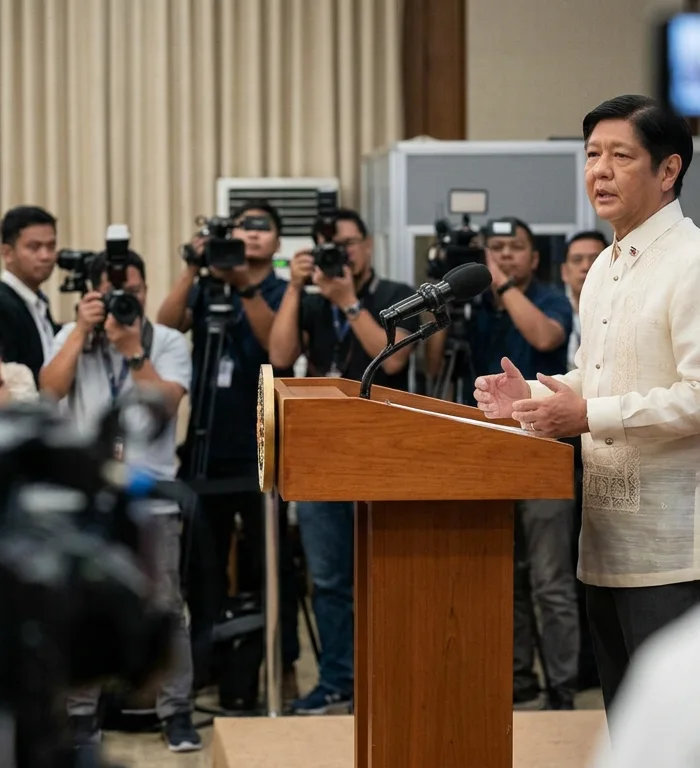
President Ferdinand Marcos Jr. asked Filipinos on Thursday to tolerate disruptions from the Philippines’ hosting of the 49th ASEAN Summit, using BBM Vlog 285 to argue the payoff would outweigh the inconvenience.
The appeal matters in Washington because it puts Marcos at the center of regional agenda-setting more than two decades into stalled ASEAN work on a South China Sea Code of Conduct.
Marcos said the gathering would produce policies benefiting the Philippines, according to the vlog account. His message was aimed at domestic patience for security, traffic and operating changes tied to the summit, but the chairmanship carries a larger diplomatic test.
The Philippines agreed to take the 2026 ASEAN chairmanship ahead of schedule after Myanmar was bypassed over its civil conflict. That gives Manila a platform inside a consensus-driven bloc that has often moved slowly on security disputes involving the South China Sea.
For the White House, State Department and Pentagon, Marcos’s chairmanship offers a regional track alongside the bilateral defense buildup already under way with Manila. Under Marcos, the Philippines expanded US access to military sites under the Enhanced Defense Cooperation Agreement and deepened cooperation with the US, Japan and Australia through the so-called Squad grouping.
ASEAN has struggled for years to complete a The hard part is institutional. ASEAN has struggled for years to complete a legally binding Code of Conduct for the South China Sea, while confrontations between Philippine vessels and the Chinese Coast Guard at Second Thomas Shoal have made maritime security a more urgent test of regional diplomacy.
If Manila uses the summit calendar to press for maritime domain awareness and Code of Conduct language tied to the 2016 arbitral award, Washington gains a broader diplomatic channel for deterrence. If ASEAN consensus trims the agenda to softer language, US policy will lean more heavily on bilateral treaty channels and smaller defense groupings.
For Marcos, the domestic risk is that visible disruption arrives before any diplomatic result. For the region, the test is whether the 49th summit turns Manila’s sharper South China Sea posture into ASEAN language that other members are willing to sign.
More stories
- Germans oppose Ukraine aid as poll shows support slipping
- Kim Jong-un receives 10 envoys after constitutional shift
- Ukraine claims Libya strike sinks Russian naval corvette
- COP31 climate talks collapse over fossil fuels and funds
- Russian military faces 1,087 recorded suicides in Ukraine war
- US faces China, Russia in Africa minerals contest
- Barcelona clashes follow housing march as Spain strikes
- Germans’ democracy satisfaction falls to one-third
- Arab-led parties win record 19 seats in Israel vote
- Burnham faces Brexit test over 55% EU return support
Latest news
- Trump prepares tariffs on China and other major exporters
- New-car buyers pay record average $50,087 in October
- Banks face ECB reserve debate over liquidity and profits
- Investors see Anthropic debut gains fade below $83 a share
- Iraq orders federal control over Kurdish-area oilfields
- Nvidia shares retreat as AI rally cools before PCE data
- Macy’s parade faces balloon limits as storm winds approach