

Arab-led parties win record 19 seats in Israel vote
The vote strengthens two Arab-led factions as Gadi Eisenkot weighs whether to rely on them in a bid to replace Benjamin Netanyahu.
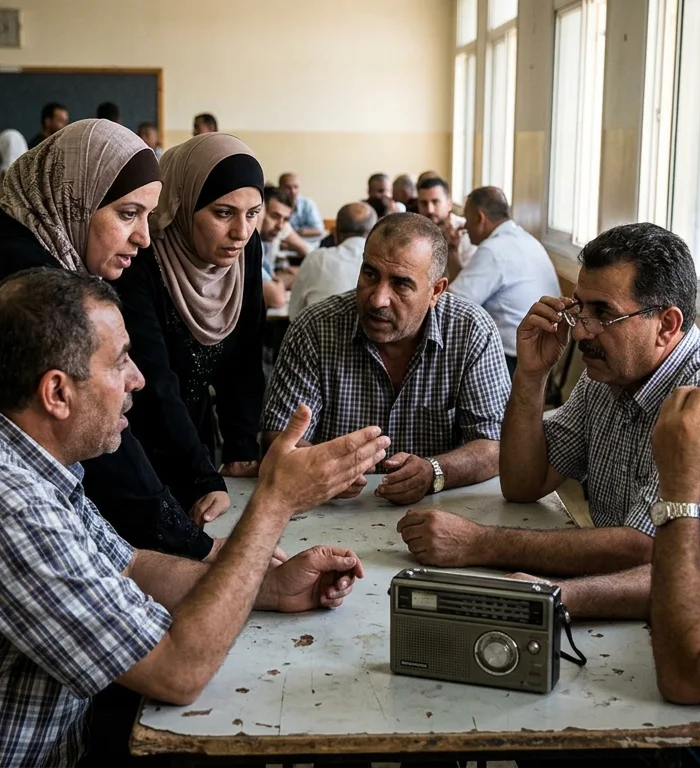
Arab-led parties won a record 19 of 120 Knesset seats after Tuesday's election, above the previous high of 15, an Associated Press report carried by WFAA on Oct. 30 said.
The result could give Ra’am and the Joint List leverage in coalition talks after more than 800,000 voters backed them, a rise of more than 60% from the 2022 election, according to Central Election Committee figures cited by AP.
Mansour Abbas, the leader of Ra’am, told supporters on Tuesday night: “We are here and we’re not on the sidelines.” AP said the performance could help opposition parties assemble a coalition to remove Prime Minister Benjamin Netanyahu.
The turnout reflected both political mobilization and anxiety inside Palestinian communities in Israel, according to voters, candidates and local officials quoted by AP. In Sakhnin, AP reported turnout of 87%, the highest in Israel. In Tarabin, a Bedouin village in the Negev where Netanyahu’s Likud had led in the previous two elections, turnout nearly doubled and Ra’am received 93% of the vote.
Mazen Ghnaim, the mayor of Sakhnin and a Ra’am supporter, linked the vote to fears over violent crime and anti-Arab attacks. “I want to protect my constituents from being killed, my children from being attacked at their universities and Arab doctors getting attacked at hospitals,” Ghnaim said.
Palestinian citizens of Israel and their descendants account for more than 20% of Israel’s population, AP reported. They hold Israeli citizenship and voting rights, while many also identify closely with Palestinians in Gaza and the West Bank. Large parts of the community have often abstained from national elections, citing alienation from the state and limited influence in government.
Ra’am and the Joint List both campaigned on crime and public investment in Arab communities, but AP said they presented different routes to influence. Ra’am emphasized participation in a governing coalition and placed a Jewish former police official second on its candidate slate. Joint List figures used sharper language on the wider conflict, with Sami Abou Shehadeh saying: “These are the choices: bad or worse.”
Netanyahu and his allies have alleged, without proof in the AP report, that foreign powers bribed voters to support Arab-led parties. In a Thursday post on X, Netanyahu warned against any party forming a government with them, saying it would lead to the “Islamization of Israel.” During the campaign, Netanyahu accused his main opponents of planning such a coalition, which Gadi Eisenkot denied.
The arithmetic remains politically difficult. Atlas360 reported on Oct. 29 that Likud was reported as the largest party with 27 seats and that Netanyahu’s bloc had 53 seats, short of a 61-seat Knesset majority, while final official results had not yet been published by the Central Elections Committee.
Only once has an Arab-led party served in an Israeli government. Ra’am joined a short-lived coalition in 2021, receiving commitments on investment in Arab communities and legal status for unrecognized Bedouin villages facing demolition, AP reported.
Eisenkot has set public conditions for cooperation, including that Arab-led parties describe Israel as a Jewish and democratic state and declare Hamas a terrorist organization “to be demolished,” according to AP. Leaders of both Arab-led factions have condemned Hamas’ Oct. 7, 2023, attack on Israel but have resisted that label, AP reported.
Yousef Jabareen, the Joint List’s leader, told AP on Wednesday he had not yet spoken with Eisenkot and that his bloc had not agreed on formal terms. “We have promised our community to do our best to get rid of this fascist government,” Jabareen said.
Source: Associated Press report carried by WFAA, Oct. 30, 2026
More stories
- Japan faces ASEAN doctrine test after Fukuda dies at 90
- Palm oil buyers face EU deforestation risk from Dec. 30
- Undocumented learners face South Africa matric barriers
- CIR places 25 Sudan commanders at reported sexual-violence sites
- Brent heads for fourth monthly gain as Middle East risk persists
- European coffin makers seek EU case with ranks down to 90
- Burnham faces Brexit test over 55% EU return support
- Swedish agency opened 50 cases tied to Microsoft datacentres
- SpaceX explores Tesla merger as Musk backs company talks
- EU lawmakers back Muslim Brotherhood resolution by 381 votes