Analysis : Inside Manchester City's £830mn 'disguised funding scheme'
A redacted 40-page ruling sets out how the club's Abu Dhabi owner secretly topped up sponsorship deals for nine seasons, how executives hid wages off the…
Ved ·
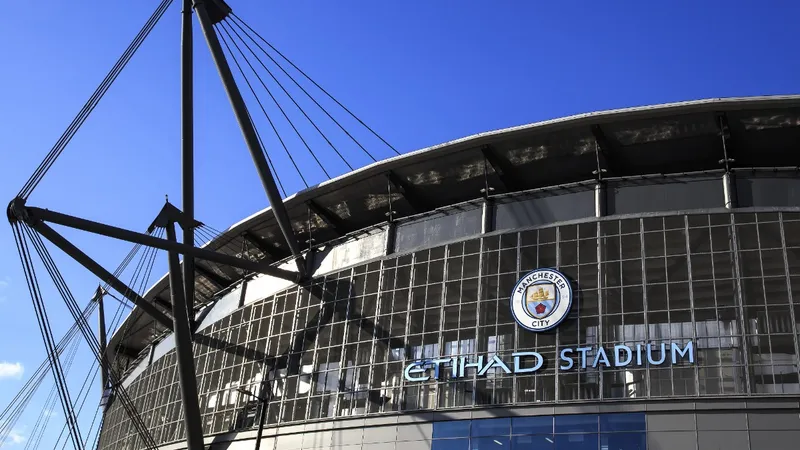
On 25 May 2013, with less than a week left in its financial year, Manchester City discovered a hole in its accounts. An unbudgeted liability of about £20mn had just landed, and someone at the club calculated that it would leave City £9.9mn short of the break-even test UEFA had begun to enforce. The independent commission that has now ruled on the club's conduct redacts the cause; Der Spiegel reported in 2018 that the shortfall followed the dismissal of the manager, Roberto Mancini, earlier that month.
What happened next took only days. Without the sponsors even being approached, according to the commission, a set of amended Abu Dhabi sponsorship agreements was generated. They recorded higher fees, bonuses for events that had already taken place, and payment for a tour of the US. The shortfall, in the commission's word, was "plugged".
That episode is a small part of a ruling, published in redacted form on 29 September 2026, that amounts to the most damaging verdict ever delivered against an English football club. The three-member commission found that for nine seasons, from 2009-10 to 2017-18, City dressed up money from its owner, Abu Dhabi United Group (ADUG), as commercial income from Abu Dhabi sponsors. Of £949.9mn the club booked as sponsorship from those companies, only £119.3mn was paid by the sponsors themselves. The remaining £830.7mn, or 87 per cent, came from ADUG.
Further side arrangements moved £66.2mn of wages and other costs off City's books and booked another £24.5mn of owner money as image-rights income, taking the total distortion to roughly £921mn. The commission concluded the conduct was intentional, that City "clearly intended to circumvent" the league's rules, that several of the club's own witnesses gave evidence they knew to be untrue, and that City then made "concerted efforts to stop and frustrate" the investigation.
The stakes are hard to overstate. In the seasons covered, City won three Premier League titles, an FA Cup and three League Cups. No sanction has yet been imposed. City, which says it is innocent and calls the ruling an "opinion" containing material errors of law, principle and fact, lodged an appeal on 1 October. The Premier League's chief executive, Richard Masters, called it the most significant case in the competition's history.
This account is drawn from the core decision itself, published court judgments and reporting by the Guardian, the Associated Press, Sky Sports, ESPN, the BBC and others. The decision's 37 appendices, where most of the detailed evidence sits, have not been made public.
The commission is not, as City's statements describe it, a "Premier League commission". It was drawn from an independent judicial panel under Section W of the league's rules, a point Sky Sports has corrected in its coverage.
Anatomy of a scheme
The Disguised Funding Scheme was born of two anxieties, according to the commission. By the end of 2009 City's commercial revenue was falling short of budget, and executives feared that losses for 2009-10 would exceed the £140mn record set by Chelsea in 2006, a record the club "was adamant it should not break". Over the longer term they feared the club could not meet the break-even rules UEFA was preparing, under which an owner's equity counts for nothing but sponsorship counts in full. Owner money could keep City solvent; only commercial income could make it compliant.
The answer, devised in early 2010, was to make one look like the other. City would sign contracts with Abu Dhabi companies at fees "well above" fair market value. The sponsor would be liable for only a fraction, the Base Sum. ADUG would pay the rest, the Tagged Sum. City would then book the entire fee as commercial revenue and conceal where the balance came from, from regulators and, the commission found, from its own auditors.
The first deals, some backdated to earlier in the season, were signed at the very end of 2009-10, and the commission found that they alone kept City from claiming the loss record. Thereafter the scheme scaled with the regulatory pressure. The owner's share of recorded Abu Dhabi sponsorship was 83 per cent in 2009-10 and 92 per cent by 2017-18, while the sponsors' genuine contribution held at £16mn a year and then fell to £11mn.
The club "tweaked" the arrangement over the years, the commission said, chiefly to keep it hidden and to reduce the chance of awkward questions from regulators and auditors. Two Abu Dhabi agreements were accepted by the league as genuine, arm's-length and at fair value. Every other one was part of the scheme. The sponsors are redacted in the published ruling. Etihad Airways, City's principal partner, says it is not named and is weighing legal action against the league over what it calls damaging implications .
Wages off the books
If the sponsorship scheme inflated City's income, a second family of devices shrank its costs. In each case, the commission found, a liability that belonged to the club was met by ADUG through a side agreement that appeared neither in City's books nor in the relevant employment contract. All were found to be shams or, in the alternative, arrangements whose substance differed from their form.
The manager is not named in the published ruling, but the arrangement's four-season span matches the league's 2023 charge concerning managerial pay between 2009-10 and 2012-13, when Roberto Mancini was manager. Der Spiegel reported in 2018 that Mancini held a parallel consultancy with Al Jazira, another Abu Dhabi club owned by Sheikh Mansour. The commission's findings are against the club; it makes no finding against any individual coach or player, and Mancini has always said his arrangements were above board.
Fordham grew out of Project Longbow, launched in the third quarter of 2012 to help City meet UEFA's new break-even test. Here the commission is notably fair to the club: it accepts that most strands of Longbow were genuine attempts to raise revenue and cut losses. Fordham was the exception, a closed circle in which owner money went out to a third party, came back labelled as commercial income, and quietly took over the club's wage obligations on the way.
Set side by side, the devices show where the weight of the case lies. The cost-side arrangements are individually small, but they matter for what they reveal: the same method, applied to wages, by people the commission says knew exactly what they were doing. It identifies, in redacted appendices, the individuals who knew the realities of each arrangement and approved its operation.
'Concocted well after the event'
The commission's sharpest language is reserved not for the accounting but for City's defence of it. It accepted that most of the 27 factual witnesses it heard were honest. But it found that evidence from "a number of important factual witnesses" called by the club was false in key respects, and that some of them gave evidence "they knew to be untrue and so had been dishonest". Findings of deliberate dishonesty against a party's own witnesses are rare in English disciplinary proceedings, and this one colours the rest of the ruling.
The centrepiece of City's case was what the decision calls the "CPC Explanation". The club accepted, in effect, that the Abu Dhabi sponsors had not paid the full fees from their own resources. The difference, it said, came not from ADUG but from the Abu Dhabi government, which had granted sponsors financial assistance through a body the decision abbreviates as the CPC, after formal applications. On that account the top-ups were state support to independent companies, not owner equity routed through them.
The commission rejected the explanation as untrue and as something "concocted well after the event". Its reasons rest on three points. City had never offered the explanation when regulators and others questioned the deals over the years. The documents said to record government commitments were, the commission found, generated by or on the instruction of a redacted party to reassure sponsors that they would never pay more than the base fee, and to hide the arrangement from regulators and auditors "should the need arise". And the account sits awkwardly with City's earlier positions: Sky Sports reports that at the Court of Arbitration for Sport in 2020 City's case was that Etihad paid from its own funds, and that Etihad told the US government in 2015 that any suggestion the Abu Dhabi government paid for its City sponsorship was false.
The commission was equally deliberate about what it would not decide. The Premier League had called expert evidence on Abu Dhabi's "two-tier" system of governance to explain how City could induce state-linked companies to take part. The commission declined to rule on it. It did not matter, it said, how or why sponsors had been persuaded, only whether they had been, and it was satisfied they had. The effect is to keep the ruling on documentary ground and away from findings about a foreign state that would be harder to defend on appeal.
Two further conclusions undercut the club's account of persecution. The commission rejected, in full, City's criticisms of how the league investigated and prosecuted the case. And it found no direct evidence that one senior figure, whose name is redacted, knew of or authorised the scheme, concluding that it ran without that person's knowledge.
'Stop and frustrate'
The Premier League's investigation began in December 2018, a month after Der Spiegel published the Football Leaks emails. It took more than four years to reach a charge, and the commission's finding on Charge 4 helps explain why: City, it concluded, made "concerted efforts to stop and frustrate" the inquiry. It upheld most of Charge 4(A), all of 4(C) and 4(D), and dismissed 4(B). The conduct behind each sub-charge is described in appendices that remain unpublished.
Part of the resistance is already on the public record. In October 2019 the league began an arbitration to compel City to hand over documents it had demanded under its investigatory powers. City challenged that arbitration in the Commercial Court and lost in March 2021, then tried to keep the judgment secret and lost again in the Court of Appeal that July. It was a familiar pattern. In 2020 CAS, while lifting UEFAs European ban, still fined City €10mn for obstructing UEFAs investigators.
One line in the decision is easy to miss. In its statement of charges the league reserved the right to argue that, if the schemes were proven, City's answers to its questions were themselves "additional and perhaps more egregious" non-co-operation through inaccurate or dishonest statements. The league never amended its charges to plead that, and the commission therefore said nothing more. City has been found to have obstructed the investigation and to have relied on dishonest evidence at the hearing. It has not been found to have lied to the league during the inquiry.
The finding matters for what comes next. Earlier PSR commissions, in the Everton and Nottingham Forest cases of 2023-24, treated a club's candour and co-operation as relevant to the size of its penalty. A club that concealed a breach and then frustrated the inquiry into it should expect that to weigh against it when sanction is decided.
Within touching distance
Regulators came close to the scheme twice before the Premier League reached it. The first time was in 2013-14, when UEFA's investigators disputed City's claim to have broken even in 2012 and 2013. According to the decision, City's figures counted the full recorded sponsorship fees as commercial revenue, with no part treated as owner equity. The investigatory chamber disagreed, but the question was never adjudicated. City and UEFA signed a settlement in May 2014, and the scheme continued for four more seasons.
The second was after the leaks. In February 2020 UEFA banned City from European competition for two seasons and fined it €30mn. In July 2020 CAS lifted the ban, finding most allegations either not established on the evidence before it or time-barred under UEFA's five-year limitation rule, while fining City €10mn for obstruction. City called the outcome a validation. It was, more precisely, a failure of proof within a limitation window.
The Premier League had three advantages UEFA lacked: no time bar, compulsory document powers enforced through the English courts, and years to use them. The scale of what followed is recorded in the decision: a 500-page statement of charges and facts, a 200-page defence, millions of documents searched, 27 factual witnesses, expert evidence on Abu Dhabi governance, accounting standards, valuation, sponsorship and Swiss law, a 42-day hearing and about 7,000 pages of transcript. The ruling then took 21 months to write, a delay the commission called regrettable.
The reckoning
No punishment has been set, and the order of events matters. The Guardian reports that the same commission will decide sanction only after a newly convened panel has heard City's appeal against liability. On current reporting, the sequence runs as follows.
- Appeal. A fresh three-person Appeal Board, one of whom must have held judicial office, hears the case in a single block of no more than five days, within 12 weeks of filing. With 30 days allowed for judgment, Sky Sports puts a decision in the third week of January 2027.
- A fight over the clock. That accelerated procedure only entered the rulebook for 2026-27. Sky reports City may argue it cannot apply to a case charged in 2023 and heard in 2024, which could push the appeal deeper into 2027.
- Sanction. The commission's powers run from a reprimand and fine through suspension and points deductions to expulsion. No club has been expelled from the Premier League; an expelled club would have to apply to the English Football League, whose rules contemplate placing it in League Two.
- The courts. Sky has reported that City could go to the High Court if it considers the process unfair, the route it took, without success, against the league's document demands in 2020-21.
There is little precedent for scale. The heaviest points penalty in Premier League history is Everton's 10-point deduction in 2023 for a single breach of the three-year PSR limit, cut to six on appeal. Executives at several rival clubs have told the Guardian that a deduction relegating City for one season would be insufficient, and they want the matter settled this season.
The financial exposure may outlast any points penalty. In 2026 Everton was ordered to pay Burnley more than £35mn after a commission accepted that Burnley would have survived in 2021-22 had Everton been sanctioned in time. The BBC has reported that several clubs sought advice on compensation before the verdict. Any club that finished behind City in a title race, a Champions League qualification battle or a relegation fight between 2009 and 2018 has a theoretical claim.
Outside football's own machinery, pressure is building. David Kogan, chair of the Independent Football Regulator, said the decision "raises serious issues" and that the regulator would use its powers to assess the suitability of owners, directors and executives where there was clear evidence of individual wrongdoing. Dame Meg Hillier, chair of the Commons Treasury Committee, has asked HMRC whether it holds an unredacted copy of the ruling, with a reply due by 15 October. Lord Cruddas, a Conservative peer, told the BBC that misleading auditors could be a criminal matter, though there are no reports of any criminal investigation. Etihad, City's principal sponsor, says it is not named in the redacted ruling and is considering legal action against the league.
What it means
Financial fair play rests on one distinction: money a club earns counts towards what it may spend; money its owner simply gives it does not. The commission's central finding is that City erased that line for nine seasons by passing owner equity through companies in the owner's own political orbit and calling it sponsorship. Every other element of the case, from the hidden wages to the obstruction, follows from that single act of relabelling.
That makes the ruling a test case for state-linked ownership, even though the commission took pains to say nothing about the Abu Dhabi state. Abu Dhabi's purchase of City has long been read as part of a Gulf soft-power strategy, a reading AP notes is now exposed to a finding of systematic rule-breaking. The mechanism found here, inflated deals with related companies quietly topped up from the centre, is precisely the risk the league's Associated Party Transaction rules were written to police after Saudi Arabia's Public Investment Fund bought Newcastle United in 2021. City challenged those rules in 2024 and 2025 before accepting in September 2025 that they were valid and binding. The ruling explains, with hindsight, why the league fought so hard to keep them.
The audit dimension is less discussed but may prove as consequential. The decision records that regulators and even City's auditors remained unaware of the scheme for years. Accounts certified as true and fair were, on the commission's findings, nothing of the sort, and the Independent Football Regulator now holds an owners-and-directors test that the Premier League never fully possessed.
The ruling also has limits that a careful reader should keep in view. It applies a civil standard, demanding "strong, cogent evidence" for serious allegations, not the criminal one. Its findings bind the club, not individuals. The published text is heavily redacted, its closing page entirely blacked out, and the evidence on which it rests sits in appendices no one outside the case has seen. And it is under appeal. Its conclusions are authoritative, but they are not yet final.
The deepest lesson may concern time. A scheme the commission dates to early 2010 produced a liability finding in late 2026 and a sanction that may land in 2027 or later. The manager who won most of the trophies has gone, as have many of the players and several executives, while the silverware remains in the cabinet. The league's accelerated appeal timetable, and the statutory regulator now standing behind it, are attempts to close that gap. Whether they work is the real test this case sets for English football's money rules.
City's response
Manchester City denies all wrongdoing. In a statement on the day of publication, the club said it was "disappointed and surprised" by what it called the opinion of the commission, that it was innocent, and that "a comprehensive body of irrefutable evidence" supported its positions. It said it would pursue its appeal on the basis that the ruling "contains clear material errors, of law, principle and fact, and is unsafe", and that it had respected due process for eight years on the understanding that the league would act as an impartial, fair-minded regulator.
In an internal video to staff and players obtained by Sky Sports News, chief executive Ferran Soriano said the case rested on "a single false accusation" that the owner's money had been secretly put into the club via Abu Dhabi sponsors, and that bank statements, transfers and witnesses demonstrated otherwise. Chairman Khaldoon Al Mubarak said after the verdict leaked that the club's confidence in proving its innocence was as strong as at the start, a statement ESPN noted came after the commission had rejected that evidence.
City's likely grounds of appeal can be inferred from the ruling. They include the rejection of the CPC explanation, the commission's decision to read the charges together rather than in isolation, reliance on hacked material, the 21-month delay in producing the decision, and the question of whether the league's new fast-track appeal rules apply. The club will find the commission's layered reasoning hard to dislodge. It held in the alternative that, even if the sponsorship contracts were not shams, their substance was owner equity; and that, even if they were genuine, as related-party deals they had to be marked down to fair market value. On every route, City fails both UEFA's and the Premier League's spending tests.