

Alberta Legislature Advances Controversial Electoral Boundary Redesign
Alberta’s government is moving to adopt a new electoral map that favors rural representation and preserves the UCP majority, triggering legal threats and…
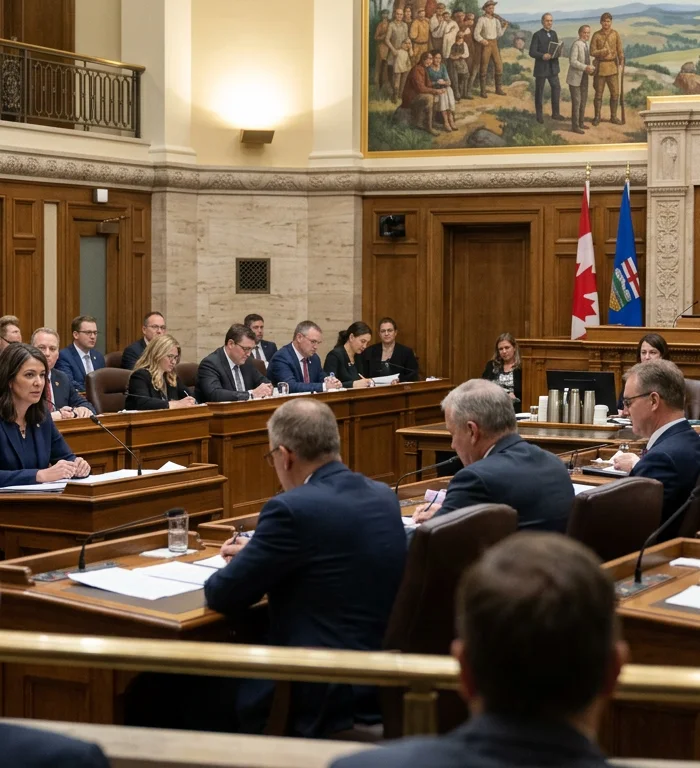
The Alberta government has initiated the legislative process to adopt a redrawn electoral map, following a unanimous vote by the governing United Conservative Party (UCP) to move the proposal toward law. The Alberta New Democratic Party (NDP) opposed the motion, citing concerns regarding the integrity of the redistricting process. The new map introduces four additional seats and modifies boundaries in Calgary and Lethbridge, areas identified as critical battlegrounds for the upcoming provincial election.
Premier Danielle Smith ordered a redraw of the electoral boundaries in April, citing a necessity to protect rural representation against rapid population growth in urban centers. Critics, including the NDP, have alleged that the process constitutes gerrymandering, noting that the final map deviates from established independent procedures. The minority members of the boundary commission warned that the changes are constitutionally vulnerable and may invite judicial intervention.
Analysis of the 2023 provincial election results suggests that the new map would likely preserve the UCP’s current 11-seat majority. However, the redistricting increases population disparities between electoral divisions. Under the proposed model, rural ridings will have populations approximately 11% below the provincial average, while ridings in Calgary and Edmonton will be roughly 6% above the average. This shift effectively increases the relative voting power of rural constituents at the expense of urban centers.
The provincial elections agency has cautioned that the timeline for implementing these changes is insufficient, even in the absence of the threatened legal challenges. The NDP has signaled its intent to contest the map in court, arguing that the redistricting process has compromised democratic norms. As the legislative process continues, the primary risks for institutional stability include potential judicial invalidation of the map and increased polarization regarding the legitimacy of the electoral framework ahead of the next provincial vote.
More stories
- Germans oppose Ukraine aid as poll shows support slipping
- Kim Jong-un receives 10 envoys after constitutional shift
- Ukraine claims Libya strike sinks Russian naval corvette
- COP31 climate talks collapse over fossil fuels and funds
- Russian military faces 1,087 recorded suicides in Ukraine war
- US faces China, Russia in Africa minerals contest
- Arctic route saves South Korean ships at least 10 days to Europe
- Tinubu seeks $7.7bn external loan for Nigeria deficit
- Planned North Africa hydrogen plants may draw 170 litres per kilogram
- Ethiopia faces governance warning after 10.4-point rights drop
Latest news
- Trump prepares tariffs on China and other major exporters
- New-car buyers pay record average $50,087 in October
- Banks face ECB reserve debate over liquidity and profits
- Investors see Anthropic debut gains fade below $83 a share
- Iraq orders federal control over Kurdish-area oilfields
- Nvidia shares retreat as AI rally cools before PCE data
- Macy’s parade faces balloon limits as storm winds approach