AfD victory tests Merz after Saxony-Anhalt state shock
AfD’s 43.8% win in Saxony-Anhalt pressures Chancellor Friedrich Merz, the CDU and Germany’s refusal to govern with the far right.
Claire Dubois ·
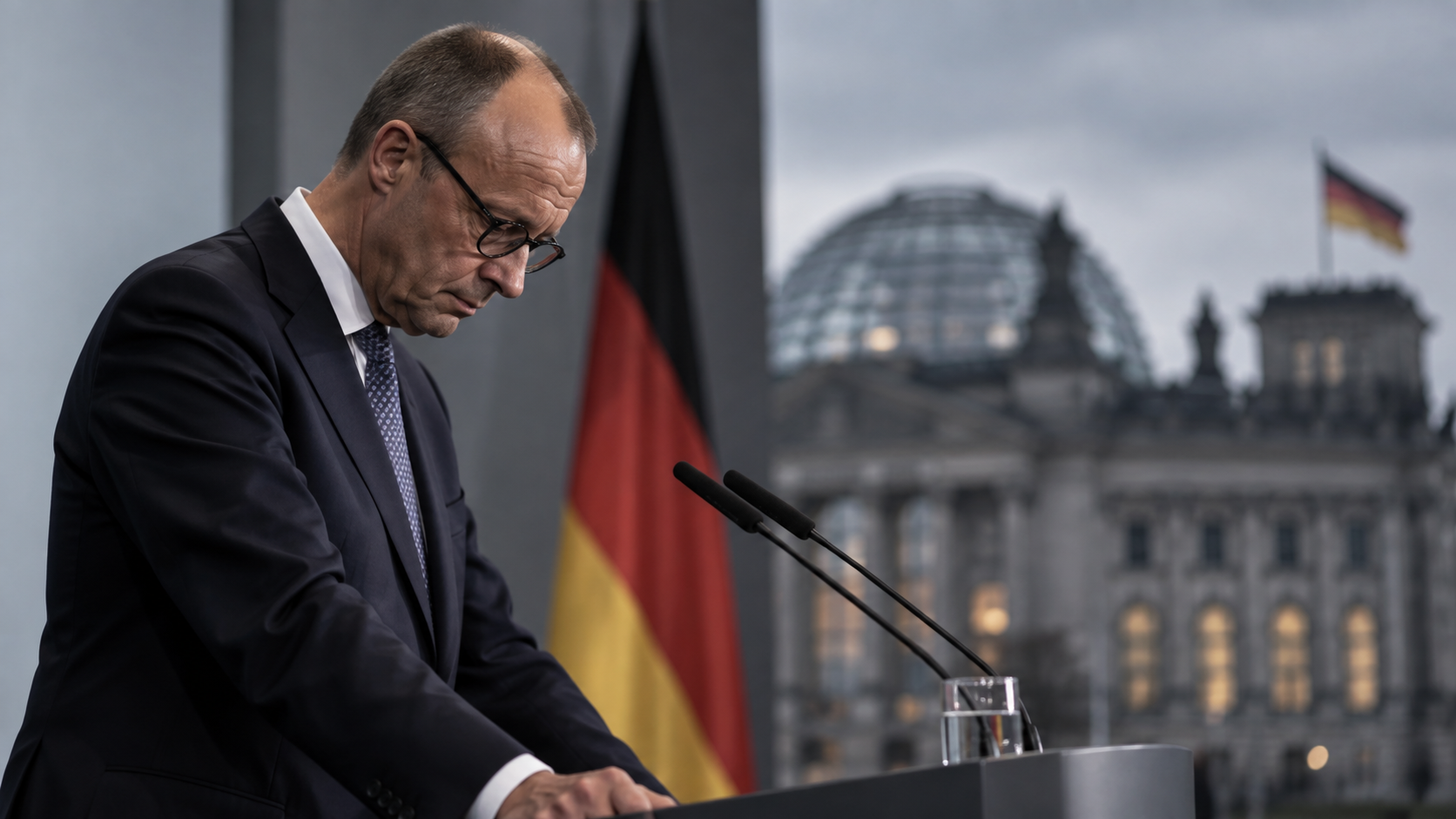
AfD victory in Saxony-Anhalt gave the party 43.8%, leaving Chancellor Friedrich Merz to defend the CDU and Germany’s party firewall.
The Alternative for Germany fell short of a seat majority in Sunday’s eastern state election, but its vote share was the strongest result since the party was founded. Merz’s Christian Democratic Union dropped to 17.2%, a score that more than halved its standing and missed even weak pre-election expectations.
Merz addressed the result Monday with a mix of concession and resistance. "This is the worst defeat the CDU has experienced in years, even decades," he said, adding that the outcome would have consequences.
Merz holds his line
The chancellor did not signal a retreat from two policies that have defined his government’s current course. He said he would continue pursuing measures meant to revive Germany’s struggling economy and maintain support for Ukraine.
That stance draws a clear contrast with the AfD, which has criticized German backing for Kyiv and favors closer relations with Moscow. "Giving up is no option," Merz said.
The result leaves Merz managing pressure on two fronts: a regional defeat that exposed CDU weakness in the east and national polls that have narrowed his room for maneuver. The immediate political question is whether the CDU can keep the long-standing refusal by establishment parties to cooperate with the far right.
Saxony-Anhalt arithmetic narrows options
AfD leaders said Monday they would seek backing from other parties and individual lawmakers for an AfD-led state government. No party had accepted that approach, and negotiations may take weeks under the state’s parliamentary rules.
Until a new administration is sworn in, the departing CDU state premier remains in office in a caretaker role. That gives the CDU time, but not control over the final arithmetic.
A small far-left group has suggested it might give passive support to an AfD state premier, a path that would test the state constitution’s voting rules. Under those rules, a premier can be elected by a plurality if three consecutive attempts to secure a majority fail.
Tino Chrupalla, the AfD’s national co-chairman, appeared to reject reliance on that route Monday. "We need a stable majority," he said.
Firewall vote tests Berlin
The Saxony-Anhalt result matters beyond a single state because Germany is Europe’s largest economy and a central supporter of Ukraine. A prolonged stalemate would add another source of political instability in Europe after years in which governments in the U.K. and France have faced repeated domestic strains.
For Merz, the narrowest path is to preserve the firewall while showing that his economic package can deliver visible results. If that holds, the CDU can argue that Sunday’s vote was a state-level warning rather than a governing collapse.
If the AfD cannot assemble a majority or passive support, Saxony-Anhalt stays under caretaker CDU administration until lawmakers find another formula. That would preserve continuity for Berlin’s macro and Ukraine policies, keep Merz’s government intact, and leave Germany’s party system strained but formally unchanged.
If the AfD secures enough support to lead its first state government, the mechanism changes. Berlin would face a stronger regional challenge to Ukraine policy, the CDU would confront pressure over whether isolation still works, and other parties would reassess how far the German firewall can stretch before it breaks.
The open question is whether other parties hold their refusal to cooperate once coalition arithmetic hardens. The answer will decide whether Sunday’s 43.8% becomes a governing mandate in Saxony-Anhalt or a warning that remains outside executive power.