Red Sea shipping blockade threat pushes Brent above $100
Red Sea shipping faces new Houthi threats, pushing Brent above $100 and raising risks for Saudi exports, regional security and global trade.
Sofia Reyes ·
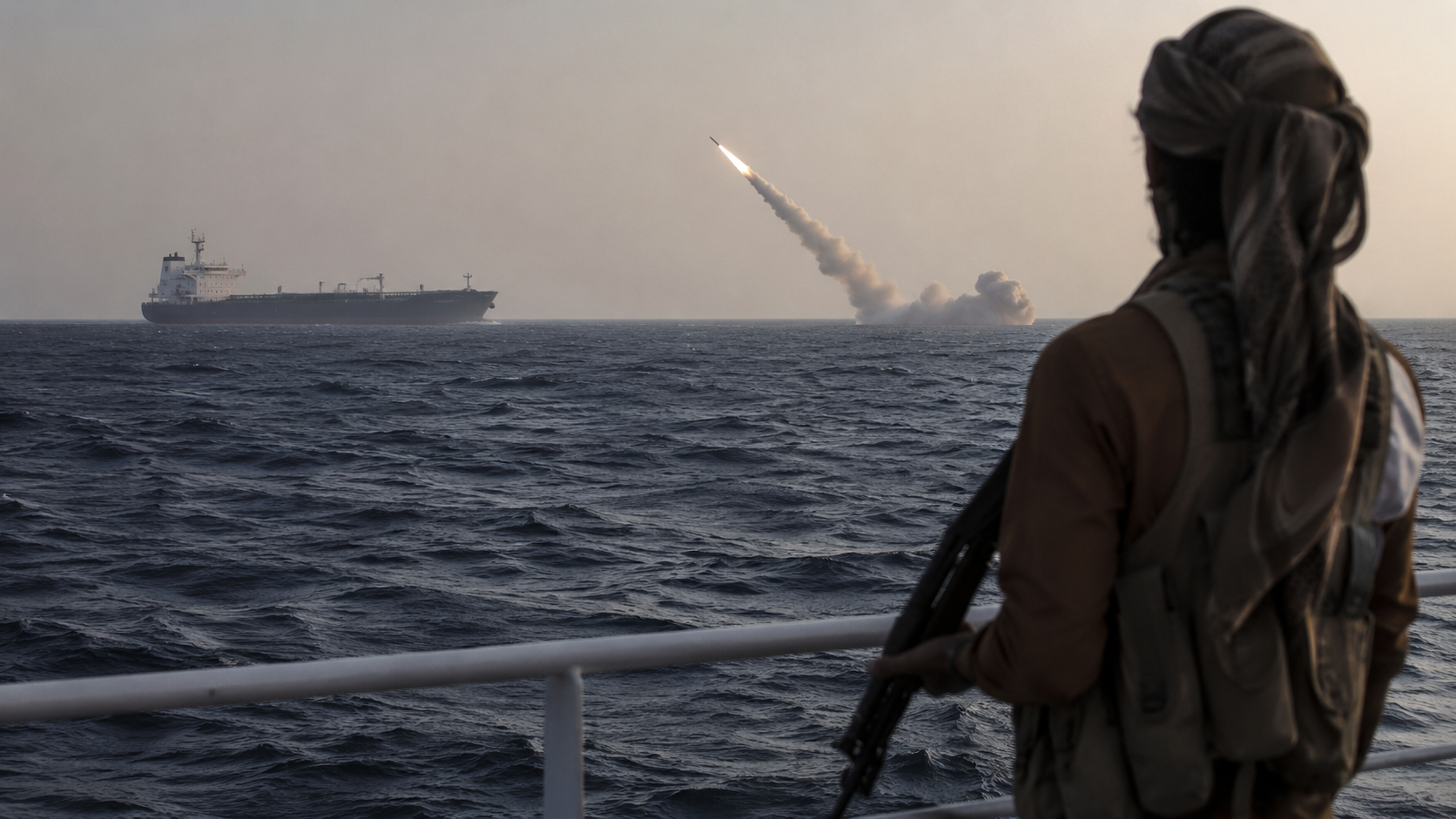
Red Sea shipping faces new Houthi threats, pushing Brent above $100 and raising risks for Saudi exports, regional security and global trade.
Yemen’s Iran-backed Houthis have threatened Saudi oil shipments through the Red Sea and fired on two vessels, opening another pressure point in the Middle East conflict. Their move targets Bab al-Mandeb, the narrow passage linking the Red Sea with the Gulf of Aden and the Indian Ocean.
The strait matters because it sits on a route used by energy cargoes and container traffic moving between Asia, Europe and the Middle East. If shipowners decide the passage is too risky, a formal closure is not required for trade to slow.
Bab al-Mandeb becomes pressure point
The Houthis had stayed largely on the margins while Iran faced U.S. and Israeli attacks, according to analysts cited in the account. They are now testing whether maritime disruption can raise the cost of pressure on their ports and on Tehran.
The escalation followed an alleged Saudi bombing of the international airport in San’a last week, which the account described as a trigger for deeper Houthi involvement. The group’s threats could pull in Saudi Arabia, Israel and Pakistan if attacks broaden or if military responses intensify.
Adam Baron, a fellow at New America who focuses on Yemen and the Persian Gulf, described the Houthis as a major lever for Iran despite their lack of a conventional navy. “With the escalation, the Houthis constitute a nuclear option for Iran,” Baron said. “They are a nonnaval power that can execute a maritime blockade and hold the global economy hostage. They did this before and are aware they have this leverage.”
Brent above $100
Some ships carrying Saudi crude were reportedly still passing through Bab al-Mandeb, but oil markets reacted to the risk rather than the verified scale of disruption. Brent crude, the international benchmark, closed above $100 a barrel on Thursday for the first time in two months, according to the account.
The shipping dilemma is practical as much as military. Vessels avoiding the southern Red Sea could head north through the Suez Canal, but cargoes bound for Asia, where Saudi Arabia sells most of its oil, would then face the far longer option of sailing around Africa.
Michael Ratney, who served as U.S. ambassador to Saudi Arabia during the Biden administration, said the commercial response can create the same effect as a blockade. “You don’t need an actual missile or drone to stop commercial traffic. If the shipping companies don’t want to go through, you effectively have a blockade,” Ratney said.
Saudi routes face choices
President Trump has threatened strikes against the Houthis and Iran if further Red Sea attacks occur, while Saudi Arabia has rejected the group’s threats. Those responses raise the risk that a maritime confrontation becomes part of a wider regional exchange rather than a contained shipping dispute.
For the global economy, the mechanism is straightforward: higher insurance costs, longer voyages and delayed cargoes can feed into energy prices and freight rates. For Saudi Arabia, the immediate concern is whether crude flows to Asian buyers remain reliable without forcing costly rerouting.
Three paths now matter. If ships keep transiting and attacks stay limited, the macro effect may remain concentrated in oil risk premiums, while Saudi exports and the wider shipping sector absorb higher security costs. If shipowners avoid Bab al-Mandeb, Brent could face further pressure, Saudi logistics would become more complex and carriers would reprice Red Sea exposure.
, Saudi Arabia or other powers strike back, the central uncertainty becomes whether deterrence restores traffic or expands the war across more chokepoints.