

Adults over 65 gain function in 4-minute daily strength trial
Penn State researchers reported better chair-stand and balance scores after 12 weeks. The small trial did not directly measure falls or long-term independence.
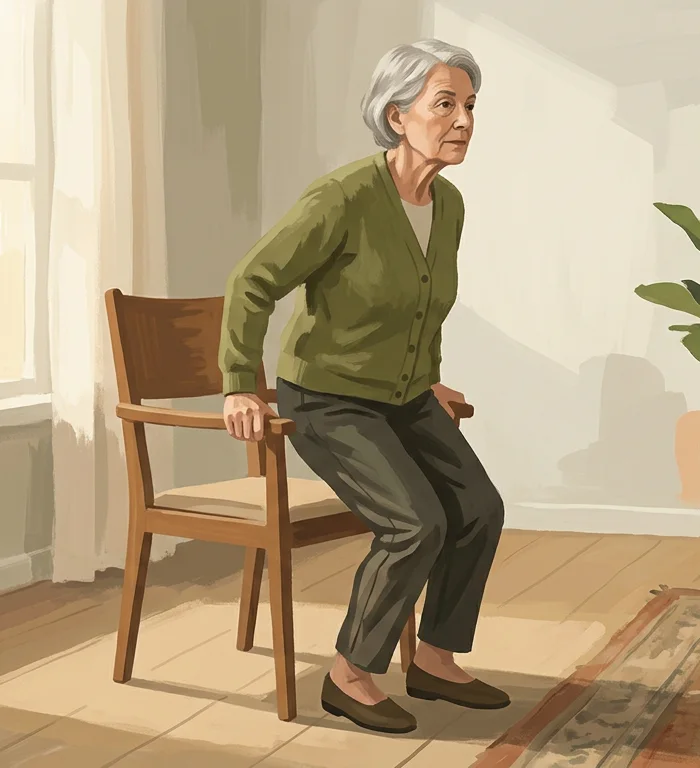
Penn State researchers reported that adults 65 and older improved mobility measures after a 4-minute daily strength routine for 12 weeks, according to an Oct. 21 ScienceDaily Health article citing a PLOS One study.
Evidence grade: Moderate (consistent observational data or small trials). The trial included 97 participants, average age 74, and matters because leg strength and balance support daily tasks; participants had reported about 18 minutes of weekly exercise before the study, below the 150 minutes of moderate activity or 75 minutes of vigorous activity cited by Christopher Sciamanna.
The Penn State College of Medicine team randomly assigned participants either to the FAST-2 exercise program or to no intervention, the ScienceDaily article said. Resistance training means exercise that makes muscles work against resistance, such as body weight or elastic bands.
The routine used four movements: push-ups, chair stands, two-arm rows and stair stepping. Each exercise lasted 30 seconds, with 30 seconds of rest, for a total of four minutes. Participants received four elastic resistance bands, an adjustable-height stepper, written instructions and easier variations.
“The human body is designed to improve very quickly,” Sciamanna, professor of medicine and public health at Penn State College of Medicine and lead author of the study, said in the article. “And just a few repetitions of an exercise performed regularly can lead to huge improvements.”
The source reported three absolute changes after the program: 4.2 more chair stands in 30 seconds, 3.6 additional seconds standing on one leg and a 2.3-second faster sit-to-stand assessment.
Adherence was high for a home routine. Participants completed the exercises on 81% of days during the 12-week trial, according to the article.
The result applies most directly to older adults similar to the study group: adults over 65, with an average age of 74, who were doing little weekly exercise at baseline. It does not establish that the same routine would produce the same gains in younger adults, in people outside the study sample or over periods longer than 12 weeks.
The study cannot show that the four-minute routine prevented falls, delayed nursing-home admission or extended independent living. The article said the tests used in the trial are indicators linked to future walking difficulty, fall risk and need for care, but those outcomes were not directly tested.
The ScienceDaily article said the work followed an earlier Penn State experiment, FAST-1, in which 24 older adults performed 30 seconds of push-ups and squats daily and improved squat performance after six months.
Source: ScienceDaily Health article based on Penn State research, Oct. 21, 2026.
Atlas360 reports health research and does not provide medical advice.
More stories
- Dietitians advise small swaps for plant-based eating
- TikTok dementia videos mislead in 66.4% of sample, researchers say
- Aberdeen Royal Infirmary faces police inquiry call over 19 deaths
- Bariatric surgery group loses 28.2% after GLP-1 use
- TOFA boosts mouse energy use 18% while preserving muscle
- ICO probes NHS therapy notes accessible to up to 140,000 staff
- Excess RNA was linked to cell energy disruption in poxvirus study
- Astronauts tolerate simulated Mars gravity after 6 months in space
Latest news
- Hull City 2–0 Brighton: When Resilience Beat Reputation
- David Parr House to honor Victorian art-workman with blue plaque
- Iran's attacks hit 25 tankers near Strait of Hormuz
- FCC approves prison cellphone jamming despite 2.5-mile warning
- Russia strikes Ukraine as Odesa faces electricity strain
- Bahrain reports two injuries after Iranian aerial attacks
- Congress tests Black Democrats' growing policy influence
- Baltic responders fight Sparta II fire after drone strike