

Excess RNA was linked to cell energy disruption in poxvirus study
A PNAS paper from Texas A&M links RNA buildup during poxvirus infection to mitochondrial dysfunction, but it reports mechanistic evidence rather than human…
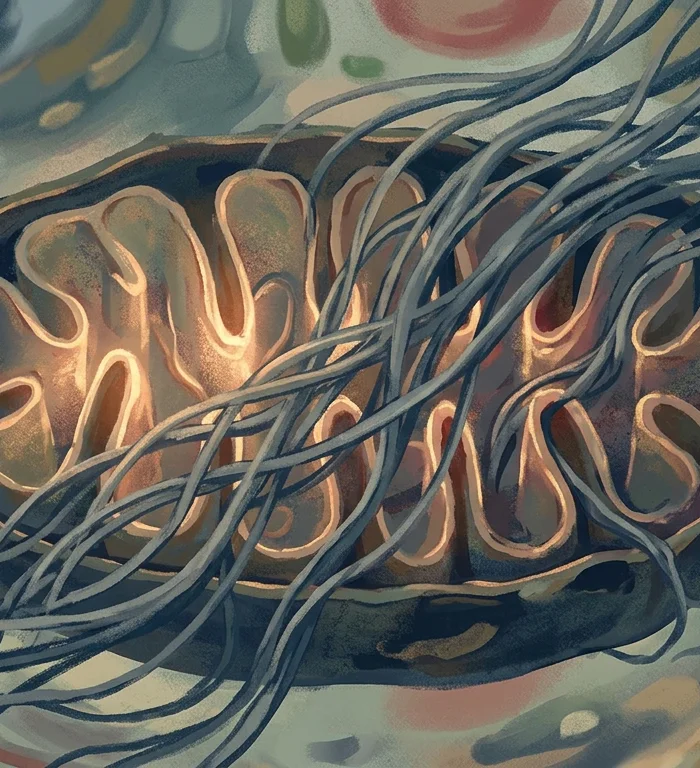
Texas A&M University researchers reported in one Proceedings of the National Academy of Sciences study publicized Oct. 21, 2026, that excess RNA was linked to mitochondrial dysfunction during poxvirus infection.
Evidence grade: Early (small, animal, cell or preprint). The work is mechanistic rather than clinical: it links RNA buildup to impaired mitochondrial respiration, the process cells use to make energy, not to disease risk in people.
The study examined RNA homeostasis, the balance between making RNA and breaking it down. RNA, or ribonucleic acid, includes messenger RNA, which carries instructions for protein production, and double-stranded RNA, which often appears during viral infection.
“Scientists have long known that RNA degradation helps control protein production and remove defective RNA,” Zhilong Yang, a professor in Texas A&M’s College of Veterinary Medicine and Biomedical Sciences, said in the university release. “Our study reveals another important role: it helps cells maintain the energy they need to function properly.”
The researchers focused on poxvirus infection, according to the release. Poxviruses include viruses linked to smallpox and mpox, and they can generate large amounts of RNA while using infected cells to reproduce.
The finding that ordinary messenger RNA may be harmful at high levels was the unexpected part of the work. “MRNA is a normal component of our cells, but it seems like with many good things, if we get too much, that can become a problem for the cell,” Yang said.
The team also tested whether the link required immune activation. “When we isolated only the mitochondria and added RNA, we still saw mitochondrial damage,” Djamal Brahim Belhaouari, the study’s first author, said in the release. “That was the moment we realized this could be a previously unknown cellular response to RNA.”
The researchers proposed a possible electrical mechanism, while saying the details are unresolved. Mitochondria make ATP, the cell’s main energy-carrying molecule, by maintaining an electrical and chemical gradient across an inner membrane; RNA carries a negative charge that may interfere with that system when it accumulates.
The study may help frame questions in aging-related disease research, cancer and neurodegenerative disease, where abnormal RNA accumulation has been observed, according to the release. It cannot show that RNA buildup is responsible for those conditions in people, or how often the mechanism operates outside the experimental setting.
The result also has a narrower implication for RNA-based medicines, including mRNA vaccines and future RNA therapies. The study does not show that existing mRNA vaccines are linked to mitochondrial damage in people.
Funding was provided in part by the National Institute of Allergy and Infectious Diseases grant R01AI143709 and Texas A&M University, according to the release. The authors said the content was their responsibility and did not necessarily reflect official NIH views.
Source: research organization release, ScienceDaily Health/Texas A&M University, Oct. 21, 2026.
Atlas360 reports health research and does not provide medical advice.
More stories
- Astronauts tolerate simulated Mars gravity after 6 months in space
- Galderma targets Ozempic face with new treatment testing
- Senate passes TBI Act renewal after 2024 lapse
- CXCR3 blockade preserves 40% more memory tissue in Alzheimer’s mice
- UK inquiry faults government after 43,000 care-home Covid deaths
- Srivastava warns 1 in 5 men over 50 risk osteoporosis fractures
Latest news
- Indian Hotels lifts FY 2027 revenue outlook to 15%-17%
- Jason Molina documentary revisits his nearly 20-album legacy
- Türkiye Desk: Flow Games’ $49m funding line sharpens mobile focus
- Musk pledges $10.7bn SpaceX stake to US children
- Researchers urge wider mental-health systems for African schools
- Lebanon families face $700 autism-care bill as war disrupts routines
- US-Mexico tariff talks stall over downstream metal duties
- France plans troop deployment ahead of Saturday protests