

CXCR3 blockade preserves 40% more memory tissue in Alzheimer’s mice
A Neuron study reported by ScienceDaily tested an antibody strategy that reduced T-cell entry into mouse brains without lowering tau buildup.
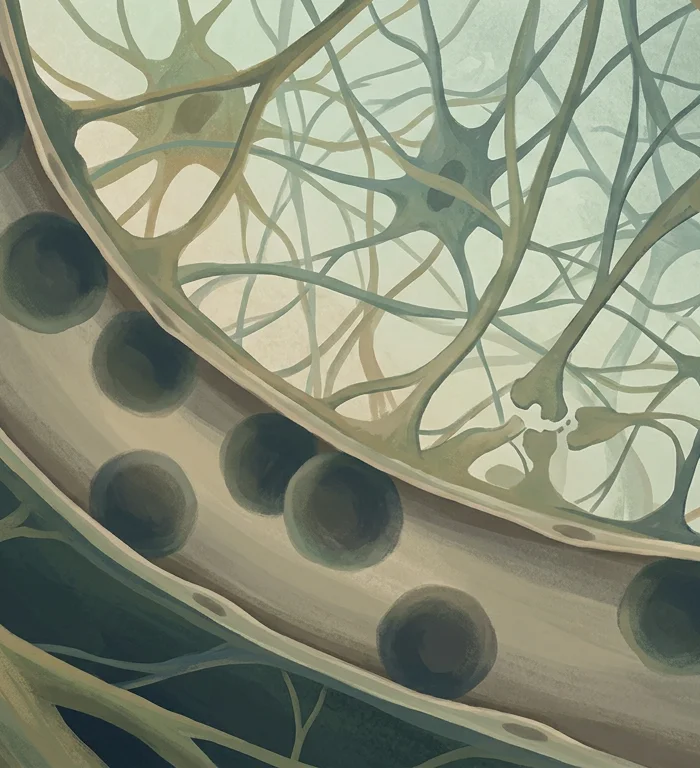
Washington University School of Medicine in St. Louis researchers blocked CXCR3 in mice with Alzheimer’s-like tau deposits, preserving roughly 40% more memory-region brain tissue, ScienceDaily Health reported on Oct. 20.
Evidence grade: Early (small, animal, cell or preprint). The Neuron study, published Sept. 28, points to a possible immune target for tau-related neurodegeneration, but it has not shown safety or benefit in people.
The researchers used an antibody against CXCR3, a receptor that helps activated T cells follow chemical signals into tissue. T cells are immune cells; in this study, the concern was their movement into brain regions with abnormal tau accumulation.
After three and a half months of antibody treatment given once every five days, treated mice had about half as many T cells in their brains as untreated mice, according to ScienceDaily’s account of the study. The treated mice also showed less neuronal injury and performed better on a memory test.
The intervention did not reduce abnormal tau tangles. Treated and untreated mice had similar levels of tau buildup, suggesting in this animal model that limiting an immune response was associated with less brain damage even when the protein deposits remained.
“For this therapeutic approach, if it is safe, you wouldn't have to design the drug to get into the brain -- which is a big deal since most molecules don't cross the blood-brain barrier well -- and you don't have to get rid of the tau to get this therapeutic effect,” said David M. Holtzman, senior author of the study and a neurology professor at WashU Medicine.
Tauopathies are diseases marked by abnormal tau protein accumulation. Alzheimer’s disease is described in the source as a secondary tauopathy because both amyloid and tau are present; primary tauopathies involve tau without amyloid.
The study builds on earlier WashU work. A 2023 Nature study from Holtzman’s laboratory reported that T cells entered the brains of mice with abnormal tau accumulation and contributed to neurodegeneration. A Nature Neuroscience study published earlier in October reported that signals directing those cells came from lymph nodes outside the brain.
The mechanism tested here involved CXCL10, a chemical signal, and CXCR3, its matching receptor on activated T cells. Mice lacking either CXCL10 or CXCR3 on T cells had reduced T-cell brain infiltration, even when researchers triggered inflammation, according to the report.
The study cannot show that blocking CXCR3 would slow Alzheimer’s disease in humans. The work was done in mice, ScienceDaily did not report the number of animals studied, and animal models of neurodegenerative disease often fail to predict human treatment effects.
The source also reported that the antibody reached the boundary of the brain but did not enter brain tissue itself. That could matter for drug development because the blood-brain barrier, the protective system that limits what enters the brain from the bloodstream, blocks many molecules.
The research was supported by a BrightFocus Postdoctoral Fellowship, National Institutes of Health/National Institute on Aging grants, the GHR Foundation, the Carol and Gene Ludwig Initiative in Neuroimmunology Research, private gifts and the Freedom Together Foundation. Disclosures listed by ScienceDaily include Holtzman’s co-founding of C2N Diagnostics, scientific advisory roles at Denali, Genentech and Switch, consulting for Pfizer, Roche, Novartis, Annexon and Acta, and advisory roles at Neuron and Cell.
The findings apply to mice with tau accumulation and should not be read as evidence that immune-targeting treatment treats Alzheimer’s disease in patients. The next step described in the source is further research to determine whether the approach is safe and effective enough to test in people.
Source: ScienceDaily Health, Oct. 20, 2026; Neuron study published Sept. 28.
Atlas360 reports health research and does not provide medical advice.
More stories
- UK inquiry faults government after 43,000 care-home Covid deaths
- Srivastava warns 1 in 5 men over 50 risk osteoporosis fractures
- Rare FN1 mutation may limit brain-vessel damage in APOE ε4 carriers
- Pope Leo XIV faces lung cancer diagnosis after lobe removal
- Guinea fowl avoid 23% energy cost after early leg loading
- Mukherjee links cancer progress to prevention and early detection
Latest news
- Ryanair warns European fares may rise 20% in 2027
- France weighs costs as French riots test insurance sector
- Andalucía has 12 of Spain's 15 poorest municipalities
- Uzbekistan seeks tourism investment after arrivals rise 37%
- STOXX 600 falls 0.6% as Brent tops $110
- SyNCH links South Africa’s LEN clinics after 79,000 first doses
- Damen challenges Rheinmetall's Mangalia deal at 75% of start
- Joburg Crisis Alliance seeks pledges from 270 councillors