

ACSM advises 1.0 to 1.2 g/kg protein for older athletes
The guidance says muscle mass typically declines 0.5% to 1.0% a year after age 50, changing energy and nutrient needs.
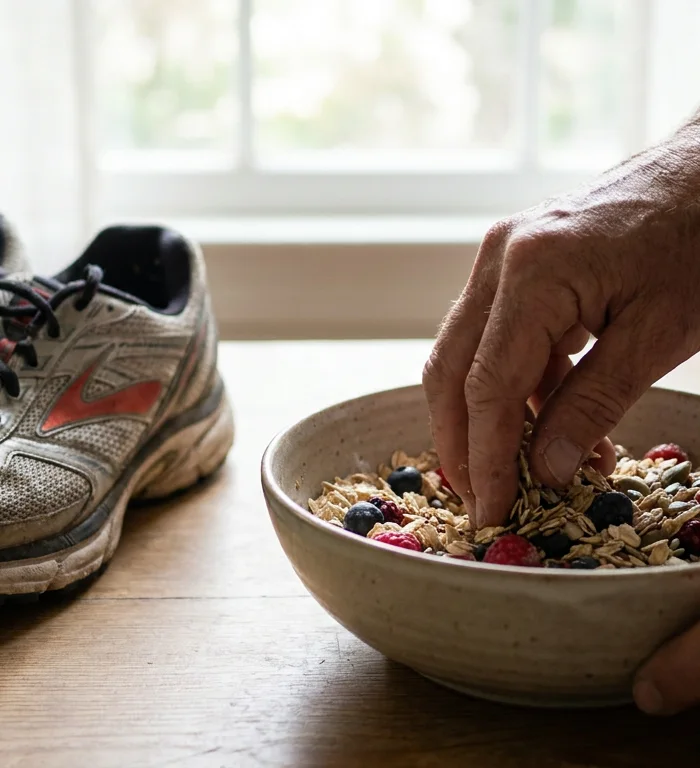
The American College of Sports Medicine published an Oct. 14 guide advising active older adults to target 1.0 to 1.2 g/kg body weight of protein daily, with higher amounts for heavy training.
Evidence grade: Claim (no study cited). The ACSM guide says muscle mass typically falls 0.5% to 1.0% a year after age 50, while lower muscle and training volume reduce calorie needs without removing the need for other nutrients.
For protein, ACSM lists 1.0 to 1.2 g/kg body weight per day for active older adults, and up to 1.5 g/kg with heavy training. It says those values apply to people with normal kidney function and recommends spreading protein over 3 to 4 meals, at 35 to 40 g or 0.4 g/kg per meal.
The guide also lists leucine, an amino acid found in protein foods, at 2.5 to 3.0 g each meal. For carbohydrate, it gives a range of 45% to 65% of total energy intake, or 3 to 12 g/kg body weight. For fat, it gives 20% to 35% of total energy intake.
ACSM says older adults need more vitamins B6, B12 and D, and more calcium, but less iron. It also says older athletes may have difficulty getting enough folic acid, calcium, zinc, magnesium, and vitamins B12, D and E from diet alone.
The guidance also covers hydration and supplements. It says fluid losses through sweat can begin to affect performance about 60 to 90 minutes into physical activity, and says supplements should enhance the diet rather than replace food.
The guide cannot show that these targets improve outcomes in a defined trial population because it is not presented as a clinical trial, cohort study or systematic review. It applies to active older adults and senior athletes, not to people whose disease, nutrition-related condition or nutrient deficiency changes their requirements.
ACSM says people seeking a full nutrition assessment should consult a Registered Dietitian Nutritionist, preferably one who is also a Board-Certified Specialist in Sports Dietetics, especially if they have a disease, nutrition-related condition or nutrient deficiency.
Source: guidance article, American College of Sports Medicine, Oct. 14, 2026.
Atlas360 reports health research and does not provide medical advice.
More stories
- Cochrane seeks Nov. 30 bids for adult pneumococcal vaccine review
- Athlete eye-balance screens may move beyond concussion rehab
- Conflict-zone athletes face sleep stress standard plans miss
- Tai Chi may ease pain in musculoskeletal disorders
- Peptide access push may obscure patient harm reports
- ACL graft choice shows no revision link in Swedish football study
Latest news
- Fairfax faces CSB choice in $5.6bn IDBI stake deal
- Stocks face rotation risk at 5.9% Treasury yield, according to BofA
- Wolfspeed faces dilution risk in $1.5bn Pentagon loan
- Iran targets Starlink with jail terms of up to 5 years
- LLM crisis reports capture 5.4%-11.0% of official figures
- Natacha Polony joins France's 2027 presidential race
- Publicis beats Q3 forecasts with 5% organic revenue growth
- Türkiye Desk: Tencent’s Flow Games move tests Türkiye’s mobile thesis