

ACL graft choice shows no revision link in Swedish football study
The BJSM cohort followed 10,693 registered players; age and playing level, not graft type, tracked most consistently with later ACL surgery.
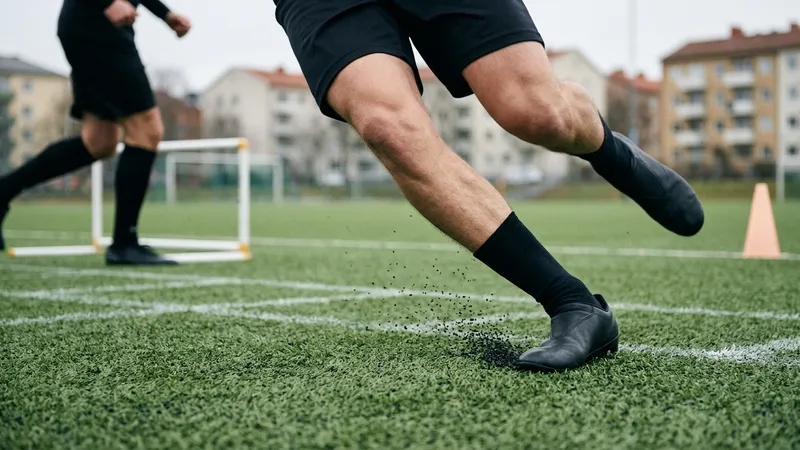
British Journal of Sports Medicine published an original research article on Oct. 12 finding graft type was not linked to revision ACL reconstruction among 6,238 Swedish football players returning to competition.
Evidence grade: Moderate (consistent observational data or small trials). The BJSM cohort matters because revision surgery occurred in 10.8% of women and 9.2% of men who returned to play, yet graft choice did not explain that difference.
What the study found
Alexander Sandon and Magnus Forssblad of Karolinska Institutet analyzed 10,693 primary anterior cruciate ligament reconstructions performed in registered football players in Sweden from Jan. 1, 2014, through Dec. 31, 2023.
ACL reconstruction is surgery to replace the torn knee ligament with a tissue graft.
The study linked the Swedish Knee Ligament Registry with the Swedish Football Association’s competition system. Return to competition meant playing in at least one official match after surgery.
The authors compared hamstring tendon, patellar tendon and quadriceps tendon autografts, meaning tissue taken from the patient’s own body. Hamstring grafts were the reference group in sex-stratified Cox models adjusted for age and pre-injury level of play.
The article said: “In football players who return to competition, these findings indicate no meaningful difference in subsequent ACLR risk between commonly used autografts.” The authors added that graft selection can be shaped by patient characteristics, surgeon preference and factors other than revision risk.
How it works
The main outcome was revision ACL reconstruction in the index knee, meaning another reconstruction on the knee that first had surgery. A second outcome was contralateral ACL reconstruction, meaning reconstruction in the opposite knee.
Players in the return-to-competition group had a mean age of 22 years, with a standard deviation of 7 years. Mean follow-up was 5.2 years, with a standard deviation of 2.9 years.
Among players who returned to competition, 232 women had revision ACL reconstruction, equal to 10.8% of women in that group. In men, 349 had revision surgery, equal to 9.2%.
Opposite-knee ACL reconstruction was recorded in 263 women, or 12.2%, and 264 men, or 6.9%. The authors reported no graft-specific differences in age-restricted sensitivity analyses or in the full cohort.
One signal differed by sex. In women, quadriceps tendon graft was associated with higher hazard of opposite-knee ACL reconstruction, with a hazard ratio of 1.98 and a 95% confidence interval of 1.17 to 3.36. A hazard ratio compares event rates over time; 1.98 means nearly double the rate during follow-up, within the reported uncertainty range.
What the study cannot show
This was a nationwide cohort analysis, not a randomized trial, so it can identify associations but cannot determine whether graft type itself changes later ACL surgery risk. The outcome was subsequent ACL reconstruction, not every possible ACL injury that did not involve surgery.
The data apply most directly to registered Swedish football players who had primary ACL reconstruction during 2014 to 2023. They may not apply in the same way to unregistered recreational players, athletes in other sports or people managed without surgery.
The cohort included all ages and levels of play recorded in the football association system. The authors grouped pre-injury level as Elite, Non-elite and Youth, and reported that being younger and playing at a higher level were the most consistent correlates of later ACL reconstruction risk.
The supplied article extract did not include funding or conflict disclosures. It said individual-level data are not publicly available because Swedish registry regulations restrict public sharing, though access can be requested from the data owners under Swedish legal and ethical requirements.
What this means
For football players who return to official matches after ACL reconstruction, the findings support the idea that common autograft choices may have similar revision-surgery risk. The study does not establish which graft is best for pain, strength, kneeling symptoms, rehabilitation or long-term knee health.
The practical message is narrower than the headline result: graft type was not independently associated with revision ACL reconstruction in this Swedish registry cohort, while age and competitive level repeatedly tracked with later ACL surgery. The study period ended Dec. 31, 2023, and data were extracted in April 2025.
Source: original research article, British Journal of Sports Medicine, Oct. 12.
Atlas360 reports health research and does not provide medical advice.
More stories
- Para athletes report pregnancy support gaps in elite sport
- NHS England logs 2.44 million A&E visits in September
- BJSM profiles three-part AI project on athletics injuries
- Health agencies seek to reduce reliance on HIV data models
- BJSM essay urges 3 youth-hockey concussion steps
- ACSM sets 1-hour Oct. 14 webinar on health equity
- Medicare Part B premium projected to hit $206 in 2026
- Salmonella Outbreak Expands Jalapeño Food Recall
Latest news
- Kazakhstan plans gold sales to reduce reserve dependence
- Devon Sawa Dismisses Plane Crash Risk Despite 'Final Destination' Role
- Galatasaray Hosts Barcelona in UEFA Champions League Match
- Trump reviews Guilfoyle amid disputed ethics allegations
- Goldman sees yuan reaching 6.40 as markets lag its outlook
- Bumble nears reported $1 billion sale to Ithaca Holdings
- Trump says Putin wants Ukraine deal more than Zelensky
- Pagcor says casino bans reach 40,000 in six months