

Para athletes report pregnancy support gaps in elite sport
A BJSM qualitative study of 11 elite competitors found inconsistent guidance, equipment challenges and policy barriers during pregnancy and postpartum.
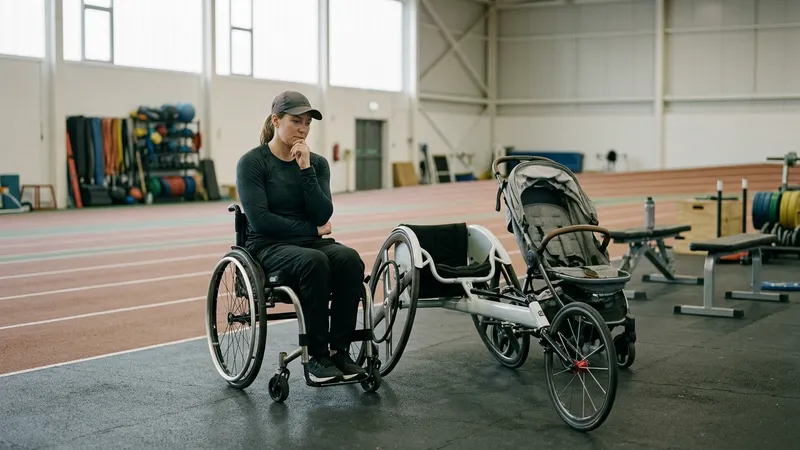
British Journal of Sports Medicine published a peer-reviewed qualitative study on Oct. 12 in which 11 elite para athletes described pregnancy and postpartum support gaps while competing within the previous 10 years.
Evidence grade: Early (small, animal, cell or preprint). In this British Journal of Sports Medicine study published Oct. 12, the 11-person sample and no comparison group mean the findings identify recurring support needs rather than measuring clinical risks, performance outcomes or policy effects.
Erica H Gavel-Pinos, Tara-Leigh McHugh and Margie H Davenport conducted individual semi-structured interviews that were audio recorded, transcribed and analyzed through conventional content analysis. Qualitative description is a research design used to describe participants’ accounts in areas where evidence is limited.
The peer-reviewed study grouped athletes’ experiences into four areas: education gaps related to disability, changes to training and equipment, medical and psychosocial concerns, and financial, policy and organizational support. The authors said the accounts showed how pregnancy, postpartum recovery, elite sport and disability interact in ways not usually captured by research on non-disabled athletes.
Participants in the study described needing to adjust equipment, monitor health and modify training with limited access to disability-informed expertise, according to the article. The study also said financial strain, childcare barriers and uneven application of sport-system policies shaped athletes’ experiences.
What it means
The finding applies most directly to elite para athletes who have experienced pregnancy or postpartum while competing, because that was the population interviewed. It does not establish how recreational athletes, non-disabled elite athletes or para athletes outside the study sample experience pregnancy and postpartum sport participation.
The study sits within a small evidence base. Pregnancy and postpartum periods are receiving more attention in elite sport, but the authors said research involving para athletes remains very limited and does not adequately address impairment-related health issues, equipment needs or logistical barriers.
For sport organizations, the study points to a practical gap rather than a new clinical rule. The authors said support may need to include disability-informed pregnancy and postpartum policies, better education for coaches and practitioners, and steps to reduce financial and access barriers.
What the study cannot show
This was a qualitative study of 11 athletes, so it cannot estimate the frequency of pregnancy complications, postpartum health problems, return-to-sport timelines or mental-health outcomes. No absolute effect size, confidence interval or statistical comparison was reported.
The study was funded by a Social Sciences and Humanities Research Council Insight Development Grant. The article said Margie H Davenport is supported by the Christenson Professorship in Active Healthy Living, Tara-Leigh McHugh is supported by a Tier 1 CRC, and the authors declared no competing interests.
The British Journal of Sports Medicine article was not commissioned and was externally peer reviewed. The article said study data generated and analyzed for the research are available from the corresponding author on reasonable request.
Source: peer-reviewed study, British Journal of Sports Medicine, Oct. 12
Atlas360 reports health research and does not provide medical advice.
More stories
- ACL graft choice shows no revision link in Swedish football study
- NHS England logs 2.44 million A&E visits in September
- BJSM profiles three-part AI project on athletics injuries
- Health agencies seek to reduce reliance on HIV data models
- BJSM essay urges 3 youth-hockey concussion steps
- ACSM sets 1-hour Oct. 14 webinar on health equity
- Repurposed Epilepsy Medication Shows Potential for Osteoarthritis Treatment
- P2X7 Receptor Inhibition Identified as Potential Therapeutic Target for Neuroinflammation
Latest news
- Trump diesel carve-out tests Congress as Russia talks stall over Ukraine
- Oil rises on tensions, pares gain on 3.5 million tons diesel talk
- Dollar rises as EUR/USD hits 2026 low
- Rayo Vallecano Match Abandoned After Fan Protest Over Club Chairman
- IDW starts Sonic road to issue 100
- NBC’s Tomlin avoids Henry name, cites 4.2-yard average
- Aussie Dollar Slips Before RBA Minutes
- Domino’s faces $1.17 billion sales test in CEO debut