

Trump diesel carve-out tests Congress as Russia talks stall over Ukraine
US envoys told Ukrainian officials that Russian diesel export relief is being considered to pull Moscow back into negotiations.
Trump diesel carve-out tests Congress as Russia talks stall over Ukraine
Washington is weighing a Russian diesel export carve-out as part of President Trump's effort to restart Ukraine peace talks, according to three people familiar with a Friday briefing to Ukrainian officials. The proposal matters in Washington because any easing of Russian energy restrictions would test how far Congress is willing to let the White House use sanctions relief as a negotiating tool.
The message to Kyiv came after earlier efforts failed to produce sustained negotiations to end Russia's war in Ukraine. For the administration, the diesel idea appears to be a transactional inducement: offer Moscow a limited economic opening, then see whether the Kremlin returns to talks that have repeatedly stalled.
For Ukraine's supporters in Congress, the same proposal lands differently. Russian refined petroleum exports are not just a trade issue; they sit inside a sanctions architecture built to reduce Moscow's revenue, limit its war capacity and prevent presidents from quietly unwinding pressure without political cost.
Diesel relief enters Ukraine diplomacy
The reported briefing puts energy sanctions at the center of the next Washington argument over Ukraine policy. The White House can frame a carve-out as a narrow diplomatic instrument, especially if officials argue that the waiver is temporary, reversible and tied to a defined negotiating step by Moscow.
That case may be difficult to sustain without details. The account so far does not specify the size of the diesel allowance, the destinations involved, the duration of the exemption or the enforcement mechanism that would snap restrictions back if Russia refuses talks.
Those omissions matter because refined petroleum products are easier to route through intermediaries than many strategic goods. A carve-out written too broadly could give Moscow revenue and market access before Washington can verify whether the concession changed Kremlin behavior.
The State Department and the National Security Council would likely own the diplomatic rationale. Treasury, through sanctions enforcement, would have to translate that rationale into licenses, guidance or waivers that companies and foreign governments can actually use.
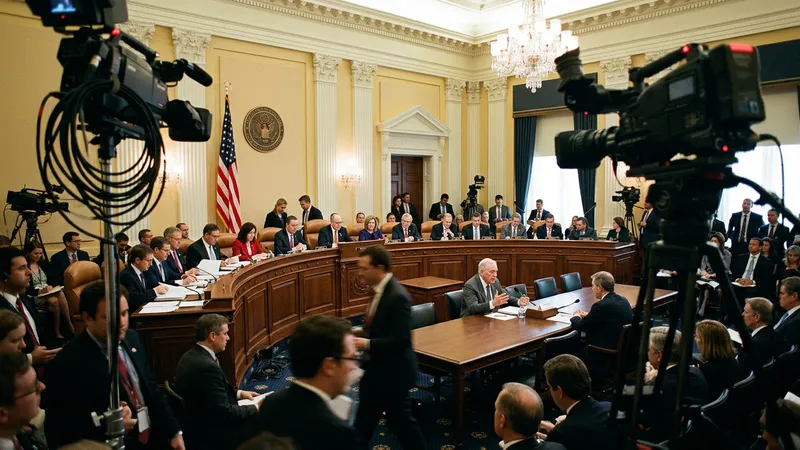
That is where Congress comes in. Lawmakers do not need to block a peace initiative outright to slow it down; they can demand briefings, hold hearings, threaten appropriations language or write new review requirements for waivers involving Russian energy exports.
Congress has constrained Russia waivers before
The political memory in Washington is the Countering America's Adversaries Through Sanctions Act, known as CAATSA, which Congress passed in 2017 during President Trump's first term. The law was designed in part to limit the executive branch's discretion over Russia sanctions and to force congressional review of certain relief measures.
That precedent gives Ukraine hawks a ready template. If senators believe the administration is offering Moscow energy relief without a clear Russian concession, they can argue that Congress has already established a principle: major Russia sanctions decisions should not rest solely on presidential judgment.
The split would not fall neatly along party lines. Some Republicans have backed President Trump's push for a negotiated end to the war, while others have pressed for tougher sanctions and more weapons for Kyiv. Democrats are likely to oppose any concession that appears to reward Moscow before Russian forces halt attacks or accept enforceable terms.
The administration's challenge is that sanctions relief is easier to announce than to contain. Once traders, refiners, insurers and shipping firms see a legal opening, they will ask whether activity near the carve-out is also permitted. Enforcement ambiguity can become market permission.
For Ukraine, the issue is leverage. Kyiv has relied on US military aid, intelligence cooperation and sanctions pressure to offset Russia's larger economy and manpower pool. If Washington trades pressure for process, Ukrainian officials will want to know what Russia is required to do in return.
Moscow reads Washington's clock
The Kremlin's calculation is also political. Grégoire Roos, director of the Europe and Russia and Eurasia programs at Chatham House, has argued that Moscow sees Washington's timeline as a source of leverage and may treat unilateral concessions as proof that waiting can produce better terms.
That assessment points to a core risk for the White House. If Russia views the diesel carve-out as a sign of US impatience rather than as a price for serious negotiations, Moscow can accept the economic benefit, delay talks and leave Washington defending a concession that did not move the war closer to a freeze.
The global macro channel would run through energy prices and sanctions credibility. A narrow diesel allowance could marginally ease supply pressure in some markets if volumes are meaningful, but a poorly policed waiver could weaken the wider sanctions regime by encouraging governments and firms to test its edges.
For the administration, the upside is a possible diplomatic opening that avoids another weapons-only debate in Washington. The downside is that a failed concession could strengthen critics who say Moscow responds to pressure, not inducements.
For the energy industry, the signal may be as important as the barrels. Companies that have stayed away from Russian trade would need legal certainty before re-entering any channel, while insurers and shippers would watch whether US guidance protects them from later penalties.
The falsifiable test is whether Congress moves from criticism to statute by December 1, 2026. If at least one key Republican Senate committee chair co-sponsors legislation requiring mandatory congressional review for executive waivers on Russian refined petroleum products, the diesel proposal will have triggered a sanctions-authority fight; if Congress holds no public oversight hearings and introduces no restrictive bill, the White House will retain room to use informal energy exemptions as part of its Ukraine diplomacy.
More stories
- Houthis Claim Ballistic Missile Strike on Riyadh Airport
- Pope Leo plans lung surgery, pauses events to October 20
- Russia rejects 60-day Ukraine truce, offers election-day pause
- Russian Strikes Test Trump's Energy Ceasefire
- Germany rejects Russian diesel deal as Merz backs curbs
- Kyiv challenges energy ceasefire as Russia reports talks
- French Fiscal Policy and UK-EU Relations Update
- NSW Police Inquiry Delayed Following Commissioner’s Request for Closed-Door Hearings
Latest news
- Para athletes report pregnancy support gaps in elite sport
- Oil rises on tensions, pares gain on 3.5 million tons diesel talk
- Dollar rises as EUR/USD hits 2026 low
- Rayo Vallecano Match Abandoned After Fan Protest Over Club Chairman
- IDW starts Sonic road to issue 100
- NBC’s Tomlin avoids Henry name, cites 4.2-yard average
- Aussie Dollar Slips Before RBA Minutes
- Domino’s faces $1.17 billion sales test in CEO debut