

Health agencies seek to reduce reliance on HIV data models
Global HIV treatment gaps persist with 10 million untreated individuals, while reliance on modeled estimates introduces inherent uncertainty into…
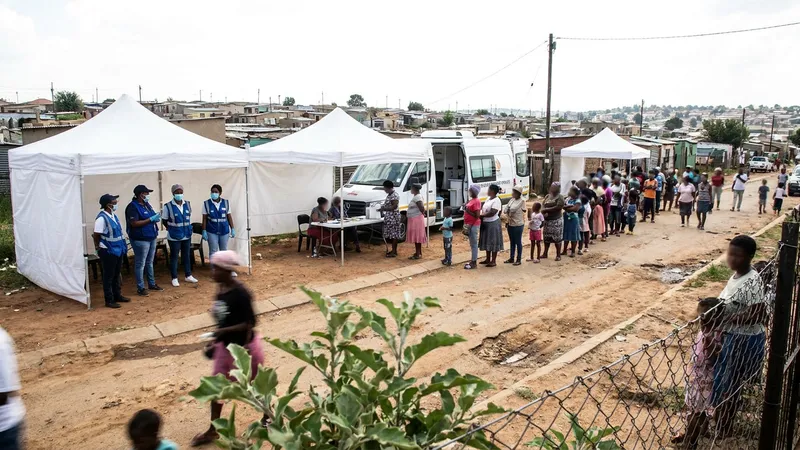
Approximately 10 million people living with HIV worldwide currently lack access to antiretroviral therapy, with half of this untreated population concentrated across Africa. Expanding access to these vital medications remains the primary requirement for reducing global HIV-related illness and mortality rates.
Monitoring the scale of treatment coverage relies heavily on statistical modeling rather than direct case reporting. Because national health databases in many regions remain incomplete, international health organizations depend on predictive estimation tools to gauge treatment access and evaluate health interventions.
Data Models Bridge Coverage Gaps in Developing Nations
To address missing patient records, health tracking systems utilize the Spectrum analytical framework. This specialized system synthesizes regional surveillance data, demographic patterns, and clinical disease progression trajectories to construct a comprehensive picture of global treatment distribution.
However, institutional reliance on these statistical estimates involves substantial uncertainty. The capacity to collect and report health metrics varies significantly among nations, with a systemic lack of standardized health status reporting in developing regions continuing to limit the precision of global HIV response evaluations.
Because these indicators depend on modeled estimates, official coverage figures undergo routine annual revisions. Public health officials and policymakers face evolving data points as new field surveillance information emerges and analytical methodologies undergo technical refinements.
Investing in Localized Digital Health Infrastructure
In the coming years, international public health bodies and sovereign donors are likely to prioritize investments in localized digital health infrastructure to gradually reduce reliance on predictive statistical modeling. Such a pivot could significantly impact international development budgets and health diplomacy, as fiscal pressures compel funding institutions to demand higher data accuracy before committing long-term pharmaceutical aid. The primary risk remains that persistent analytical inaccuracies may lead to misallocated medical resources, potentially worsening public health crises across underserved regions in sub-Saharan Africa. Nevertheless, closing these data gaps offers a vital opportunity to accelerate the adoption of digital record-keeping systems that can bolster broader healthcare infrastructure in developing economies. As observed during global campaigns against malaria and tuberculosis, structural improvements in ground-level monitoring consistently yield more sustainable therapeutic outcomes than top-down statistical estimates. Ultimately, achieving global disease suppression targets will hinge on whether international stakeholders can successfully bridge the gap between theoretical modeling and operational healthcare delivery on the ground.
More stories
- BJSM profiles three-part AI project on athletics injuries
- BJSM essay urges 3 youth-hockey concussion steps
- ACSM sets 1-hour Oct. 14 webinar on health equity
- Trial data put CBL-514's visceral fat findings in context
- Repurposed Epilepsy Medication Shows Potential for Osteoarthritis Treatment
- P2X7 Receptor Inhibition Identified as Potential Therapeutic Target for Neuroinflammation
- CDC Excludes Pennsylvania Measles Deaths From National Data
- New Urine Test Shows High Bladder Cancer Detection Accuracy
Latest news
- France boards Russian crude-linked tanker, Macron says
- Houthis Claim Ballistic Missile Strike on Riyadh Airport
- Micron expands buyback plan by $33 billion
- Amazon seller says $4.5 million business lost account
- Pope Leo plans lung surgery, pauses events to October 20
- Anthropic cuts web access after AI testing incidents
- Ukraine says Russia hits six energy targets after Trump ceasefire
- Orion's $59.3 million fraud charge spotlights wire scams