

Yemeni Military Escalation Intensifies Across Multiple Strategic Fronts
Yemeni government forces have launched a widespread military offensive across four governorates following Houthi missile and drone attacks on Saudi Arabia.
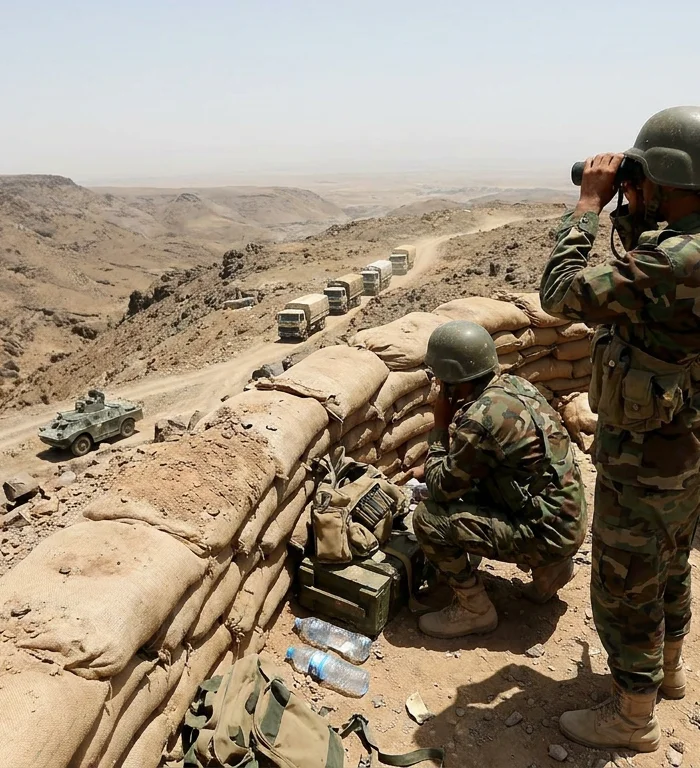
Yemeni government forces have launched a coordinated military campaign across the Lahj, Taiz, Marib, and Al-Jawf governorates. This escalation follows a series of Houthi-led missile and drone strikes directed at targets within Saudi Arabia, including Riyadh and the Eastern and Southern regions. The government offensive aims to disrupt Houthi supply lines and reclaim strategic territory in the southwestern and northern sectors of the country.
Government military operations have focused on neutralizing Houthi command structures and logistical capabilities. A precision airstrike was conducted against a meeting of senior Houthi field commanders in the Al-Maqatirah district of Lahj. While the specific identities and casualty counts from this strike remain unverified, the operation reflects a shift toward targeted intelligence-led engagements.
Recent combat data indicates a significant increase in Recent combat data indicates a significant increase in operational tempo. Government forces reported 875 distinct military actions on Saturday, including artillery strikes and ambushes. These operations resulted in the reported neutralization of 130 Houthi combatants and the destruction or damage of approximately 50 military vehicles, including mobile rocket launchers.
Frontline stability remains contested, particularly in the Lahj governorate, where Houthi forces have attempted to seize supply routes connecting Lahj and Taiz. Government units successfully repelled these advances, securing positions in the Al-Mudharabah district. Simultaneously, in the Marib governorate, government forces downed a Houthi reconnaissance drone and targeted barracks on the Mas front to degrade the group’s surveillance and troop-monitoring capabilities.
The broadening of these confrontations suggests a strategic effort by government forces to force a retreat from liberated zones and secure critical infrastructure. The simultaneous nature of these engagements across geographically dispersed fronts indicates a high level of coordination between ground units and air assets. Observers should monitor whether this surge in activity leads to a sustained shift in territorial control or if it represents a temporary tactical escalation in response to cross-border strikes.
More stories
- Germans oppose Ukraine aid as poll shows support slipping
- Kim Jong-un receives 10 envoys after constitutional shift
- Ukraine claims Libya strike sinks Russian naval corvette
- COP31 climate talks collapse over fossil fuels and funds
- Russian military faces 1,087 recorded suicides in Ukraine war
- US faces China, Russia in Africa minerals contest
- Saudi officials report Aramco tower damage after attack
- Saudi officials report Aramco tower damage after attack
- Syria's 20,000 Uyghurs face postwar suspicion, Feng says
- Dov Lior permits settlers to pick Palestinian olives
Latest news
- Trump prepares tariffs on China and other major exporters
- New-car buyers pay record average $50,087 in October
- Banks face ECB reserve debate over liquidity and profits
- Investors see Anthropic debut gains fade below $83 a share
- Iraq orders federal control over Kurdish-area oilfields
- Nvidia shares retreat as AI rally cools before PCE data
- Macy’s parade faces balloon limits as storm winds approach