

Amazon Satellite Internet Deployment Faces Significant Launch Bottlenecks
Amazon’s satellite-internet project is struggling to meet deployment targets due to launch-vehicle failures and reliance on third-party providers…
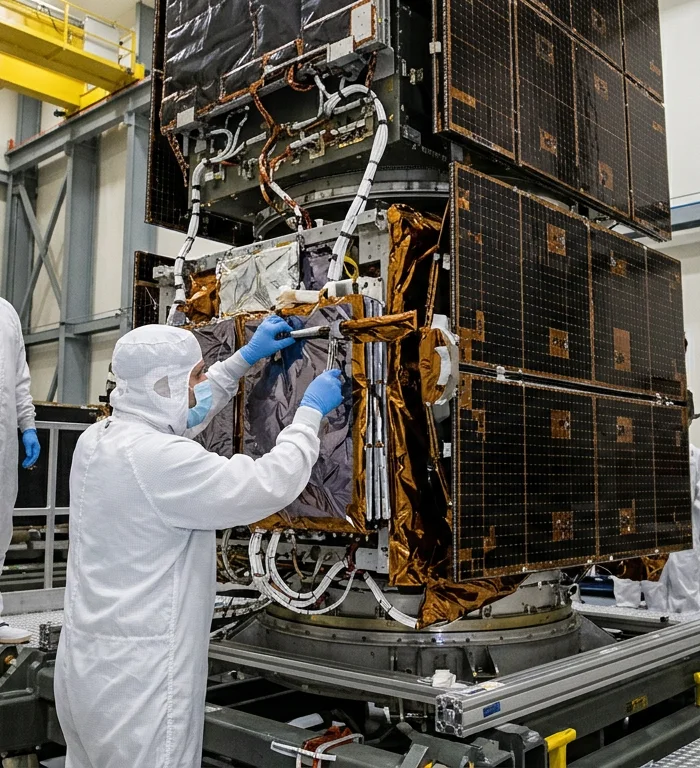
Amazon’s satellite-based internet initiative, Leo, is experiencing operational delays that threaten its goal of launching commercial service by the end of the year. While the company has successfully manufactured a significant inventory of satellites, it currently lacks the launch capacity to deploy them into orbit at the required scale. The program currently maintains approximately 400 satellites in orbit, trailing significantly behind the competitor’s fleet of over 11,000 units.
The primary constraint stems from a reliance on third-party launch providers, which has resulted in a series of setbacks. A recent failure involving a United Launch Alliance Vulcan vehicle and previous delays linked to Blue Origin’s New Glenn rocket have created a logistical bottleneck. To mitigate these risks, the company has reportedly accelerated missions using SpaceX’s Falcon 9 rockets, despite the competitive nature of the two firms.
Analysts estimate that Amazon is investing at least
Financial and regulatory pressures remain high. Analysts estimate that Amazon is investing at least $4 billion into the project this year, with individual satellite production costs reaching approximately $2 million. Although the Federal Communications Commission has granted regulatory relief by waiving specific deployment milestones, the company faces mounting pressure to demonstrate operational viability to secure its position as a viable alternative to existing satellite-internet monopolies.
United Launch Alliance Vulcan
The strategic importance of this project is underscored by geopolitical concerns regarding the concentration of satellite infrastructure under a single provider. Government officials and commercial partners, including major airlines, are actively seeking alternatives to reduce dependency on a single entity for critical communication and military-grade connectivity. The success of the Leo project is now tied to the company's ability to resolve its launch-vehicle dependencies and integrate its recent acquisition of Globalstar to expand its service offerings into the consumer smartphone market.
Looking ahead, the company must overcome these launch-vehicle shortages to meet its commercial service deadlines. Failure to stabilize the deployment schedule could jeopardize long-term contracts for in-flight Wi-Fi and broader government-backed broadband initiatives. Market observers will continue to monitor the frequency of successful launches as a key indicator of the project's long-term sustainability and its ability to challenge the current market leader.
More stories
- Europe faces attribution gap after 16 cyber, physical incidents
- PIF backs Grand Theft Auto as Saudi players embrace game
- Signal limits screenshots to curb AI access to messages
- Cognition runs Devin Mac workspaces on EC2 in 6 AWS regions
- Salesforce engineers cut 600-failure triage to 90 minutes
- Türkiye Desk: GTA 6 puts console access and network demand in focus
- Meta VR Glasses launch at $1,299 to challenge Apple Vision
- PlayStation and PC software sales rise to 21 million in Japan behind Capcom's latest hit
Latest news
- Trump prepares tariffs on China and other major exporters
- New-car buyers pay record average $50,087 in October
- Banks face ECB reserve debate over liquidity and profits
- Investors see Anthropic debut gains fade below $83 a share
- Iraq orders federal control over Kurdish-area oilfields
- Germans oppose Ukraine aid as poll shows support slipping
- Kim Jong-un receives 10 envoys after constitutional shift
- Ukraine claims Libya strike sinks Russian naval corvette