PlayStation and PC software sales rise to 21 million in Japan behind Capcom's latest hit
Japan's PC and PlayStation sales grew 13% in early 2026, led by Resident Evil Requiem. This surge offers a vital buffer for publishers amid rising costs.
Jason Kwon ·
If you want to understand the modern geography of the video game business, you usually start with a widely accepted baseline: the Japanese market belongs to Nintendo and mobile phones. For the better part of a decade, high-end console and PC development in the region has been treated as a stubborn, enthusiast holdout against the overwhelming commercial tide of handheld convenience. But the ground in Tokyo is subtly shifting.
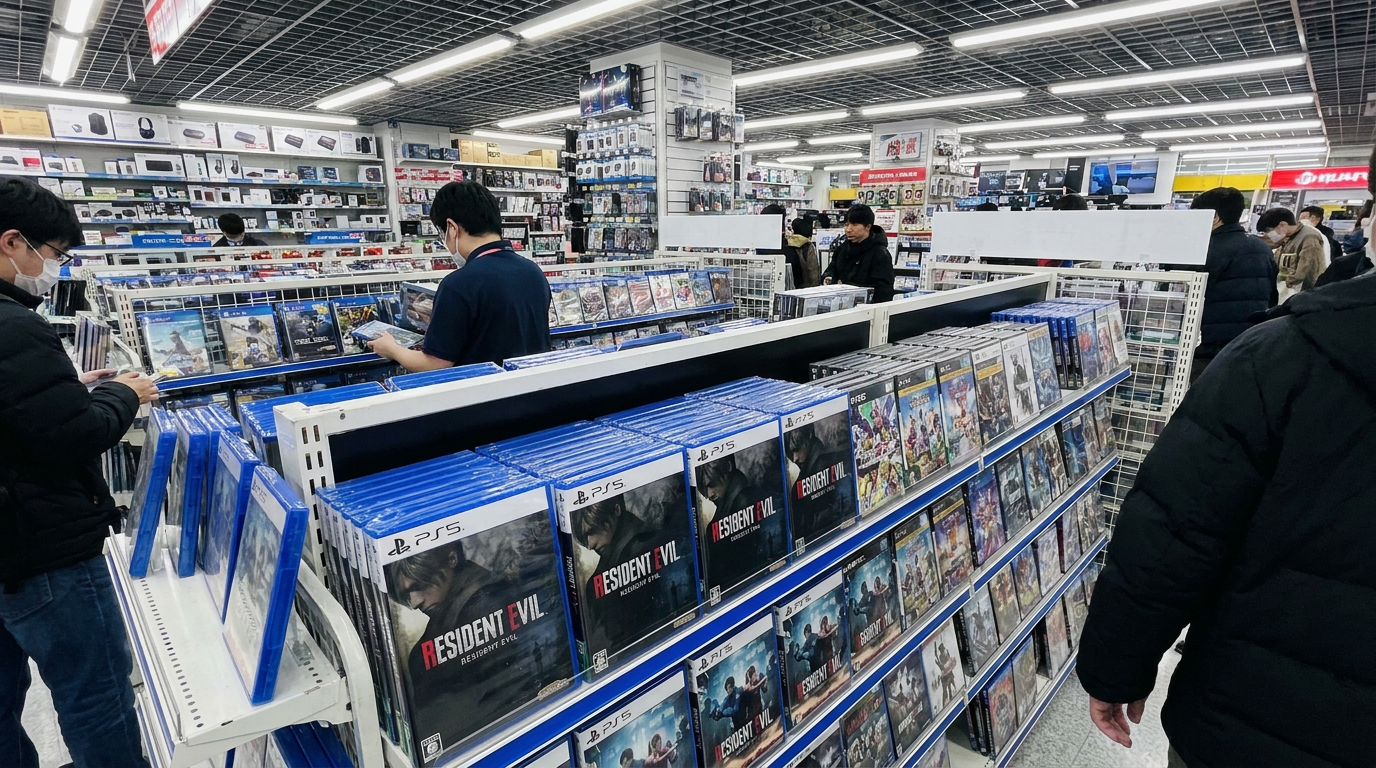
According to a new report from Sensor Tower, first surfaced by GamesIndustry.biz , combined PC and PlayStation unit sales in Japan rose 13 percent during the first half of 2026. The two high-end platforms moved a collective 21 million units over the six-month period. That is a serious volume of software for hardware ecosystems that largely require a dedicated screen and a power outlet, particularly in a market defined by the daily commute. The charge was not a rising tide lifting all boats equally, however; the surge was led heavily by Capcom, with Resident Evil Requiem serving as the primary driver for the regional spike.
A 13 percent bump proves the domestic appetite for high-end hardware is expanding
Whenever a Western analyst looks at the Japanese market, the default assumption is that anyone not making a free-to-play gacha game or a family-friendly platformer is fighting over scraps. The 21 million units sold across PC and PlayStation complicates that narrative. A 13 percent jump is not a rounding error—it is a structural expansion of the addressable market for high-fidelity games.
What makes this development actually matter for the people who fund and greenlight AAA budgets is the geographical de-risking it represents. Historically, Japanese publishers building massive, big-budget blockbusters had to rely overwhelmingly on North American and European audiences to recoup their investments. The domestic market was simply too heavily skewed toward portable hardware to support massive sell-through for a game that required a $500 console or a $1,500 PC rig. Now, the math is starting to look a little friendlier at home.
It is fitting that Resident Evil Requiem is the title dragging these numbers upward. Capcom has spent the last several years aggressively modernizing its internal development pipeline and treating PC as a first-class citizen, rather than an afterthought ported months later by an external studio. By ensuring its flagship horror franchise hits PlayStation and PC simultaneously with optimized performance, Capcom captures the cultural moment globally while maximizing its reach locally.
The platform power dynamics are shifting away from closed console ecosystems
We do not have the exact split between PC and PlayStation in Sensor Tower's headline 21 million figure, but the mere fact that PC is being tracked alongside Sony's console as a twin pillar of the high-end market in Japan tells its own story. Five years ago, PC gaming in Japan was a fringe enthusiast niche. Today, it is a core revenue driver for domestic publishers.
For Sony, this platform pairing is a double-edged sword. On one hand, any growth in the high-end domestic market is a victory for the PlayStation brand, which has occasionally faced local criticism for pivoting too hard toward Western tastes and moving its corporate headquarters to California. Staying culturally and commercially relevant in its ancestral home is vital for Sony Interactive Entertainment.
On the other hand, the pairing of PC and PlayStation in these tracking metrics highlights a quiet loss of exclusivity. Japanese players who want to play the biggest new releases no longer default strictly to a PlayStation console. Valve's Steam platform, alongside localized payment options and better support from Japanese developers, has made the desktop an entirely viable alternative. When a player buys Resident Evil Requiem on PC instead of PlayStation, Sony loses its standard 30 percent platform cut. The overall market might be up 13 percent, but the platform owner's share of that growth is likely being diluted by the open PC ecosystem.
The release calendar still dictates the ceiling
The necessary skepticism here is that software sales are inherently spiky, and one massive blockbuster can temporarily mask underlying stagnation. A 13 percent rise in the first half of 2026 is an undeniable win for the high-end market, but it is also heavily contingent on the fact that a new mainline Resident Evil game actually came out to anchor the schedule.
If the back half of the year lacks a comparable domestic heavy hitter, that 21 million pace will not hold. Furthermore, tracking unit sales does not immediately tell us about revenue or margins. While the reliance on a single mega-hit like Requiem suggests full-price $70 purchases drove the revenue, unit volume on PC is often padded by older catalog games finding a second life through steep storefront discounts.
Over the next six to twelve months, the thing to watch is how other major Japanese publishers react to this expanded baseline. Companies like Square Enix and Sega are already navigating their own pivots toward multiplatform, global-first releases. If the domestic PC and PlayStation audience can reliably absorb north of 40 million software units a year going forward, developers will have a much safer foundation to justify their escalating budgets. The commute-friendly handhelds are not giving up their crown anytime soon, but the high-end platforms are finally putting up a very real fight.