Moscow Game Hub says two-thirds of its Tokyo Game Show titles are already localized for Japan
The development cluster brought prepared games to TGS, covering Japanese translation costs to remove financial hurdles for foreign publishers.
Jason Kwon ·
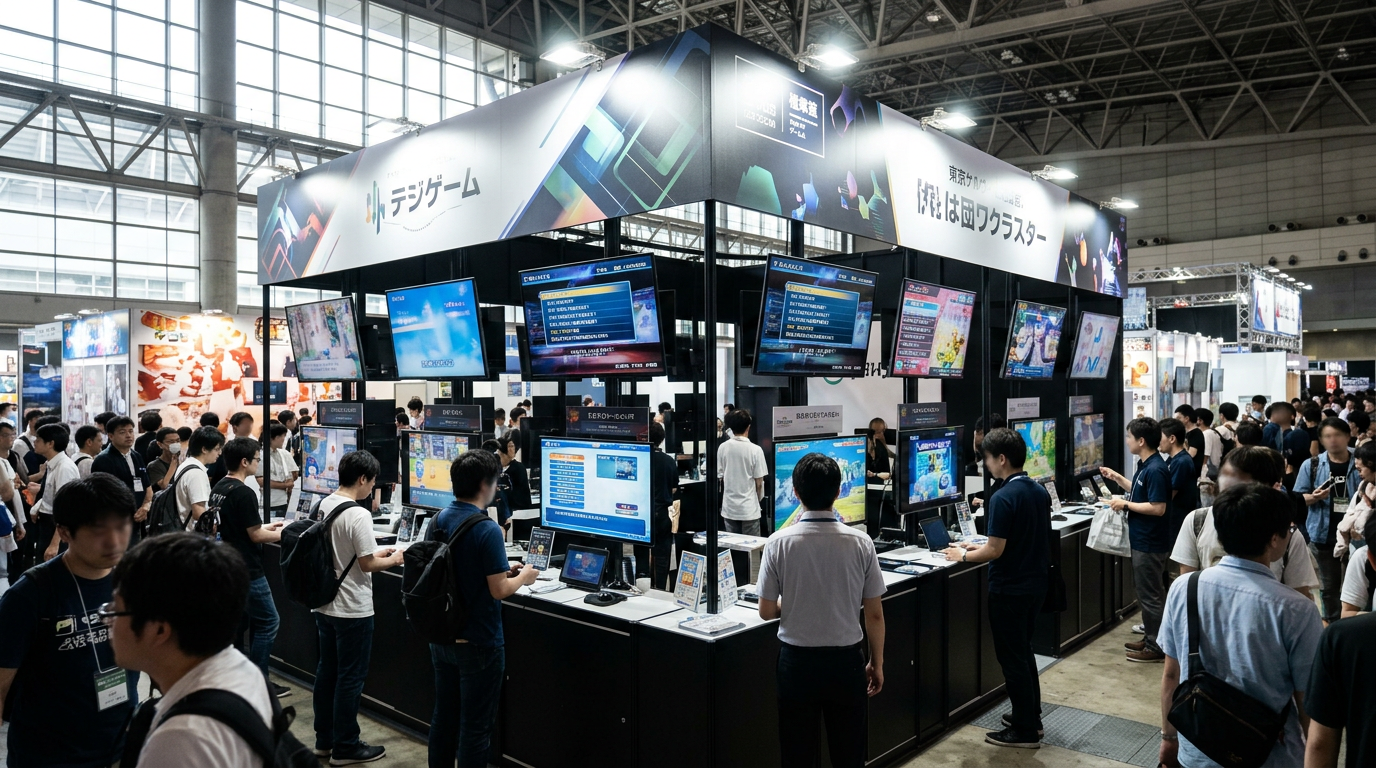
The Moscow Video Game and Animation Cluster arrived at the Tokyo Game Show this week with a specific pitch to Japanese publishers: the hardest, most expensive part of the translation work is already paid for. According to a press release distributed by PR Newswire APAC , two-thirds of the titles the organization brought to the exhibition floor were fully localized into Japanese before a single distribution deal was signed.
The cluster, which operates under the banner of the Moscow Game Hub, represents a massive centralization of game development resources. The organization reports operating a 55,000-square-meter facility fully equipped with motion capture stages, sound recording studios, and a dedicated esports arena. It claims to house 70 companies with over 250 projects currently in development. At the Tokyo Game Show, it operated what it called one of the largest national stands on the floor, holding more than 200 meetings to discuss publishing financing, console releases, and marketing support for its ecosystem of studios.
The upfront cost of translation operates as a strategic subsidy
Japanese localization is notoriously difficult. It requires deep cultural adaptation, high-context rewriting, and often complex user-interface redesigns to accommodate specific font rendering, rather than straightforward word-for-word translation. For a typical independent studio, funding that work out of pocket before securing a publisher in the region is an enormous financial risk. For a centralized, collective cluster, it serves as a calculated investment to grease the wheels of distribution.
To remove the first obvious friction point for prospective distributors, the hub explicitly noted it brought fully prepared games to Tokyo, bypassing the traditional trade-show reliance on raw prototypes or early vertical slices. Anastasia Rybkina, head of the Moscow Game Hub, framed this upfront expenditure as a deliberate strategy aimed at securing regional footholds.
"Japan is the world's third gaming market, and Japanese localization is one of the industry's most expensive," Rybkina noted in the release. "We invest in it deliberately because we see reciprocal interest: Japanese companies are interested in our games and teams."
The organization is actively looking for local partners to bring its domestic projects to Japan, while simultaneously pitching its Moscow facilities as an outsourcing and production site for foreign developers.
A centralized export machine replaces the traditional indie hustle
The games highlighted at the stand reflect a targeted product strategy rather than a random assortment of pitches. The hub heavily featured horror titles that blend a genre pioneered and perfected by Japanese developers with the aesthetics and folklore of Slavic mythology. The release specifically highlighted "Cauldron Inn" by Oxygen Chick, "Zaychik" by Game Art Pioneers, and "The Black Ice" by Antelus Games. The wider portfolio included action games, tactical strategies, visual novels, and racing simulators, targeted primarily at PC and consoles.
What stands out here is the underlying mechanism of market entry. Rather than individual studios flying to Tokyo to pitch unpolished ideas to mid-tier publishers, the Moscow Game Hub is operating as a collective export engine. It is a highly organized ecosystem approach that absorbs the financial risk of translation to give its domestic developers a head start. By pooling resources for a massive booth and presenting finished, translated builds, the hub functions more like a state arts council attempting to export domestic culture at scale.
The distance between a trade show meeting and a console storefront is vast
Reading a corporate press release requires separating the reality of the floor from the marketing pitch. The Moscow Game Hub claims that in its first year of operation, it ranked "among the industry's top three global leaders," a sweeping assertion that arrives entirely without a stated metric. It is unclear if that refers to raw square footage, headcount, or the sheer volume of projects in incubation.
But the more pressing reality for the hub's 70 resident companies is the gap between developer intent and platform approval. Securing a publisher is only one layer of the global gaming business. To release titles on PlayStation or Nintendo platforms—the primary vehicles for commercial success in the Japanese market—developers must pass through strict platform-holder certifications.
These gatekeepers dictate everything from technical performance standards to the backend corporate structures required to receive payments. A Japanese publisher taking on a slate of PC and console titles from a Moscow-based cluster in the current global economic climate must navigate a complex web of financial compliance, international payment gateways, and platform policies. A localized, fully playable game is a great way to start a conversation, but it does not magically generate a digital storefront page.
Ultimately, the hub's secondary pitch might prove to be its most viable business model. By offering its 55,000-square-meter facility as a motion-capture and production site for Japanese studios, the hub is pivoting toward business-to-business outsourcing. Supplying development work relies on standard corporate contracts and flat fees rather than consumer-facing platform approvals. If the hub can convince foreign studios that its technical infrastructure is sound and its rates are competitive, it may find its fastest route into the global market is through the closing credits of someone else's game.