

Pakistan Tests Indigenous Fa’az Air-to-Air Missile to Bolster Aerial Deterrence
Pakistan has successfully tested its first indigenous BVR air-to-air missile, the Fa’az, aiming to reduce reliance on foreign suppliers and counter evolving…
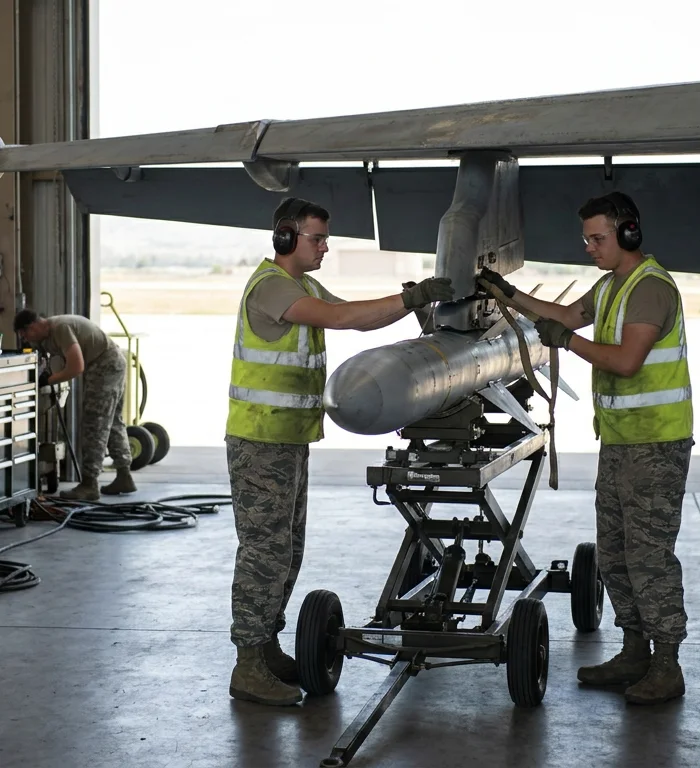
Pakistan successfully conducted a test launch of the Fa’az, its first indigenously developed beyond-visual-range (BVR) air-to-air missile, on November 3, 2026. The missile, launched from a JF-17 fighter, features an imaging infrared (IIR) terminal guidance system, a reported operational range exceeding 100 kilometers, and a top speed of Mach 3.5.
This development allows the Pakistan Air Force (PAF) to establish a domestic supply chain for advanced munitions, reducing reliance on foreign vendors and mitigating risks associated with supply shortages during prolonged engagements. The shift toward indigenous production is intended to sustain a larger stockpile of BVR missiles, which is considered essential for maintaining regional deterrence against the Indian Air Force (IAF).
Pakistan Air Force
Technically, the Fa’az-IIR provides a distinct operational advantage over radar-guided alternatives due to its resistance to electronic jamming. Its infrared seeker capability is viewed as a countermeasure against stealth aircraft and unmanned combat aerial vehicles (UCAVs), such as the platforms currently being integrated into the IAF’s future strike architecture. By utilizing mid-course radar updates, the missile can be directed toward targets that would otherwise be difficult to track with traditional radar-guided systems.
Strategic planners anticipate that the Fa’az technology may serve as the foundation for future indigenous medium-range surface-to-air missile (SAM) systems. This transition would mirror global trends where air-to-air munitions are adapted for ground-based air defense roles. The integration of the Fa’az alongside existing radar-guided missiles is expected to complicate the defensive requirements for opposing air forces, as adversaries must now contend with dual-guidance threats in aerial combat scenarios.
The development comes as the IAF continues to modernize its fleet, including plans to procure 114 additional Rafale fighters, a project estimated at approximately $3.24 trillion. The PAF’s focus remains on leveraging cost-effective, domestic solutions to maintain a credible deterrent against a numerically superior adversary, prioritizing operational readiness through the diversification of its missile inventory.
More stories
- Germans oppose Ukraine aid as poll shows support slipping
- Kim Jong-un receives 10 envoys after constitutional shift
- Ukraine claims Libya strike sinks Russian naval corvette
- COP31 climate talks collapse over fossil fuels and funds
- Russian military faces 1,087 recorded suicides in Ukraine war
- US faces China, Russia in Africa minerals contest
- Spanish workers stage first general strike in 14 years
- Singapore faces 400-post Indonesia disinformation push
- Britain sends Typhoon jets to defend Saudi Arabia airspace
- Zelenskiy plans Ukraine talks in Oslo as US ties deteriorate
Latest news
- Trump prepares tariffs on China and other major exporters
- New-car buyers pay record average $50,087 in October
- Banks face ECB reserve debate over liquidity and profits
- Investors see Anthropic debut gains fade below $83 a share
- Iraq orders federal control over Kurdish-area oilfields
- Nvidia shares retreat as AI rally cools before PCE data
- Macy’s parade faces balloon limits as storm winds approach