

Rising Orbital Debris Poses Increasing Risks to Aviation and Ground Safety
The rapid expansion of satellite constellations is increasing the risk of space debris strikes, with projections suggesting a significant rise in threats to…
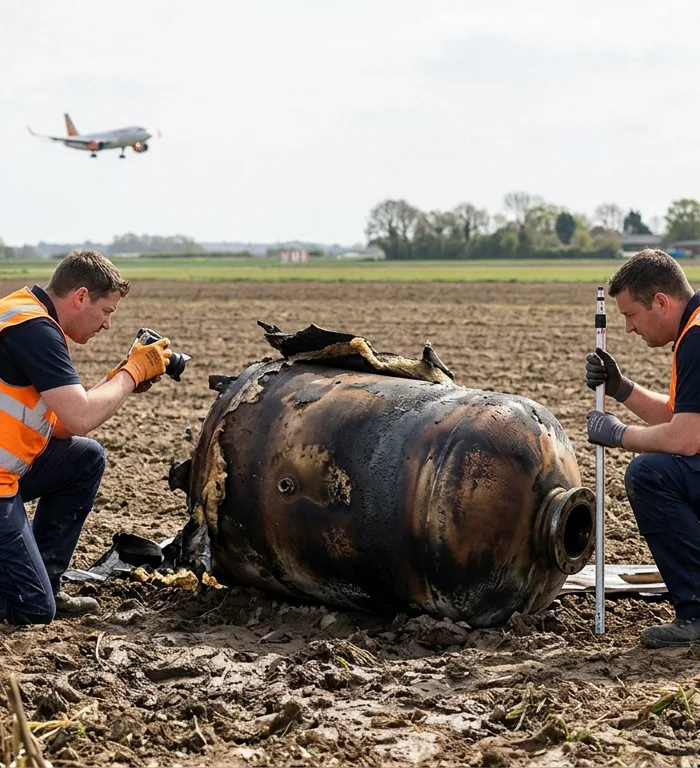
The frequency of space debris re-entering Earth’s atmosphere is projected to increase significantly as the number of active satellites grows from approximately 12,900 today to an estimated 100,000 within the next decade. While current risks remain low, the volume of defunct hardware and rocket remnants falling to Earth is expected to rise exponentially. This trend creates emerging hazards for both commercial aviation and populations on the ground.
Technical assessments indicate that current satellite disposal methods, which rely on atmospheric burn-up, may be insufficient. Research suggests that durable materials such as titanium and specialized alloys often survive hypersonic descent, contradicting claims by some operators that their hardware is fully demisable. Consequently, the volume of debris reaching the surface is likely underreported, as many fragments land in unpopulated or remote areas without identification.
The Federal Aviation Administration
Regulatory bodies are beginning to acknowledge the shift in risk profiles. The Federal Aviation Administration (FAA) estimates that by 2035, the probability of a catastrophic space debris strike on a commercial aircraft will reach approximately 7 in 10,000 per year. Such an event would likely result in total aircraft loss or rapid decompression.
Ground-level risks are projected to be higher than those faced by aviation. Projections suggest that by 2035, the probability of a human injury or fatality caused by falling space debris could reach 10% annually. Some models indicate that, under current satellite deployment trajectories, a casualty event could be expected every two years. These findings highlight a growing gap in current safety protocols, as international aviation authorities note that these hazards cannot yet be quantified with the same precision as traditional flight risks. Stakeholders are now evaluating the integration of space situational awareness data into broader air safety management systems to mitigate these evolving threats.
More stories
- Europe faces attribution gap after 16 cyber, physical incidents
- PIF backs Grand Theft Auto as Saudi players embrace game
- Signal limits screenshots to curb AI access to messages
- Cognition runs Devin Mac workspaces on EC2 in 6 AWS regions
- Salesforce engineers cut 600-failure triage to 90 minutes
- Türkiye Desk: GTA 6 puts console access and network demand in focus
- Apple AI server plan puts Nvidia links back in play by 2029
- SK Hynix eyes Intel Ohio plant for U.S. memory output
Latest news
- Trump prepares tariffs on China and other major exporters
- New-car buyers pay record average $50,087 in October
- Banks face ECB reserve debate over liquidity and profits
- Investors see Anthropic debut gains fade below $83 a share
- Iraq orders federal control over Kurdish-area oilfields
- Germans oppose Ukraine aid as poll shows support slipping
- Kim Jong-un receives 10 envoys after constitutional shift
- Ukraine claims Libya strike sinks Russian naval corvette