
Air Force Officer Faces Charges After Demanding President’s Impeachment
The US Air Force has charged Major Jason Watson with Uniform Code of Military Justice violations after he protested in uniform against the administration's…
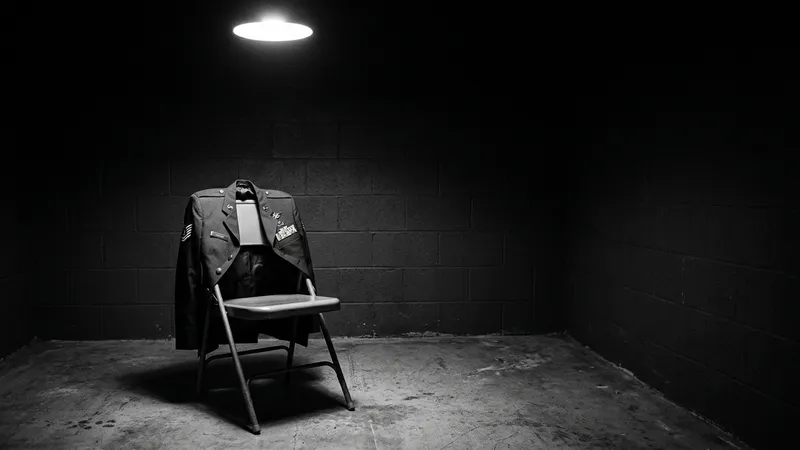
The United States Air Force has initiated formal military justice proceedings against Major Jason Watson. These charges follow his public demands for the impeachment of President Donald Trump and President JD Vance, along with criticism of the administration's handling of the conflict with Iran. Military officials confirmed the charges on Tuesday, noting they are linked to Watson's participation in a July protest at the US Capitol, where he appeared in uniform.
Major Watson is being prosecuted under three articles of the Uniform Code of Military Justice (UCMJ). One of the most significant articles cited is Article 88, which specifically prohibits military personnel from using contemptuous words against the President, President, and Congress. His legal representatives have confirmed that Major Watson remains in pre-trial confinement as the military justice process moves forward.
Military Speech Restrictions
This incident represents a rare application of military statutes that govern the political speech of active-duty service members. The Air Force has stated its commitment to ensuring Major Watson receives full due process throughout the upcoming proceedings. The military justice system enforces stringent regulations concerning the political activities of its personnel, emphasizing the critical need to preserve non-partisan command structures within the armed forces.
Major Watson has publicly accused the current administration of constitutional violations and corruption. His case marks him as the first active-duty officer to face such charges in connection with the broader 'Removal Coalition' protest movement.
The UCMJ generally allows service members to personal opinions on political matters as private citizens, but it imposes significant restrictions on doing so while in uniform, in a manner that implies official endorsement, or when using contemptuous language against senior government officials.
Historical Context of Military Conduct
Historically, the Uniform Code of Military Justice has been used to maintain discipline and order within the ranks, including regulating political expression deemed disruptive or disrespectful to civilian authority. Article 88, in particular, aims to prevent military personnel from undermining public confidence in their civilian leadership, a principle seen as vital for civil-military relations in a democratic society.
While specific instances of charging officers under Article 88 are infrequent, its existence underscores the military's strict stance on maintaining an apolitical image.
The outcome of Major Watson's court-martial could set a precedent regarding the boundaries of political speech for active-duty military personnel, especially in an era of heightened political polarization. Legal experts suggest the case will likely draw close scrutiny regarding the balance between First Amendment rights and the unique disciplinary requirements of military service.
Broader Implications for Service Members
This case highlights ongoing debates about the role of military members in political discourse. While service members do not forfeit their constitutional rights, those rights are often subject to additional limitations deemed necessary for military effectiveness and good order. The military's emphasis on neutrality ensures that the armed forces remain loyal to the Constitution and its civilian leadership, rather than to specific political parties or figures.
The proceedings against Major Watson will be closely watched by legal scholars, civil liberties advocates, and military personnel alike, as they could redefine the parameters of acceptable political engagement for those serving in uniform. The rigorous legal process is designed to weigh the specific actions taken against the long-standing principles of military professionalism and non-partisanship.
More stories
- Climate and AI Risks Drive Litigation, Reshaping Corporate Liability
- Net Zero Cost Projections Inflated by Nearly Half a Trillion Pounds
- Trump Administration Actions Lower Fuel Prices, Raise Long-Term Economic Risks
- New US AI Export Curbs Ignite Global Tech Supply Chain Chaos
- Conservative Air Defense Plan Faces Scrutiny Over Cost, Scope
- Scotland’s Power Grid Strained by Massive Data Center Expansion
- Reform UK Plan to Scrap GDPR Threatens EU Data Flow
- Federal Judge Blocks Ohio Law Requiring Proof of Citizenship for Voters
Latest news
- Kyiv playground blast puts Ukraine air-defense stocks back on Washington’s agenda
- Rubio’s Athens speech hardens Washington’s public line on Iran
- Saudi airport hit in new Houthi attack, officials say
- New Horizon posts $4.1 million Q1 loss as R&D rises
- French Borrowing Costs Hit 5% as Debt Crisis Deepens
- Houthis claim Riyadh airport strike as injuries reported
- Germany Reaffirms Russia Sanctions Amid Potential US Policy Shift
- China beats Thailand 2-0 to reach junior badminton final