New US AI Export Curbs Ignite Global Tech Supply Chain Chaos
United States restrictions on foreign access to advanced AI models are causing uncertainty, while its AI sector faces infrastructure bottlenecks.
Atlas Newsdesk ·
The United States is implementing increasing restrictions on foreign access to its advanced artificial intelligence models, generating considerable security and economic uncertainty among international partners. These recent directives have specifically limited access for significant intelligence allies, indicating that reliance on U.S.-based AI infrastructure carries inherent political and operational risks for other nations.
This evolving policy approach jeopardizes the competitive position of countries that do not possess their own domestic frontier model capabilities. The situation highlights a growing global technological divide, where access to cutting-edge AI could become a significant differentiator.
Infrastructure Bottlenecks and Investment
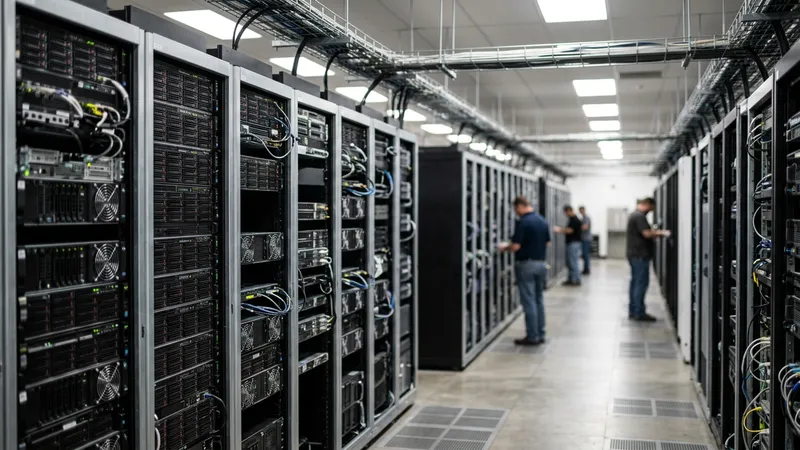
Concurrently, the U.S. AI industry is confronting a substantial infrastructure bottleneck. Four prominent firms are anticipated to invest $700 billion this year on the development of domestic data centers. This projected expenditure represents approximately 2% of the total U.S. Gross Domestic Product, underscoring the scale of required investment.
However, this expansion is being complicated by domestic opposition to large-scale energy and construction projects. These challenges in infrastructure development could create opportunities for other nations to engage in negotiations for access to AI technology.
Potential for International Cooperation
Allied nations might capitalize on their capacity to provide stable power, predictable governance, and secure locations suitable for data center expansion. Such contributions could be leveraged in exchange for guaranteed access to frontier AI systems.
This potential arrangement, termed a "grand compute bargain," reflects the increasing scarcity of computing power globally, where demand now consistently surpasses available supply. Without securing such agreements, allied nations may struggle to integrate advanced AI into their economies, further broadening the existing technological disparity.