US Seeks Extended Stay for Tanker Jets in Bulgaria
Bulgaria's prime minister anticipates a US request to extend the deployment of tanker aircraft, highlighting the strategic partnership.
Lauren Collins ·
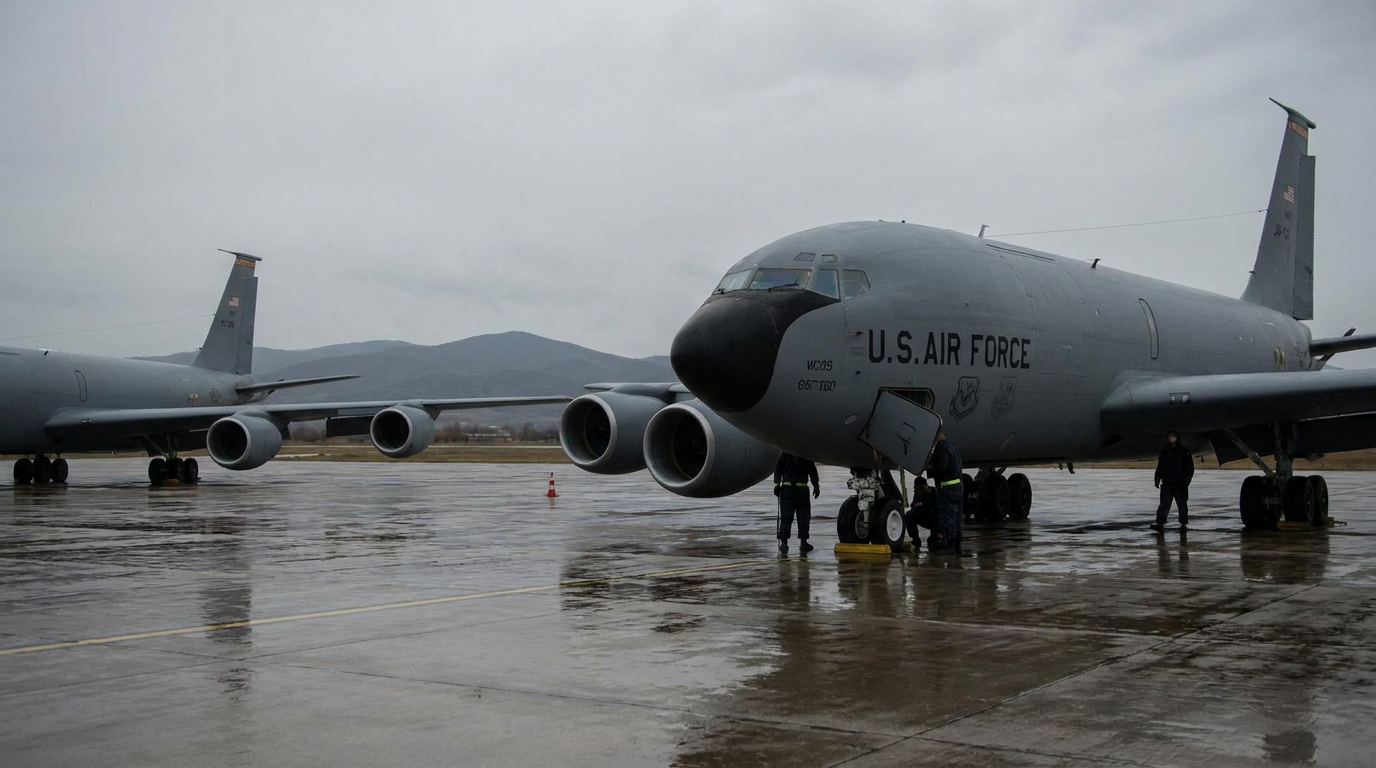
Bulgaria is anticipating a formal request from the United States to extend the deployment of its tanker aircraft, currently stationed at Sofia Airport. Prime Minister Rumen Radev informed his cabinet that discussions with U.S. officials, including President Donald Trump and Secretary of Defense Pete Hegseth, have set the stage for this potential extension.
The presence of these U.S. military aircraft in the Bulgarian capital began in mid-February. Initially, their deployment was linked to NATO drills and forward presence initiatives, according to official statements from both the Bulgarian government and the U.S. Embassy in Sofia.
Logistical Support Amidst Regional Tensions
The U.S. tanker planes were first observed at Sofia's civilian airport shortly before operations commenced in the Middle East. Their extended stay is now under consideration, with Prime Minister Radev acknowledging the U.S. as a key strategic partner and ally.
While the official explanation points to routine exercises, the deployment has drawn scrutiny. Opposition parties within Bulgaria have voiced concerns, interpreting the presence of the aircraft as military assistance to the U.S. campaign in the region.
International Relations and Defense Posture
These developments follow statements from U.S. Secretary of State Marco Rubio, who commended Bulgaria and other regional allies for their willingness to provide logistical support for American operations in the Middle East. The potential extension signifies a deepening of defense cooperation between the two nations.
The original agreement for the U.S. tanker aircraft was set to conclude at the end of May. The anticipated request indicates a shift in operational needs or strategy requiring a continued presence beyond this initial timeframe.
The decision to host the aircraft has been framed by the Bulgarian government within the broader context of NATO commitments and bilateral strategic partnerships. The government’s stance emphasizes maintaining strong ties with its U.S. allies and contributing to regional security frameworks.
The implications of extending the U.S. military presence extend beyond logistics, potentially influencing Bulgaria's broader defense posture and its role within NATO and international security efforts. Further details regarding the duration and specific terms of any extension are expected following a formal U.S. request.