US sea drones strike Iran naval base in first combat use
US sea drones hit Iran’s Bandar Abbas naval base on Sunday, marking the first combat use of armed unmanned surface vessels, the Pentagon said.
Lauren Collins ·
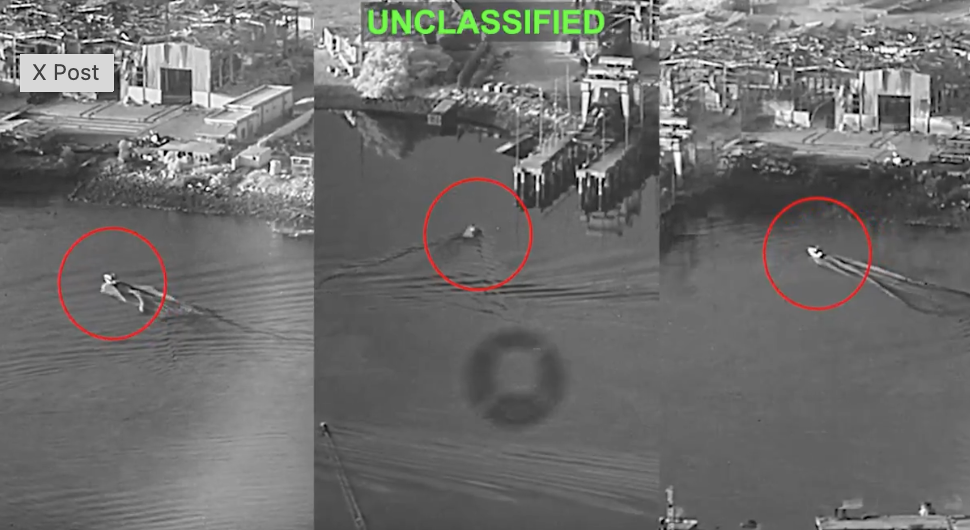
US sea drones hit Iran’s Bandar Abbas naval base on Sunday, marking the first combat use of armed unmanned surface vessels, the Pentagon said.
US Central Command said three Corsair unmanned surface vessels were used against a submarine and ship maintenance facility at the base. The command posted footage showing a vessel moving toward a dock before detonating on contact.
Corsair enters live combat
The strike gives the Pentagon a new maritime tool in its campaign against Iran: a boat-sized weapon designed to reach a target without a crew aboard. The Corsair is a 24-foot sea drone built by Saronic Technologies, a Texas company launched in September 2022.
Saronic was founded by a former member of the Navy SEALs, according to the source material. The company also makes Marauder, a 180-foot autonomous surface vessel intended to carry large containers and payloads from a Louisiana shipyard.
The Bandar Abbas attack is different from earlier unmanned maritime uses because Central Command described it as a direct strike. In June, the US Navy used a Corsair to help rescue two crew members after a US Army AH-64 Apache helicopter crashed off Oman, the first reported rescue of that kind using an unmanned surface vessel.
Autonomy moves from test to strike
The operation reflects a broader Pentagon move toward autonomous systems across air and sea. The campaign against Iran has already included one-way aerial attack drones modeled on the Shahed platform, a design associated with Iran’s own drone arsenal.
The Trump administration plans to spend tens of billions of dollars on autonomous platforms, according to the source material. The Bandar Abbas strike shows how that spending push is moving from procurement language into battlefield use, where unmanned systems can be tested against fixed military infrastructure.
For the Pentagon, the appeal is operational as well as political. A drone vessel can approach a defended dock without exposing a sailor to direct fire, while giving commanders another option between surveillance and a larger conventional strike.
For Saronic, the attack places its Corsair platform at the center of a fast-growing defense category. Combat use can raise a system’s profile, but it also increases scrutiny of performance, targeting reliability and how the weapon is integrated into command decisions.
Hormuz risk widens the stakes
The strike came as the US renewed hostilities against Iran and threatened to seize control over the Strait of Hormuz after continued attacks on commercial tankers. The waterway is a strategic chokepoint, so any sustained confrontation there can affect shipping, insurance and energy-market expectations even before supply is physically disrupted.
The immediate industry effect is clearest for naval technology suppliers. If unmanned boats prove useful against ports, docks and maintenance facilities, militaries may accelerate demand for surface drones, counter-drone defenses and command systems that can manage mixed fleets of crewed and uncrewed vessels.
The risk is escalation at sea. Iran could respond by hardening naval facilities, targeting US-linked maritime assets or increasing pressure around commercial shipping lanes, while Washington could expand its use of unmanned systems to reduce personnel exposure.
Three paths after Bandar Abbas
If US strikes remain limited to military maintenance sites, the macro effect could be contained to higher risk pricing around Gulf shipping rather than a broader economic shock. Under that path, Saronic gains a combat reference for Corsair, while the wider defense sector focuses on niche maritime strike and rescue missions.
If attacks spread toward assets near commercial routes, the mechanism changes. Shipping uncertainty around the Strait of Hormuz would become the global channel, Saronic would face heavier demand and oversight, and the maritime weapons industry would likely see faster investment in both attack drones and interceptors.
If diplomatic or military pressure reduces tanker attacks, the Corsair strike may be remembered as a demonstration rather than the start of a sustained naval drone campaign. The open questions are whether Central Command reports additional sea-drone strikes, how Iran responds at sea, and whether Congress pushes for tighter rules on autonomous weapons spending.