Iran Threatens to Close Strait of Hormuz Amid US Tension
Iran threatens to shut the Strait of Hormuz, a key oil route, escalating its confrontation with the United States over potential military action.
Lauren Collins ·
Escalating Threats in a Vital Waterway
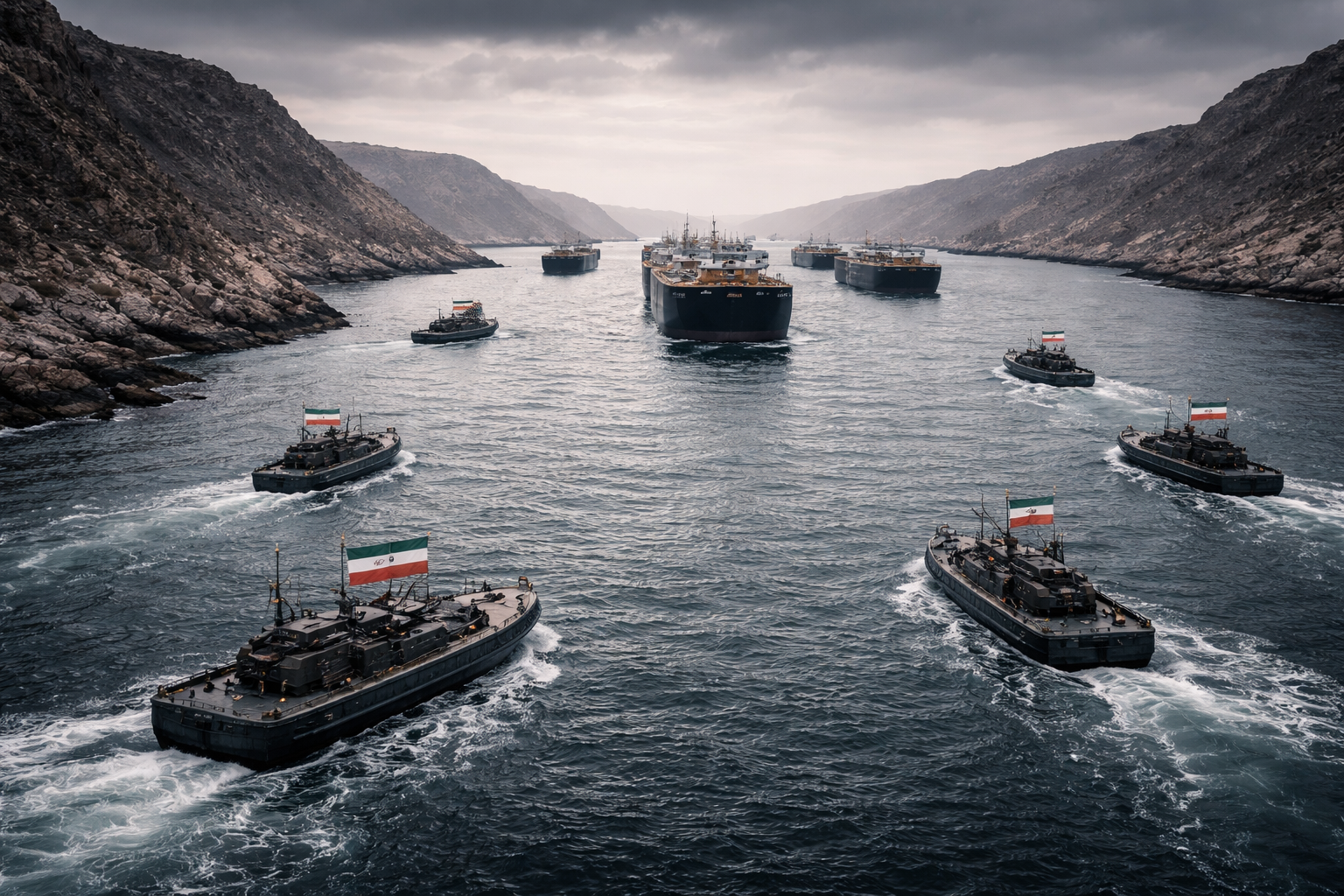
Iran has issued an explicit threat to shut down the Strait of Hormuz if the United States acts on threats to target the nation's infrastructure. The declaration from Tehran’s military raises the stakes in a volatile confrontation, directly challenging Washington and placing the security of global energy supplies at risk.
The warning specified that an indefinite closure of the critical maritime chokepoint would be implemented should President Donald Trump's administration carry out any strike against Iranian power plants. In a separate and novel development, sources within Tehran indicated that the government is also exploring methods to monetize its de facto control over the strategic waterway, a move that would upend decades of international maritime protocol.
A Critical Global Chokepoint
The Strait of Hormuz is the world's single most important oil transit artery. It connects Persian Gulf producers to the open ocean, making it a lynchpin of the global economy. Approximately one-third of the world's seaborne oil and nearly 20% of total global petroleum consumption passes through the strait daily. At its narrowest point, the shipping lane is only two miles wide, rendering it highly vulnerable to disruption.
Nations including Saudi Arabia, the UAE, Qatar, Iraq, and Kuwait depend on the strait for their oil exports. Any prolonged blockage would almost certainly trigger a severe energy crisis and a global economic recession as energy prices skyrocket.
Military and Legal Implications
An attempt by Iran to close the strait would be a direct challenge to international law. The United Nations Convention on the Law of the Sea guarantees “transit passage” through international straits, meaning a closure would be a flagrant violation met with a robust international response. From a military perspective, Iran’s Islamic Revolutionary Guard Corps Navy (IRGC-N) could employ asymmetric tactics to disrupt shipping.
These strategies include the use of naval mines, anti-ship ballistic missiles, drone attacks, and swarms of small, fast-attack craft to harass and deter commercial vessels. This posture sets up a direct confrontation with the United States Navy's Fifth Fleet, based in nearby Bahrain, whose primary mission is to ensure freedom of navigation and secure maritime commerce in the region.
Analysts suggest that while Iran could disrupt traffic for a short period, a sustained closure would be difficult to maintain against a full-scale US military response.
The concept of “monetizing” the strait introduces a new layer of complexity. While details remain vague, this could involve imposing transit fees, levying charges for inspections, or using the threat of delays as leverage for economic concessions, all of which challenge the principle of free passage.
A History of Flashpoints
Tensions in the Strait of Hormuz are not a new phenomenon. The current situation echoes previous periods of high friction, most notably the “Tanker War” phase of the 1980-1988 Iran-Iraq War. During that conflict, both nations targeted each other's oil tankers, which eventually drew in the US Navy to protect commercial shipping in operations like Operation Earnest Will.
Tehran has periodically issued threats to close the strait over the past several decades, typically in response to international pressure, sanctions, or military threats. While often used as a tool of rhetoric, the credibility of such threats increases significantly during periods of direct military confrontation.
The international community is now closely monitoring for any signs of de-escalation or further military posturing from either Washington or Tehran, as a miscalculation could have devastating consequences.