Bolsonaro visit ban tests court power in Brazil October vote
A 90-day Bolsonaro visit ban tightens court limits on Jair Bolsonaro's political communications before Brazil's October vote.
Lauren Collins ·
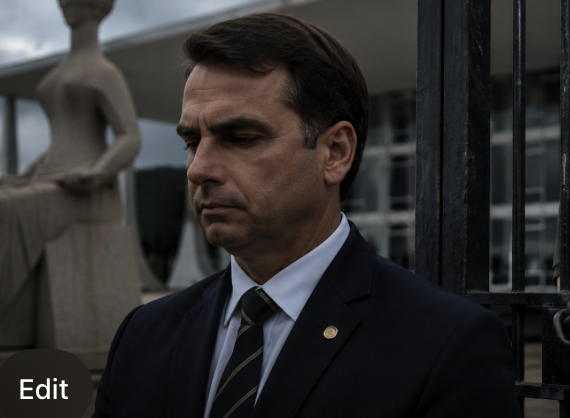
Bolsonaro visit ban blocks Flávio Bolsonaro from seeing his father for 90 days, extending a court fight into Brazil's election.
Justice Alexandre de Moraes issued the order on Monday against Flávio, a presidential candidate and son of former leader Jair Bolsonaro. The restriction effectively rules out father-son visits until after the first round of the October election.
A 90-day campaign barrier
Moraes said Flávio misused visitation rights by helping his father bypass a court-ordered social media ban. The judge cited the weekend publication of a letter from the former president as the trigger for the new restriction.
The elder Bolsonaro has been barred since last year from using social media either directly or through intermediaries. Moraes treated the letter's publication as part of the same enforcement problem: a former president under legal limits still reaching voters through allies and relatives.
In the message, Jair Bolsonaro urged supporters to set aside internal disputes while restating support for Flávio's candidacy. The appeal appeared aimed at calming tensions between Flávio and former First Lady Michelle Bolsonaro, which had broken into the open late last month.
House arrest and online limits
Jair Bolsonaro is under house arrest while serving a 27-year sentence for attempting a coup after his 2022 election defeat. Moraes also had a leading role in the trial that ended with Bolsonaro's conviction last September, deepening the political confrontation between the judge and the former president's camp.
The Monday order gave Bolsonaro's lawyers 48 hours to explain whether the former president knew the letter would be posted online. Moraes also said the Bolsonaros had previously violated the same social media restriction, making the latest episode more than a single disputed post.
Bolsonaro campaign coordinator Rogério Marinho accused Moraes of trying to intervene in the election. He called the decision "authoritarian" and "disproportionate" and described it as an attempt to "isolate the former president from any communication."
A lawyer for Flávio's campaign said it would seek to overturn the ruling, calling it illegal and unconstitutional. The legal response sets up a compressed fight over access, speech limits and campaign strategy before voting begins.
Campaigns face a court clock
Moraes has long drawn attacks from the Bolsonaro family and its allies, who accuse him of persecution and censorship of right-wing Brazilians. The judge's defenders frame his actions as enforcement against the online spread of false political claims, but the supplied record does not include a fresh response from the court beyond the order itself.
For Flávio's campaign, the immediate cost is practical as well as symbolic. The ban removes a direct channel to a former president whose endorsement still carries weight with Bolsonaro-aligned voters, while forcing the campaign to manage family tensions without in-person visits.
The order also sends a warning to Brazil's political campaign industry and digital operators. If a restricted figure's personal message is reposted by a relative or campaign ally, courts may treat that distribution as evidence of circumvention rather than ordinary political speech.
The broader macro mechanism is institutional risk, not a single market number. If election rules are enforced clearly and appeals move quickly, investors and foreign governments can read the dispute as a stress test of Brazil's courts; if decisions appear ad hoc, the campaign may add uncertainty around policy continuity and post-election acceptance.
If the ban is upheld through the first round, the global effect would likely come through political-risk pricing, the Flávio campaign would lose a high-value family channel, and other campaigns would tighten controls over messages from legally restricted figures. If an appeal reverses the order, the campaign regains access and the wider sector may read the social media ban more narrowly.
A third path depends on the 48-hour explanation. If lawyers cannot show Jair Bolsonaro lacked knowledge of the online posting, Moraes could have grounds to intensify enforcement; if they can, the dispute may narrow to procedure, timing and the exact boundary between a private letter and a banned public message.