

US military weighs strategic asset deployment as regional interceptor stocks tighten
The Pentagon assesses the use of heavy conventional ordnance against Iran as diminished missile defense inventories complicate regional security posture.
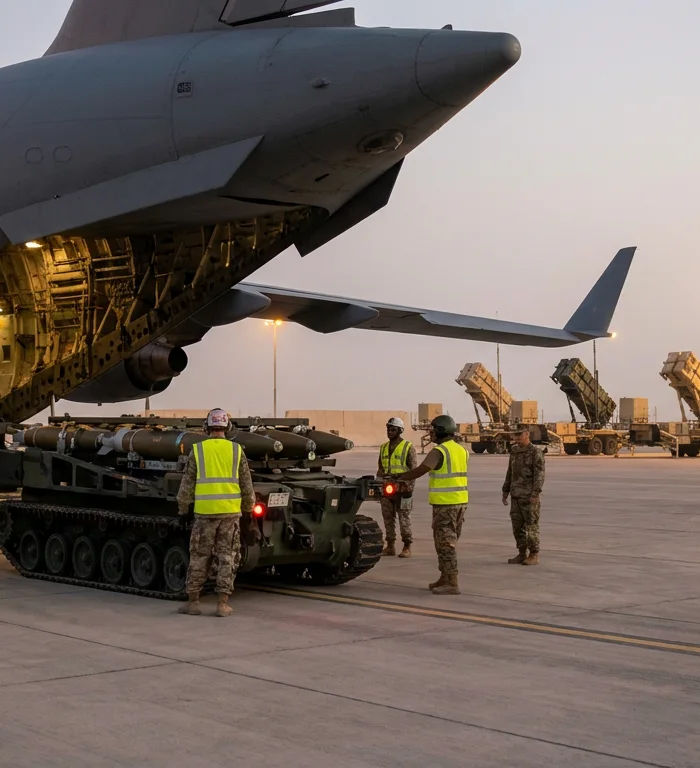
Strategic calculus shifts amid defense constraints
President Trump is currently weighing the use of heavy strategic assets, including the GBU-43/B Massive Ordnance Air Blast (MOAB), against Iranian targets as the US military contends with critical supply constraints. The potential deployment follows a sustained period of high-intensity engagements that have significantly depleted regional stockpiles of interceptor missiles.
Defense officials are grappling with the logistical challenge of replenishing advanced defensive hardware at a rate that matches current operational demands. The shift toward evaluating high-yield, non-nuclear capabilities suggests a pivot from reliance on standard interceptor batteries toward more decisive, offensive-heavy strike configurations.
Inventory pressures test regional security
President Trump
The US Department of Defense has faced recurring difficulties maintaining sufficient inventory levels for systems like the Patriot and THAAD interceptors, which are essential for protecting regional infrastructure. Supply chain bottlenecks in the industrial base have left limited room for error, forcing commanders to prioritize high-value targets while managing a finite supply of defensive assets. For nations within the Gulf Cooperation Council (GCC), including Saudi Arabia, the UAE, and Qatar, this situation creates a complex diplomatic environment. These countries continue to navigate a delicate path of neutrality, seeking to de-escalate tensions while remaining host to critical US military installations that are central to the current strategic planning. Energy markets and maritime stability The escalation potential remains a primary driver of volatility in regional oil markets, which typically react sharply to direct kinetic engagement between US and Iranian forces. Unlike previous proxy-level skirmishes, the prospect of utilizing massive ordnance suggests a scenario that could rapidly expand, threatening the stability of transit routes through the Strait of Hormuz.
Any disruption to these maritime channels would have immediate global macro consequences for energy pricing and supply chains. The current uncertainty regarding replenishment timelines for regional missile defenses adds a structural risk factor for investors and regional governments attempting to calibrate their exposure to a potential kinetic shift.
Diplomatic pathways and future triggers
The primary uncertainty remains whether the current posture will force a recalibration of Tehran's regional activities or trigger an unintended escalation. Observers are looking to upcoming US Department of Defense procurement announcements and shifts in base access protocols for signals regarding the long-term feasibility of maintaining current deterrence levels.
If regional diplomatic signaling from Tehran toward Riyadh increases in the coming months, it could indicate a tactical pivot to secure a security guarantee against direct US intervention. Conversely, a reduction in pressure on US naval assets in the Levant would lower the immediate demand for interceptors, potentially easing the current strategic tension by the end of May 2025.
More stories
- Germans oppose Ukraine aid as poll shows support slipping
- Kim Jong-un receives 10 envoys after constitutional shift
- Ukraine claims Libya strike sinks Russian naval corvette
- COP31 climate talks collapse over fossil fuels and funds
- Russian military faces 1,087 recorded suicides in Ukraine war
- US faces China, Russia in Africa minerals contest
- Albania protests intensify as Rama rejects calls to resign
- US official denies Trump Starshield restriction directive
- U.S. Navy evades Iran missiles as Hormuz pressure builds
- Brazil poll puts Flávio Bolsonaro level with Lula race
Latest news
- Trump prepares tariffs on China and other major exporters
- New-car buyers pay record average $50,087 in October
- Banks face ECB reserve debate over liquidity and profits
- Investors see Anthropic debut gains fade below $83 a share
- Iraq orders federal control over Kurdish-area oilfields
- Nvidia shares retreat as AI rally cools before PCE data
- Macy’s parade faces balloon limits as storm winds approach