

US and Iran hold mediation talks as Qatar seeks to bridge conflict gaps
Washington and Tehran are reviewing new proposals to de-escalate tensions, according to Qatari officials managing the back-channel negotiations.
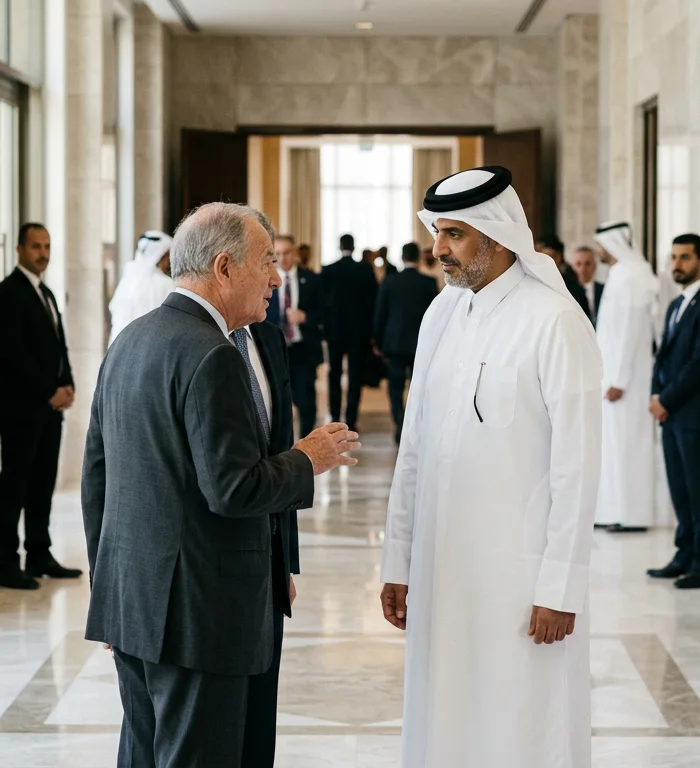
Diplomatic channels reopen in Doha
The United States and Iran are actively reviewing new proposals aimed at narrowing long-standing differences, according to an official statement released by Qatari mediators. The announcement follows a period of heightened friction across the Middle East, with Doha positioning itself as the primary conduit for de-escalation between the two powers.
Qatari officials confirmed that both Washington and Tehran have committed to the ongoing mediation process. The dialogue focuses on establishing a framework to avoid further regional escalation, specifically targeting the potential for a direct, multi-front military confrontation.
The mechanics of regional mediation
Qatar serves as a critical intermediary between the Qatar serves as a critical intermediary between the United States and Iran, a role necessitated by the absence of formal diplomatic relations between the two nations. This arrangement allows for technical negotiations that would otherwise be impossible, particularly as regional proxy actors increase activity near critical maritime choke points and energy corridors. The Biden administration maintains that preventing a broader regional spillover is a priority, citing the need to secure Gulf energy infrastructure and protect personnel stationed in the region. For Tehran, the current calculus involves navigating the risks of direct entanglement while maintaining the influence of its regional network, often referred to as the Axis of Resistance. Risk of regional energy disruption The urgency of these talks is underscored by the vulnerability of global trade routes. Any escalation risks impacting the Strait of Hormuz, through which a significant portion of the world's seaborne oil transits daily, and the Bab al-Mandab, where commercial shipping has faced ongoing disruption from regional militia activity.
Doha The United States
Analysts suggest that a successful outcome from these talks would require more than just verbal commitments. The primary focus for stakeholders remains whether these diplomatic signals can translate into a verifiable pause in kinetic operations across Iraq, Syria, and the Red Sea.
Future stability and key benchmarks
The efficacy of the Qatari-led effort hinges on whether the current back-channel discussions can move from crisis management to a durable framework. The immediate test for the success of this mediation is whether it results in a measurable, sustained decrease in militia-led activity against Western assets.
A failure to stabilize these fronts will likely result in a return to elevated tensions, increasing the likelihood of direct military responses. Observers are watching for any indicators of a formal suspension of hostilities, which would signify that both Washington and Tehran have reached a temporary, tactical accommodation.
More stories
- Germans oppose Ukraine aid as poll shows support slipping
- Kim Jong-un receives 10 envoys after constitutional shift
- Ukraine claims Libya strike sinks Russian naval corvette
- COP31 climate talks collapse over fossil fuels and funds
- Russian military faces 1,087 recorded suicides in Ukraine war
- US faces China, Russia in Africa minerals contest
- AI giants compete for Europe capital after $250bn bond wave
- EU ministers face deadlock over heat aid for 50 million Europeans
- Nigeria traces 44 contacts after Abuja Ebola case
- UAE ministry seeks bids for 68km Dubai-RAK highway
Latest news
- Trump prepares tariffs on China and other major exporters
- New-car buyers pay record average $50,087 in October
- Banks face ECB reserve debate over liquidity and profits
- Investors see Anthropic debut gains fade below $83 a share
- Iraq orders federal control over Kurdish-area oilfields
- Nvidia shares retreat as AI rally cools before PCE data
- Macy’s parade faces balloon limits as storm winds approach