Ukraine missile defence push targets Freyja prototype test
Ukraine missile defence planners want a Freyja prototype by midyear as Kyiv seeks European help against Russian ballistic strikes.
Claire Dubois ·
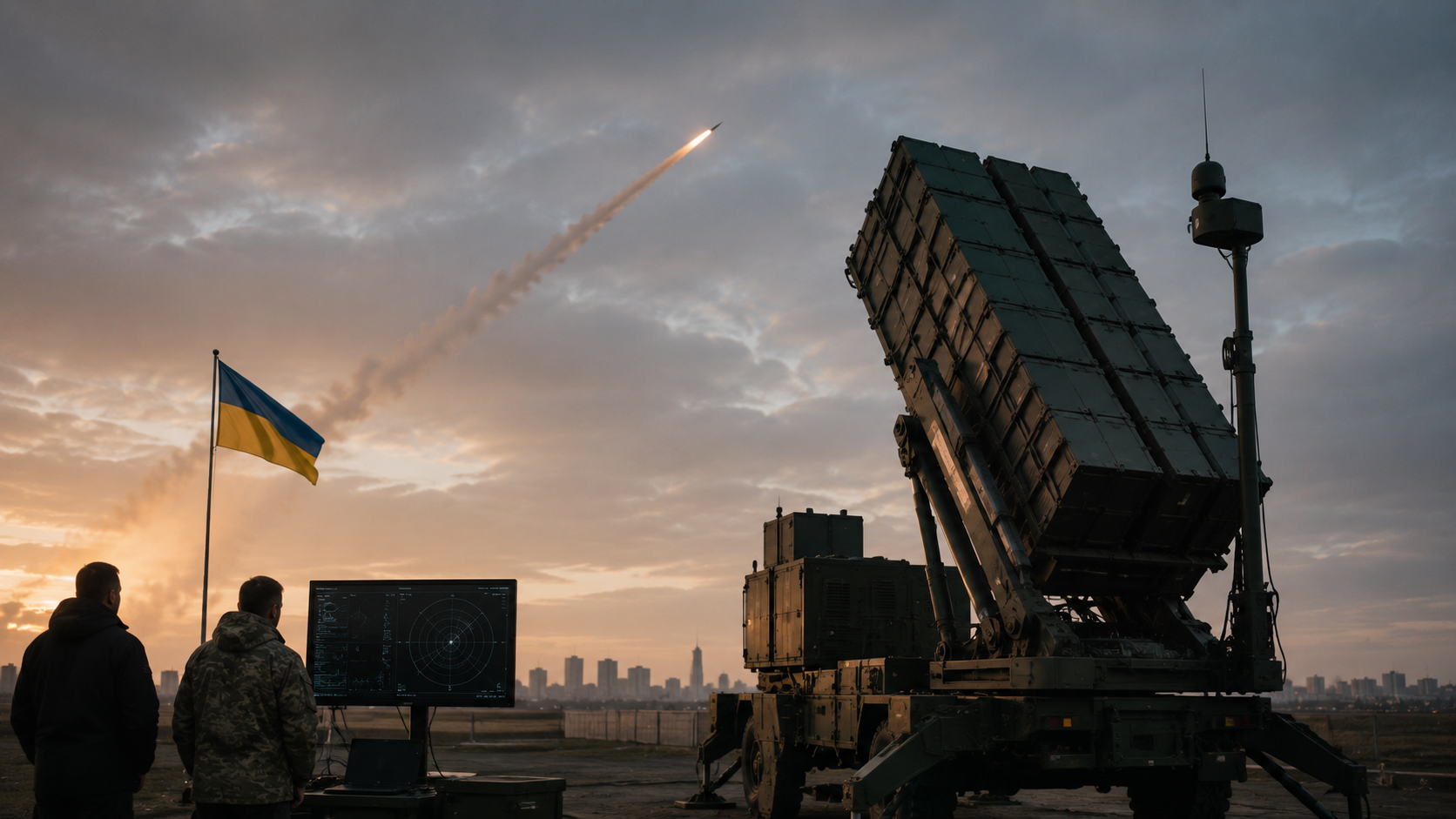
Ukraine missile defence planners want a Freyja prototype by midyear as Kyiv seeks European help against Russian ballistic strikes.
Davyd Aloian, deputy secretary of Ukraine's National Security and Defence Council, said Kyiv is pressing for a working version of the European anti-ballistic system in the first half of next year. The target matters because Ukraine says its existing protection against ballistic missiles is too dependent on U.S.-made Patriot systems.
Freyja timetable tightens
Aloian oversees the Freyja project and said an international steering committee is expected to hold its first meeting soon to assess research and development costs. That step would turn a political initiative into a technical and budget process involving governments and manufacturers.
He described the schedule as deliberately compressed. Aloian said Ukraine's objective is "to have an MVP (minimum viable product) ready by the first half of next year," adding that the prototype should be able to "demonstrate its first practical results."
The anti-ballistic coalition was formally launched at a Paris summit two weeks earlier, according to the source material. Leaders from 10 European countries attended, including Ukrainian President Volodymyr Zelenskiy, along with roughly a dozen defence manufacturers.
Patriot reliance shapes urgency
Ukraine's need is narrow and acute: ballistic missiles fly at several times the speed of sound, leaving defenders little time to detect, track and intercept them. Kyiv says the Patriot is the only system in its arsenal that can reliably bring down Russian ballistic missiles.
That dependence has become a strategic risk for Ukraine. Patriot deliveries have been constrained by political volatility, limited stocks and long production cycles, according to the source material.
Russia has increased ballistic attacks this month on Kyiv and Odesa, Ukraine's capital and a major southern port hub. The source material said Russia launched dozens of missiles, and that Ukraine failed to intercept most of them because it lacked enough interceptors.
Kyiv is offering to bring hardware to the Freyja effort rather than waiting for a fully external solution. Ukraine is prepared to contribute a launcher and an interceptor missile, which Zelenskiy has described as a "matter of testing."
European firms enter the build
Ukraine wants European partners to add the parts of the system that are hardest to integrate at speed. The requested contributions include modern radars, sensors, missile guidance expertise and control electronics.
The manufacturers already associated with the effort include Eurosam, which makes the SAMP-T interceptor system, as well as Leonardo, Thales and Saab. Their involvement points to a project that would combine existing industrial capabilities rather than start every component from scratch.
For the European defence sector, Freyja is a test of whether coalition procurement can move faster than traditional national programmes. If the steering committee quickly defines costs, roles and technical standards, manufacturers could align production and testing around a shared architecture.
If those decisions slip, Ukraine's operational gap remains largely tied to Patriot availability. That outcome would keep pressure on U.S. supply channels and leave European firms with a slower, less unified route into the anti-ballistic market.
The macro effect is industrial and security-driven rather than a conventional trade story. If Europe funds and fields a working prototype, defence budgets could shift toward air and missile defence integration, with Eurosam and other suppliers positioned to benefit from follow-on orders.
If testing exposes major problems in guidance, sensors or interceptor performance, the cost curve changes. Ukraine would still need near-term interceptors, the Freyja coalition would face a longer development cycle, and Europe's defence industry would confront the limits of accelerating complex missile systems under wartime pressure.