NATO summit brings Trump and Zelenskyy into tense talks
Trump will meet Zelenskyy at a NATO summit in Turkey as Ukraine talks, Iran tensions and defense-spending demands strain alliance unity.
Lauren Collins ·
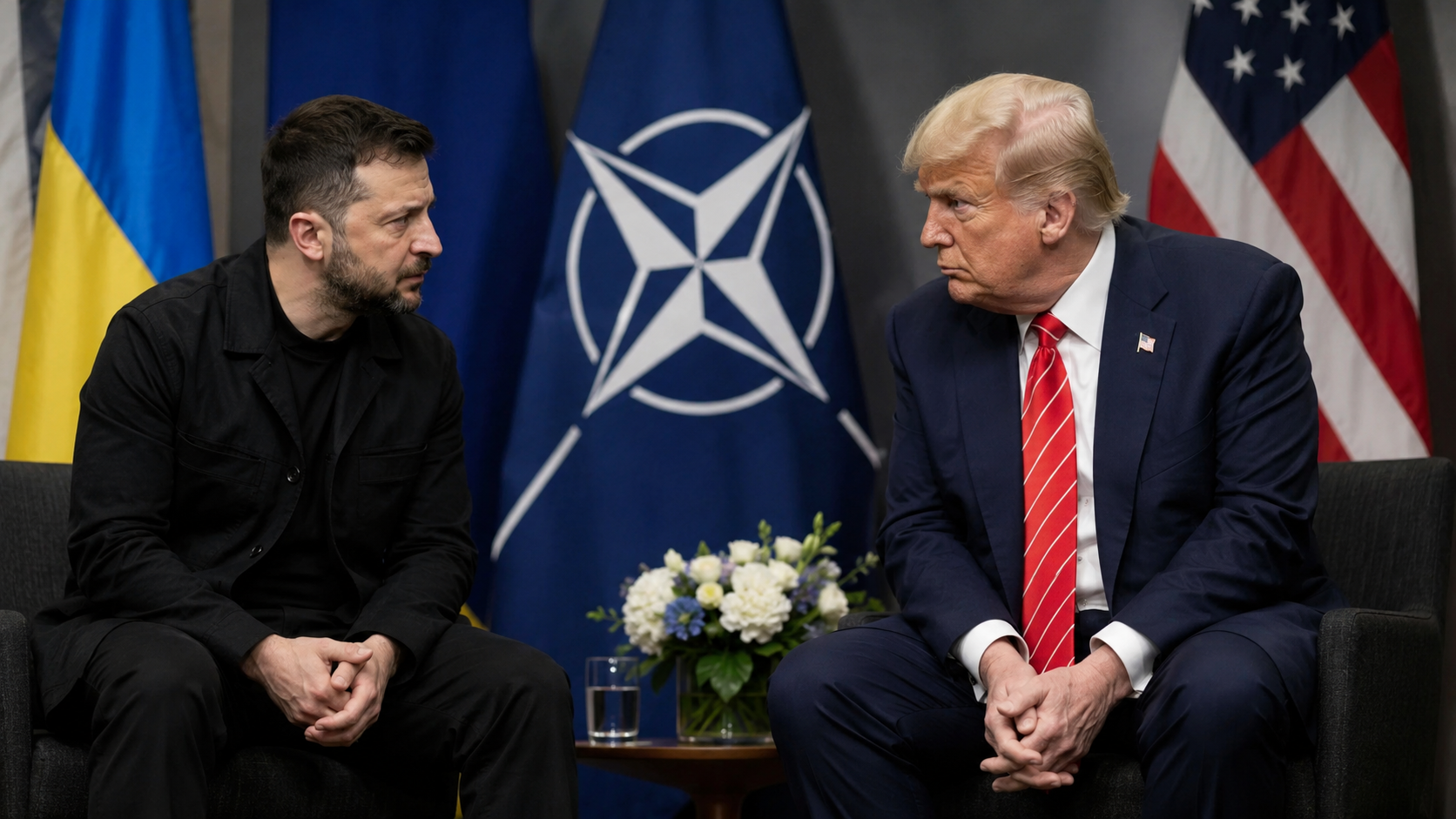
Trump will meet Zelenskyy at a NATO summit in Turkey as Ukraine talks, Iran tensions and defense-spending demands strain alliance unity.
President Donald Trump is scheduled to arrive in Turkey on Tuesday for talks with President Recep Tayyip Erdogan before joining alliance leaders on Wednesday, White House spokesperson Anna Kelly said. His meeting with Ukrainian President Volodymyr Zelenskyy will put the stalled Russia-Ukraine diplomacy back into the center of an agenda already crowded by disputes over Iran, Greenland and military budgets.
The Turkey summit gives Zelenskyy a direct channel to a U.S. president who campaigned on ending the war quickly but has since shown frustration with the lack of a settlement. Trump’s relationship with the Ukrainian leader has shifted between pressure and engagement, leaving European governments alert to any change in U.S. backing for Kyiv.
Turkey schedule puts Erdogan first
Trump’s first stop with Erdogan matters because Turkey sits inside NATO while also maintaining channels with Moscow and Kyiv. Ankara has often positioned itself as a broker in regional crises, making the host setting more than diplomatic scenery.
The White House has not described a detailed peace plan for the Trump-Zelenskyy meeting. A U.S. official, speaking anonymously on a call with reporters, said Trump intends to discuss efforts to end the war with Zelenskyy.
That conversation follows Trump’s Saturday call with Russian President Vladimir Putin, according to Kremlin foreign policy aide Yuri Ushakov. The timing gives the summit a triangular quality: Washington is speaking to Moscow, Kyiv is pressing for support and European allies are asking for a renewed diplomatic push.
Ukraine talks meet battlefield limits
Ukraine has stepped up long-range drone and missile attacks on targets inside Russia, seeking to show that it can impose costs on a larger adversary. The same U.S. official said the administration still sees the war as largely stalled, with neither side making decisive advances.
For Zelenskyy, the Turkey meeting is an opportunity to keep U.S. attention on Ukraine after months in which the White House has been heavily focused on Iran. European leaders have also called for new U.S. and European efforts to restart peace talks between Kyiv and Moscow.
The open question is whether a summit conversation can move beyond public pressure and produce a process that both warring capitals accept. Without that mechanism, the meeting risks becoming another display of alliance concern rather than a step toward negotiations.
Iran crisis shadows alliance spending
The NATO gathering is also shaped by anger over the U.S. and Israeli war with Iran, which began on Feb. 28, according to the source account. The closure of the Strait of Hormuz halted oil and gas shipments and created an energy shock that forced U.S. allies to manage consequences from strikes they were not consulted on.
Trump has criticized several NATO members for refusing early U.S. requests to use military bases and for not helping reopen the strait. He has also pushed partners to raise defense spending to 5% of GDP, a target far above what many governments have treated as politically realistic.
“President Trump expects all allies to step up immediately and not only get on a sustainable path to the 5 percent, but get to 5 percent as soon as possible,”
U.S. Ambassador to NATO Matt Whitaker told reporters, calling higher European military spending “really crucial.” His comment turns the summit into a budget test as much as a security meeting.
If the Trump-Zelenskyy talks create a credible path back to Russia-Ukraine negotiations, the global effect could be lower geopolitical risk around Europe, while Kyiv would gain diplomatic room and NATO could redirect part of its attention to Iran and energy security. That route would still depend on Moscow’s willingness to engage and on whether Ukraine sees any proposal as compatible with its security needs.
If the meeting instead exposes deeper splits, the macro pressure would likely come through defense budgets, energy vulnerability and a more fragmented Western response to simultaneous wars. For Ukraine, that would raise uncertainty over U.S. support; for NATO, it would sharpen the divide between members ready to meet Trump’s 5% demand and those facing domestic resistance.
A third path is a limited summit outcome: public unity, no immediate diplomatic breakthrough and continued pressure on allies to spend more. In that case, the global economy would remain exposed to the Hormuz disruption described in the source account, Ukraine would keep pressing the battlefield and NATO’s defense industry would face stronger political demand without a settled funding timetable.