ISS crew returns safely after US-Russian space mission tour
An ISS crew of U.S. and Russian spacefarers landed safely after a stay aboard the orbital laboratory, preserving a rare joint space link.
Atlas Newsdesk ·
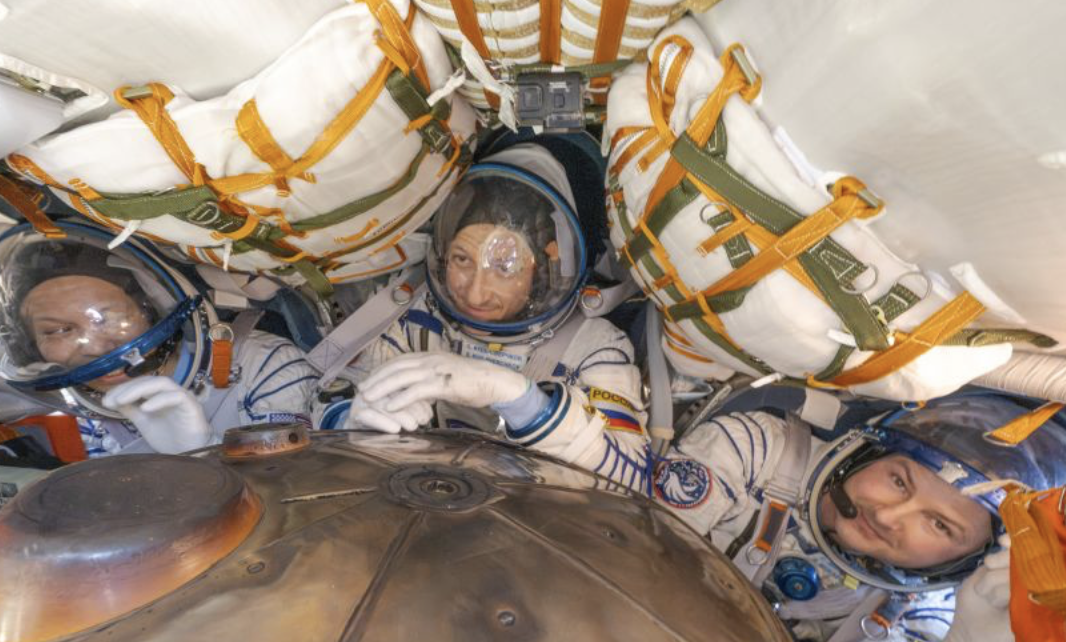
An ISS crew of U.S. and Russian spacefarers landed safely after a stay aboard the orbital laboratory, preserving a rare joint space link.
The reported landing closes a mission that kept American and Russian personnel working together in orbit despite deep political strain on Earth. The source item did not identify the crew members, spacecraft, landing site, mission length, or the agencies that confirmed the recovery.
Safe return from orbit
A safe landing is the central operational fact: the crew returned from the International Space Station without a reported incident. For space agencies, that outcome matters because the riskiest phases of human spaceflight include launch, re-entry, descent, and post-landing recovery.
The return also carries diplomatic weight. The International Space Station remains one of the few major technical programs where the United States and Russia continue to depend on one another for daily operations, crew handovers, and orbital maintenance.
Missing crew details narrow record
The available source leaves major facts unconfirmed. It does not name the U.S. astronaut or Russian cosmonauts, specify whether the return used a Russian or U.S.-operated vehicle, or state when the crew launched for the station.
Those gaps limit what can be stated as record. Without an official agency statement or mission update, the article cannot verify the landing zone, the medical condition of individual crew members, the duration of the stay, or the next planned rotation.
Even with those limits, the event fits a familiar ISS cycle. Crews arrive, operate experiments and station systems, then hand over duties before returning to Earth so the orbiting laboratory can maintain continuous human presence.
Cooperation survives geopolitical strain
The ISS has long functioned as a working partnership rather than a symbolic one. American and Russian systems are intertwined across crew transport history, station operations, and emergency planning, which makes coordination practical even when diplomatic relations are strained.
That interdependence affects more than the people aboard the station. Training teams, mission controllers, recovery crews, engineers, and government agencies must synchronize procedures across languages, hardware standards, and national chains of command.
For the space sector, each normal crew return protects confidence in the rotation model that keeps the station staffed. A failed or delayed landing would not only affect one mission; it could force schedule changes for research, cargo planning, and future crew assignments.
Orbital link, limited macro effect
The global economic effect of one successful crew landing is likely narrow because human spaceflight is a government-led, mission-specific activity rather than a broad market driver. Its wider value lies in institutional continuity, especially when other areas of U.S.-Russian cooperation are limited.
The event still matters for the space industry because reliability is cumulative. Each completed return adds operational evidence for spacecraft procedures, recovery planning, crew health protocols, and the international logistics needed to keep people in low Earth orbit.
The key uncertainty is not whether this crew landed safely, which the source states, but what the full mission record shows. Agency confirmation would clarify the crew list, vehicle, timeline, and any post-landing medical or technical observations.
Three paths after landing
If official mission updates confirm a routine recovery, the immediate effect should be continuity. The ISS program can proceed with planned handovers, the agencies can emphasize operational discipline, and the wider sector gains another data point supporting regular human spaceflight cadence.
If later disclosures show a technical issue during descent or recovery, the mechanism changes. The ISS program would likely review procedures, future crew rotations could face schedule pressure, and spacecraft operators across the sector would study the incident for risk controls.
If geopolitical tension begins to restrict station coordination, the consequences would extend beyond this landing. The macro effect would still be concentrated rather than global, but the ISS program could face planning friction, while the broader space sector would see renewed pressure to reduce dependence on cross-border mission architecture.