

Ukrainian Missile Strike Severely Damages Strategic Kerch Bridge
A Ukrainian missile strike has rendered the Kerch Bridge inoperable, disrupting Russian logistics and blocking maritime traffic while triggering retaliatory…
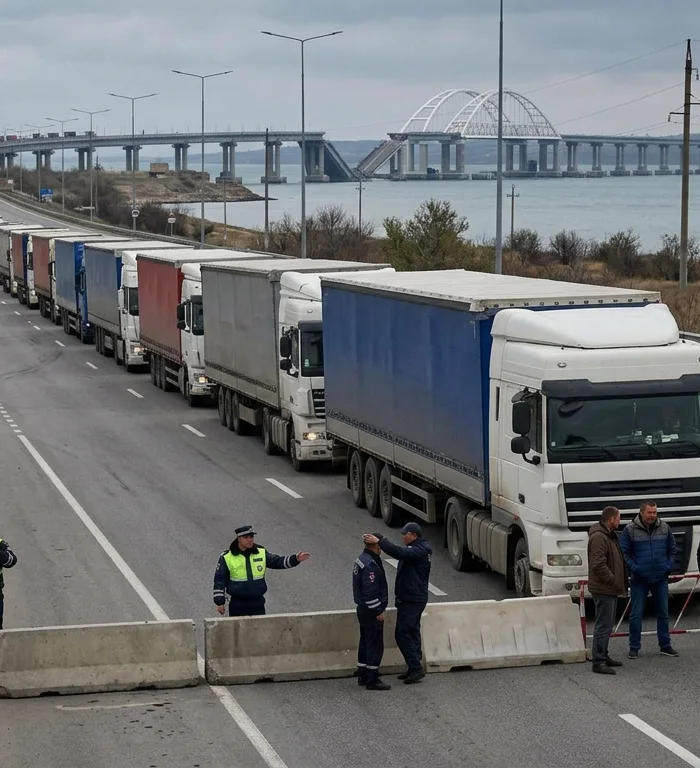
Ukrainian forces have successfully disabled the Kerch Bridge, a critical transit artery connecting the Crimean Peninsula to the Russian mainland. The strike, executed via cruise missile, resulted in the collapse of a 227-meter road arch span into the Kerch Strait. Regional authorities have confirmed the structure is currently unusable, forcing all logistical and civilian traffic to rely on the land corridor through occupied southern Ukraine.
The destruction of the bridge creates significant maritime and logistical risks. Debris from the collapsed steel structure has obstructed the primary navigable channel between the Sea of Azov and the Black Sea, potentially halting commercial and military shipping to ports such as Mariupol and Berdiansk. The complexity of the structural damage suggests that repairs will be prolonged, particularly if Ukrainian forces maintain the capability to interdict reconstruction efforts.
This strike follows a period of systematic degradation of regional air defense systems by Ukrainian unmanned forces. The bridge’s neutralization serves as a strategic escalation, complicating Russian supply lines and limiting the Kremlin’s ability to project power into the peninsula. The loss of this transit route increases the vulnerability of Russian forces in southern Ukraine, who now face a constrained and exposed logistics network.
Kerch Bridge
In retaliation, Russian forces conducted a series of strikes against critical infrastructure in Kyiv, including the targeting of two major bridges spanning the Dnipro River. These operations also impacted energy facilities and transport hubs in the Cherkasy, Kharkiv, and Zaporizhzhia regions. The reciprocal targeting of infrastructure indicates a shift toward high-intensity strikes on logistical nodes, further straining regional stability.
Despite the intensification of hostilities, diplomatic channels remain active. Recent discussions involving international envoys regarding potential conflict resolution frameworks suggest that both parties are balancing military escalation with exploratory talks. However, the current operational environment remains volatile, with both sides prioritizing the destruction of transport infrastructure to dictate the terms of future engagement.
More stories
- Germans oppose Ukraine aid as poll shows support slipping
- Kim Jong-un receives 10 envoys after constitutional shift
- Ukraine claims Libya strike sinks Russian naval corvette
- COP31 climate talks collapse over fossil fuels and funds
- Russian military faces 1,087 recorded suicides in Ukraine war
- US faces China, Russia in Africa minerals contest
- Portugal targets more than 20,000 electric cars with subsidies
- Kallas faces EU role doubts after seven-member Ukraine talks snub
- Barcelona clashes follow housing march as Spain strikes
- Germans’ democracy satisfaction falls to one-third
Latest news
- Trump prepares tariffs on China and other major exporters
- New-car buyers pay record average $50,087 in October
- Banks face ECB reserve debate over liquidity and profits
- Investors see Anthropic debut gains fade below $83 a share
- Iraq orders federal control over Kurdish-area oilfields
- Nvidia shares retreat as AI rally cools before PCE data
- Macy’s parade faces balloon limits as storm winds approach