

Turkish fruit exports put Russia trade back in Washington sanctions frame
Turkey’s fresh-fruit exports rose to $1.36 billion in January-September, with Russia central to the trade.
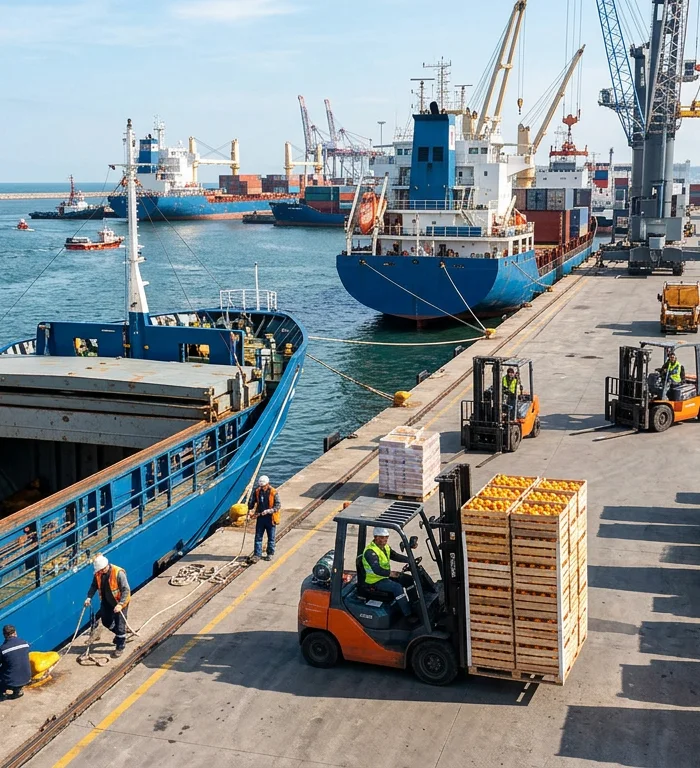
Turkish fruit exports put Russia trade back in Washington sanctions frame
Washington is watching Turkey’s fresh-fruit trade after Turkish exporters reported $1.36 billion in revenue from 721,858 tons shipped in January-September, a flow that keeps Russia embedded in one of Ankara’s most sensitive commercial corridors. The cargo is legal when it is agricultural, but US officials have treated Russia-linked trade networks as a sanctions risk when banks, insurers or logistics firms also touch restricted goods.
The Turkish data point matters in Washington because food is one of the few categories where sanctions policy and trade policy deliberately diverge. Western measures on Russia have generally carved out agricultural and humanitarian goods, while the Treasury Department has warned that commercial channels can still be used to disguise payments, routing and services for sanctioned actors.
Turkey sits at the center of that tension. It is a NATO member, hosts critical alliance infrastructure and coordinates closely with Washington on parts of regional security, yet it has also maintained large trade flows with Russia since Moscow’s full-scale invasion of Ukraine reshaped Black Sea shipping, energy and finance.
Fresh produce is a legitimate part of that relationship. Fruit and vegetable exports move through exporters, freight forwarders, ports, trucking firms, insurers and correspondent banks, creating a long chain of intermediaries before goods reach Russian buyers. Each link is ordinary in commercial trade; each also becomes a compliance point when the destination is Russia.
The Turkish
The January-September figure gives policymakers a scale marker. Turkey earned $1,363,753,000 from 721,858 tons of fresh-fruit exports over nine months, according to the Turkish export data provided in the signal. That implies a sizable recurring trade flow rather than a one-off shipment, which is why sanctions lawyers and Treasury officials tend to focus on the systems around the goods instead of the food itself.
For the White House, the issue falls between food-security policy and Russia pressure policy. Washington has tried to avoid measures that can be portrayed as blocking food or medicine, especially in markets sensitive to price shocks. At the same time, US sanctions strategy depends on narrowing Russia’s access to hard currency, shipping services and financial infrastructure.
That creates a narrow enforcement lane. Agricultural goods can move, but a Turkish bank clearing a payment for a sanctioned Russian buyer, or a logistics company handling cargo for a restricted counterparty, can still attract US scrutiny. The legal distinction is technical, but the economic effect is straightforward: legitimate exporters need banking access, and banks need confidence that the transaction is not a sanctions problem.
Congress adds another layer. Lawmakers who favor tighter Russia sanctions have pressed successive administrations to focus on third-country routes that help Moscow maintain trade and procurement networks. Turkey is not the only country in that category, but its NATO status and Black Sea geography make it unusually important to Washington.
The Pentagon and National Security Council also have a stake because Black Sea commerce is tied to broader security management. Shipping corridors, port activity and maritime services affect how Russia, Ukraine, Turkey and NATO members operate around the same waters. A trade channel that looks purely agricultural to exporters can look like infrastructure for strategic competition to defense planners.
Ankara’s position is more complicated than a simple alignment test. Turkey benefits from export revenue, access to Russian demand and its role as a regional trade hub. It also wants to avoid a direct clash with US financial enforcement, which can cut off banks and firms from dollar channels even when the underlying goods are not prohibited.
That is why Washington’s most likely pressure point is not a ban on fruit. It is compliance: beneficial-ownership checks, payment screening, vessel histories, counterparties, insurance records and the separation of agricultural transactions from restricted trade. Those are the places where US officials can act without saying they are targeting humanitarian commerce.
The company-level impact is clearest for Turkish exporters and logistics firms rather than for a single named corporate issuer. If banks tighten screening, exporters can face slower settlement, higher documentation costs and rejected transactions even when cargo is permissible. If banks receive clearer guidance, the trade can continue with less friction, though not without monitoring.
The industry effect runs through margins. Fresh fruit is perishable, so delays in customs, shipping or payment can destroy value faster than in many manufactured goods. A compliance hold that would be an inconvenience for durable goods can become a loss-making event for growers, packers and freight companies moving seasonal produce.
For the broader macro picture, the channel is small next to Turkey’s total economy but important to the country’s external accounts and regional trade politics. Export earnings bring in foreign currency at a time when Turkish policymakers remain sensitive to balance-of-payments pressures. Any US action that makes Russia-facing trade harder would land first in sector cash flows, then in bank risk models and trade-finance pricing.
The sanctions risk also cuts both ways for Washington. If enforcement is too blunt, US officials could be accused of undermining food trade that sanctions were designed to exempt. If enforcement is too loose, Russia-linked intermediaries may continue using ordinary trade documentation to keep restricted networks alive.
The falsifiable test is whether the US Department of the Treasury names Turkish maritime, freight or payment intermediaries tied to Russian commerce by December 15, 2024. If OFAC designates at least three Turkish logistics or freight entities for using agricultural corridors as operational cover, Washington’s Russia enforcement campaign will have moved from warnings into a direct challenge to Turkey’s trade infrastructure, raising compliance costs for exporters and tightening risk appetite across Black Sea shipping. If US and Turkish officials instead announce clear banking channels for agricultural exports to the region, the macro effect would be calmer food-trade flows, the company effect would be fewer rejected payments for Turkish exporters, and the industry effect would be a more formal split between lawful produce shipments and restricted Russia-linked commerce.
More stories
- Turkey’s Sub-30% Inflation Still Leaves Washington With a Sanctions Problem
- Kazakhstan plans gold sales to reduce reserve dependence
- Trump says Putin wants Ukraine deal more than Zelensky
- Saudi authorities extend Riyadh airport closure to Oct 17
- Trump diesel carve-out tests Congress as Russia talks stall over Ukraine
- Houthis Claim Ballistic Missile Strike on Riyadh Airport
- Turkey's science medals give Washington a new NATO tech problem
- France condemns Houthi attack on Riyadh airport
Latest news
- TabMF may improve AI dataset retrieval across six tasks
- Traffic fears keep 1 in 6 Irish parents wary of play
- Marwynn lines up 18-month AI computing trial with OmniX
- Xbox tests streak badge tied to 3 weekly plays
- Publicis Reports 5% Q3 Revenue Growth, Confirms Guidance
- Nvidia's reported $1 billion Figure bet tests AI supply loop
- Robot method lifts benchmark success to 74.8%
- RBL Bank slides 8% as provisions temper Q2 profit jump