

Turkey’s PKK push puts 900 U.S. Syria troops in focus
Ankara’s rapid-resolution language collides with Washington’s reliance on the SDF, which Turkey links to the PKK.
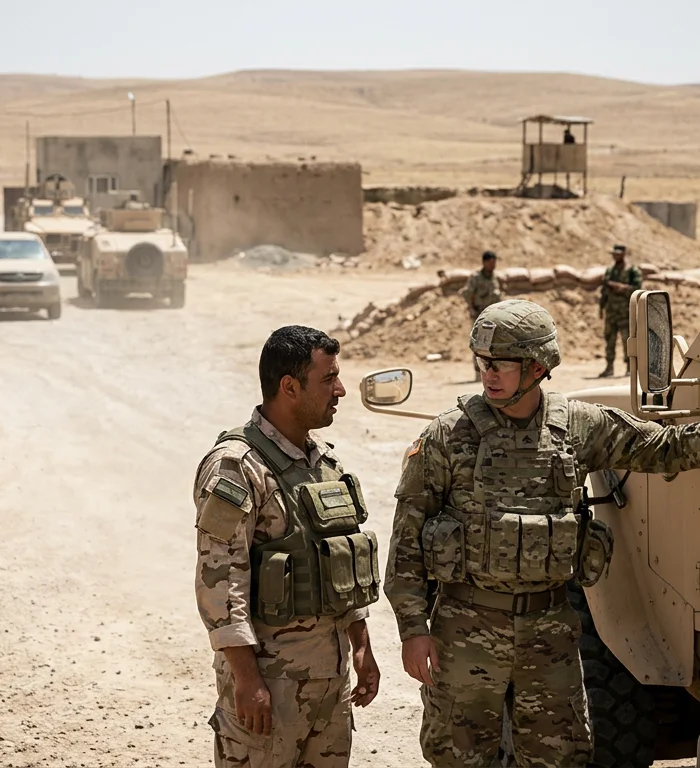
Turkish Interior Minister Mustafa Çiftçi tied Ankara's “Terror-free Turkey” campaign to a fast result at a Batman panel reported this week, putting Washington's roughly 900-troop Syria mission under renewed scrutiny.
The pressure point is timing: the language follows an Oct. 2024 political opening around the PKK file while the Pentagon still relies on the Syrian Democratic Forces in northeast Syria. Turkey views the SDF's YPG component as inseparable from the PKK.
Turkish Interior Minister Mustafa
A secondary Turkish report said Çiftçi spoke at a panel in Batman titled “Türkiye Yüzyılı’nda Terörsüz Türkiye, Kardeşlik Hukuku ve Toplumsal Barış Paneli.” The report said he argued the process would succeed in a short time and framed it as driven by Turkey's own will and public support.
For Washington, the issue is operational rather than rhetorical. The U.S. counter-ISIS mission in northeast Syria depends on local partner forces, while Ankara's security policy treats the same Kurdish military network as a direct extension of a group it has fought for decades.
That gap leaves the White House, State Department and Pentagon with a familiar trade-off. A Turkish-Kurdish political realignment inside Turkey would strengthen Ankara's case for changes to U.S. liaison channels with the SDF; an unchanged U.S. posture would preserve continuity against ISIS but risk another dispute with a NATO ally.
posture planning in the Middle East competes for Congress is another constraint. Bipartisan debates over the sustainability of the Syria deployment have already put the mission's legal, budgetary and strategic durability under scrutiny, especially as broader U.S. posture planning in the Middle East competes for forces and attention.
The main uncertainty is whether Ankara's domestic track produces security guarantees that cover northern Syria as well as Turkey's internal PKK file. If it does, Washington would face pressure to adjust how it works with the SDF; if it does not, Turkey could return to military pressure against SDF-linked infrastructure across the border.
The measurable test is the next formal Pentagon or State Department policy statement after U.S.-Turkey High-Level Defense Group consultations: whether Washington changes SDF liaison protocols or Syria basing language, or leaves both intact.
More stories
- Eisenkot secures first coalition deal but lacks majority
- Germans oppose Ukraine aid as poll shows support slipping
- Kim Jong-un receives 10 envoys after constitutional shift
- Ukraine claims Libya strike sinks Russian naval corvette
- COP31 climate talks collapse over fossil fuels and funds
- Russian military faces 1,087 recorded suicides in Ukraine war
- Egypt offers Saudi defense help, seeks parliament's role
- Magyar puts Hungary's euro plans before first budget test
- IREF targets nearly 74% cut in Iraq basmati freight
- Hormuz reopening hinges on Iran's seven stated conditions
Latest news
- Trump prepares tariffs on China and other major exporters
- New-car buyers pay record average $50,087 in October
- Banks face ECB reserve debate over liquidity and profits
- Investors see Anthropic debut gains fade below $83 a share
- Iraq orders federal control over Kurdish-area oilfields
- Nvidia shares retreat as AI rally cools before PCE data