

Turkey-Armenia border push tests Russia’s regional leverage
Pashinyan said Yerevan and Ankara are near the last step toward fully reopening a border closed since 1993.
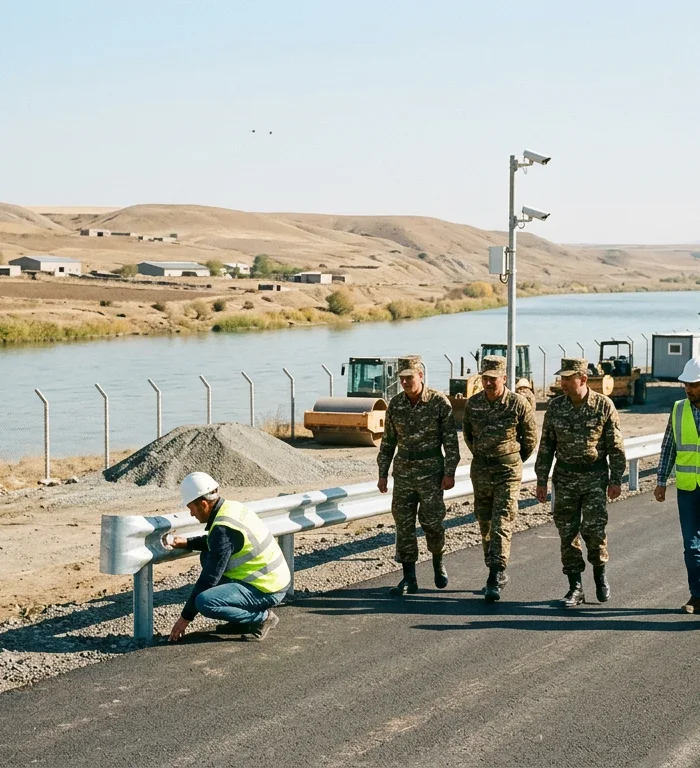
Armenian Prime Minister Nikol Pashinyan said Armenia and Turkey are close to the final step toward fully reopening their land border, according to a Turkish news report.
The move would matter beyond bilateral trade: the border has been closed since 1993, limiting Armenia’s westward routes and reinforcing its dependence on corridors shaped by Russia, Iran and Azerbaijan.
Pashinyan made the comment after a meeting with Pashinyan made the comment after a meeting with Turkish President Recep Tayyip Erdogan, saying the two governments were nearing the point of opening the frontier completely. Ankara and Yerevan have pursued normalization through special envoys while keeping the border issue linked to the wider Armenia-Azerbaijan peace track.
For Washington, an opening would fit a long-running US objective in the South Caucasus: giving Armenia more economic and diplomatic options outside Moscow’s orbit. During the Biden administration, Senior Advisor for Caucasus Negotiations Louis Bono pushed parallel tracks between Armenia-Azerbaijan and Armenia-Turkey, according to the policy background supplied to US lawmakers and regional watchers.
Turkey shut the border in 1993 in solidarity with Azerbaijan during the first Nagorno-Karabakh war. Since then, Armenia’s routes west have depended largely on Georgia, while talks over transit through southern Armenia have remained politically charged.
Armenian Prime Minister Nikol
The main dispute is still sequencing. Ankara has historically tied a full opening to a comprehensive Armenia-Azerbaijan peace deal and transit access through southern Armenia, often described as the Zangezur corridor. Armenian officials and supporters in Congress have treated that demand as a sovereignty issue.
If Ankara and Yerevan move first with an operational border step, Washington would gain a practical marker that normalization is not wholly hostage to the Armenia-Azerbaijan file. If Turkey instead restates that the border depends on Baku’s approval, Pashinyan’s signal would narrow back into another peace-talk deadline.
The next observable test is whether Turkish and Armenian special envoys announce customs readiness and a date for opening the Margara-Alican crossing. A reversal would be visible if Ankara walks back Pashinyan’s timeline or says the border remains contingent on a finalized Armenia-Azerbaijan peace agreement.
More stories
- Germans oppose Ukraine aid as poll shows support slipping
- Kim Jong-un receives 10 envoys after constitutional shift
- Ukraine claims Libya strike sinks Russian naval corvette
- COP31 climate talks collapse over fossil fuels and funds
- Russian military faces 1,087 recorded suicides in Ukraine war
- US faces China, Russia in Africa minerals contest
- UN agencies seek aid for 30.3m facing DR Congo hunger
- Hungary seizes nearly $20m in Orban-era corruption probe
- Biya faces Cameroon succession pressure after 74-day absence
- AfD leak details 420,000 emails on Trump outreach
Latest news
- Trump prepares tariffs on China and other major exporters
- New-car buyers pay record average $50,087 in October
- Banks face ECB reserve debate over liquidity and profits
- Investors see Anthropic debut gains fade below $83 a share
- Iraq orders federal control over Kurdish-area oilfields
- Nvidia shares retreat as AI rally cools before PCE data
- Macy’s parade faces balloon limits as storm winds approach