

Tunisia Increases Military Readiness and Resource Stockpiling Amid Regional Instability
Tunisia is bolstering border defenses and stockpiling essential supplies in response to rising regional security threats and potential supply chain volatility.
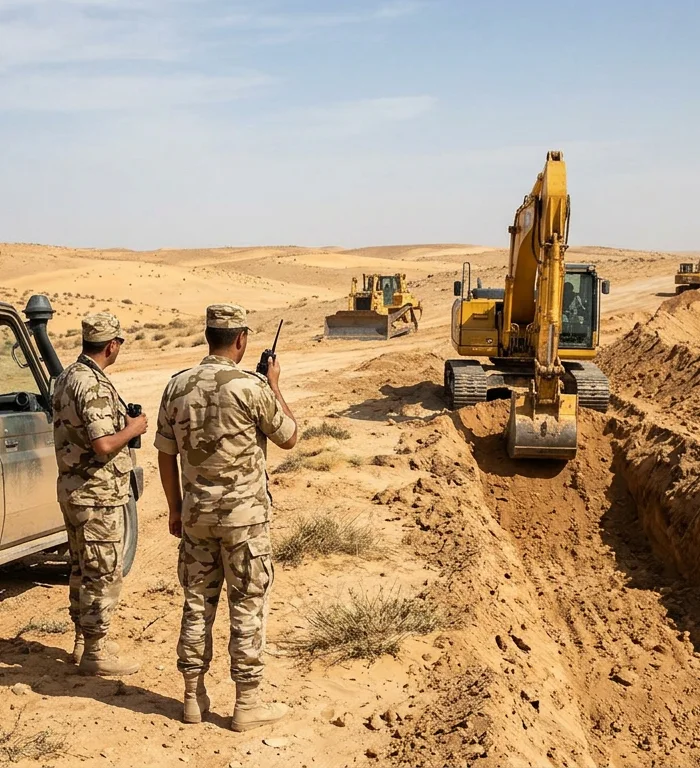
Tunisia has initiated a comprehensive national security strategy to mitigate risks stemming from escalating regional conflicts and geopolitical instability. Defense officials confirmed that the government is prioritizing the stockpiling of essential commodities, including fuel, medicine, and food, to ensure domestic stability during potential supply chain disruptions.
Border security protocols are being significantly expanded to address infiltration and smuggling risks. The military is currently extending an earthen barrier along the eastern frontier and constructing a 95-kilometer trench to enhance surveillance and control of land, air, and maritime borders. These physical infrastructure projects are intended to restrict the movement of illicit networks and terrorist groups operating within the Sahel and North African regions.
Legislative efforts are underway to regulate the use of drone technology, reflecting a shift toward addressing modern asymmetric threats. The government has characterized the current defense budget as a strategic investment necessary to maintain national sovereignty and independent decision-making capabilities in an environment of intensifying strategic competition and regional arms proliferation.
While officials maintain that the domestic security environment
While officials maintain that the domestic security environment remains relatively stable, the military has transitioned to a posture of preemptive operations. These activities focus on dismantling logistical support networks and neutralizing suspicious elements before they can execute operations. The state is emphasizing self-reliance and the optimization of existing military resources, while simultaneously seeking to maintain international cooperation to bolster national defense capabilities.
Policymakers should monitor these developments as indicators of Tunisia's evolving risk assessment regarding its immediate neighborhood. The focus on border fortification and resource security suggests a long-term expectation of persistent instability in the Sahara and Sahel corridors, which may impact regional trade routes and security cooperation frameworks.
More stories
- Germans oppose Ukraine aid as poll shows support slipping
- Kim Jong-un receives 10 envoys after constitutional shift
- Ukraine claims Libya strike sinks Russian naval corvette
- COP31 climate talks collapse over fossil fuels and funds
- Russian military faces 1,087 recorded suicides in Ukraine war
- US faces China, Russia in Africa minerals contest
- Europe to join next Ukraine talks, Kushner says
- Melaka vote puts living costs before 687,697 voters
- CIR places 25 Sudan commanders at reported sexual-violence sites
- Brent heads for fourth monthly gain as Middle East risk persists
Latest news
- Trump prepares tariffs on China and other major exporters
- New-car buyers pay record average $50,087 in October
- Banks face ECB reserve debate over liquidity and profits
- Investors see Anthropic debut gains fade below $83 a share
- Iraq orders federal control over Kurdish-area oilfields
- Nvidia shares retreat as AI rally cools before PCE data
- Macy’s parade faces balloon limits as storm winds approach